

Home
News - Events Science & Technology News Mechanical Engineering 4.0 – Challenges and Opportunities for Vietnam
Featured News

Mechanical Engineering 4.0 – Challenges and Opportunities for Vietnam
The mechanical engineering industry is one of the backbone industries, playing an important role in the country's industrialization and modernization. However, in recent decades, it seems that the domestic mechanical engineering industry has shown signs of lagging behind the region and the world. New challenges posed in the context of integration and the 4.0 industrial revolution (Industry 4.0) require domestic mechanical research and manufacturing facilities to have solutions and changes to ensure competitiveness and survival.
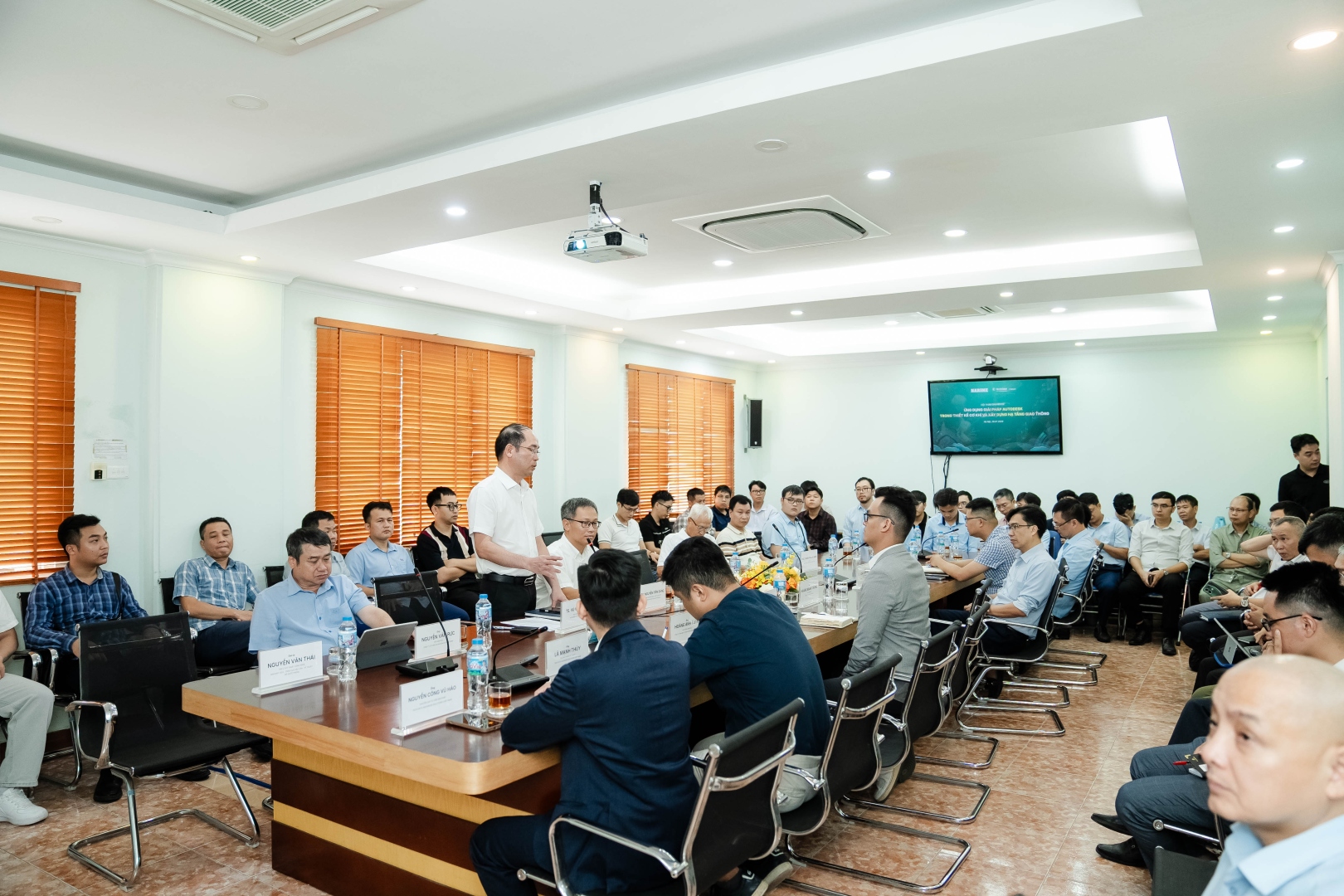
Regarding this issue, Dr. Vu Van Khoa, Deputy Director of the National Research Institute of Mechanical Engineering (NARIME) – Ministry of Industry and Trade had an exchange with the science and technology information page of the Industry and Trade sector (khcncongthuong.vn).

Dr. Vu Van Khoa, Deputy Director of the National Research Institute of Mechanical Engineering – Ministry of Industry and Trade (NARIME)
Could you please tell us about the challenges facing research and manufacturing facilities and enterprises in the industrial mechanical engineering sector in our country in the context of Industry 4.0?
Dr. Vu Van Khoa:
Industry 4.0 is formed based on the combination of digital technology with high technologies to create smart technologies such as 3D printing, robots, artificial intelligence, Internet of Things (IoT). Future production will combine the fields of physics, digitization and biology, the virtual world (software, networks) and the real world (machines and equipment)... drawing closer together. The convergence of cutting-edge technologies allows for optimal use of resources, saving labor, saving investment, saving time,... in the process of research-manufacturing technology and production organization.
In the context of the world industry entering the Fourth Industrial Revolution, in Vietnam the manufacturing mechanical engineering industry is still quite backward, with the technological level mainly at the level of the Second Industrial Revolution, with many difficulties and shortcomings. For example, the basic mechanical manufacturing industry is at the level of machining. In many fields, domestic enterprises are still unable to self-manufacture some products with international competitiveness; unable to manufacture components and spare parts for multinational corporations, repair complex equipment... Mechanical enterprises are often small in scale, with poor management, low technology, and weak linkage capability. The use of electronic and information technology is still not widespread, mainly concentrated in foreign-invested enterprises.
However, due to good production organization, there have been and are many types of products that Vietnamese enterprises do very well, such as hydraulic mechanical equipment for hydropower, non-standard parts for cement, thermal power, petrochemical industries, molds...

Shipunloader belonging to the coal supply system of NARIME. Photo: NARIME
The challenges for research and manufacturing facilities and enterprises in the industrial mechanical engineering sector in our country in the context of Industry 4.0 include:
First, in mechanical machining production, design work will be greatly assisted by computer systems and intelligent software. Machines also replace humans in manufacturing and equipment installation. This forces mechanical enterprises that want to develop strongly and sustainably to change their labor structure and professions, shift from low-skilled labor to high-skilled labor, invest in advanced machining technology, change production management methods, and improve product quality control. However, investment in industry, especially heavy industry, is very costly while the resources of Vietnamese mechanical enterprises are limited. Some State preferential policies for developing mechanical products are not long enough and their application is complicated, thus they have not created momentum for enterprises to borrow capital and make in-depth investments in production.
Second, the Fourth Industrial Revolution will create fierce competition for Vietnamese enterprises in general and mechanical enterprises in particular. The competition is not only among domestic enterprises but also with foreign enterprises and multinational corporations.
So are there any opportunities for domestic mechanical enterprises?
Dr. Vu Van Khoa:
The Fourth Industrial Revolution will impact the entire economy and social life, posing many challenges for the mechanical industry. Our country no longer has the advantage of attracting investment based on low labor costs; limited science and technology capacity restricts the ability to access and apply the achievements of Industry 4.0... without strong solutions, we will fall further behind.
However, the Fourth Industrial Revolution also brings many opportunities for the industry such as: the ability to absorb new technologies, also known as leapfrogging, creating smart production methods, shifting towards a knowledge economy.

Installation of the Coal Supply System for Song Hau 1 Thermal Power Plant. Photo: NARIME.
Opportunities for research and manufacturing facilities and enterprises in the industrial mechanical engineering sector in our country in the context of the Fourth Industrial Revolution include:
First, with the increasingly strong development of digital technology, communication will change the production methods of enterprises in the direction of saving time, costs and increasing work efficiency.
Second, the Fourth Industrial Revolution with the outstanding development of mechanical machining technology will be a good opportunity for Vietnamese mechanical enterprises to access modern scientific and technological achievements in production, optimize production processes. If invested correctly and with product orientation, enterprises have the opportunity to participate in the global supply chain.
Third, the Fourth Industrial Revolution with its global diffusion nature will be a good opportunity for Vietnamese enterprises with good products and services to promote their image, expand new markets, and participate in the global supply chain.
Fourth, enterprises will gain experience and benefit from suppliers as suppliers compete with each other in improving quality, delivery speed, prices of goods, and transparency increases thanks to access to global digital systems for research, development, marketing, selling and distributing goods.

ESP electrostatic precipitator system of Vung Ang Thermal Power Plant. Photo: NARIME
NARIME is one of the "brands" accredited in the field of heavy industrial mechanical engineering research and manufacturing, with many valuable research works and products associated with major national projects. What makes the value of NARIME today?
Dr. Vu Van Khoa:
From the early days of its establishment in 1962, the National Research Institute of Mechanical Engineering – NARIME (predecessor was the Institute of Mechanical Design and Manufacturing) identified the task of localizing equipment and systems of industrial plants as one of the important tasks.
In recent years, NARIME has adhered to the motto of closely linking research activities with socio-economic programs. On average, each year the Institute implements about 5 to 10 scientific and technological topics/tasks at various levels. With financial support from the Ministry of Industry and Trade, the Ministry of Science & Technology combined with financial resources from large economic contracts, the Institute's leadership, scientists, and staff have always strived to serve enterprises with the motto: "Perfect solutions, advanced technology, environmentally friendly".
Therefore, in my opinion, what makes the value of NARIME is the extensive experience associated with a team of scientific and technological researchers who have matured through major national projects.

Floating pontoon system for floating solar power plant. Photo: NARIME.
It is known that besides traditional key technologies, NARIME is researching and developing some new technologies. Could you share more about these technologies and their applications?
Dr. Vu Van Khoa:
In recent years, the Institute has achieved a number of outstanding research results. For example, mastering the design and manufacturing of hydraulic mechanical equipment for hydropower projects, notably Son La (2400MW) and Lai Chau (1200MW); mastering the design and manufacturing of coal supply systems, ash and slag discharge systems, electrostatic precipitator systems, fire prevention and fighting systems... for thermal power plants.
In mineral exploitation and processing, the Institute has implemented many projects for designing and manufacturing auxiliary equipment; gradually mastering plant design, project management, equipment integration and commissioning for bauxite processing plants.
In addition, the Institute has succeeded in mastering the technology of designing and manufacturing floating pontoon and mooring systems for floating solar power projects. This is a science and technology product supported by the Institute's development investment fund. The technology has been applied to the Da Mi Solar Power Plant project with a capacity of 47.5 MW.
In the field of automation, the Institute has mastered the design and integration of automation systems for industrial lines such as paper mills, cement plants, small hydropower plants. The products have been supported by the science and technology of three projects: "Research, design, integration, installation and operation of the control system for hydraulic turbine units and Dak Rong hydropower plant", "Research and design of automation control system for rotary kiln cement plant with capacity of 2,500 T clinker/day", and "Research, design and manufacturing of automatic cement bagging system for rotary kiln cement plant with capacity of 2,500 T clinker/day".
Some other research areas are also NARIME's strengths, such as diagnosis, active monitoring of rotating parts of industrial works; design and manufacturing of assembly lines and molds, jigs for the automobile and motorcycle industry.
Currently, NARIME is focusing resources on research, receiving technology transfer towards mastering new technologies such as: technology and equipment for dry discharge of red mud, environmental incident handling systems, applying to the Lam Dong and Nhan Co alumina plants.
Recently, to get closer to the Fourth Industrial Revolution, the Institute has established a research group on products related to robots and high technology. The aim is to master some technologies in automated, flexible production systems and smart storage systems in industry.
The Institute has proposed to the Department of Science and Technology - Ministry of Industry and Trade to obtain necessary support for the research group. It is hoped that when completed, this product group will meet market demand, promote the strengths and capabilities of NARIME, contribute to enhancing autonomy and increasing income for workers, bringing the Vietnamese mechanical engineering industry to international integration, meeting Industry 4.0.
Thank you, sir./.
|
The National Research Institute of Mechanical Engineering (NARIME) under the Ministry of Industry and Trade is a State research and development agency for science and technology in the fields of mechanical engineering and automation.
In recent times, NARIME has gradually cooperated, linked research, manufacturing and perfected synchronous equipment systems of high quality, European standards, capable of bidding to supply equipment for domestic and foreign industrial plants such as Nghi Son Thermal Power Plant, Thai Binh 1 Thermal Power Plant, Myanmar Metallurgical Plant... It is also a reputable supplier of solutions, auxiliary equipment, and spare parts for many domestic manufacturers and assemblers such as VAP, Honda, Toyota, Doosan, VinFast...
See more information about the Institute at: http://narime.gov.vn
|
Huong Giang
Source at https://khcncongthuong.vn/tin-tuc/t11230/co-khi-4-0--thach-thuc-va-co-hoi-cho-viet-nam.html
Related News
- Discuss solutions to promote foundational industries in the new period
- Research results on the application of robots in a detergent powder manufacturing plant
- Specific mechanisms and policies are needed to develop mechanical engineering products with large market capacity in the period 2026-2045.
- Mastering Heat Exchange Equipment: A New Step Forward for Vietnam's Mechanical Engineering Industry


