

Home
Strategic Technology: The Decisive Lever for Long-term Competitiveness
Featured News

Strategic Technology: The Decisive Lever for Long-term Competitiveness
According to experts, developing strategic technologies is an investment in long-term competitiveness. This is an opportunity for the Industry and Trade sector to create a breakthrough in growth.
Opportunity to transform the growth model
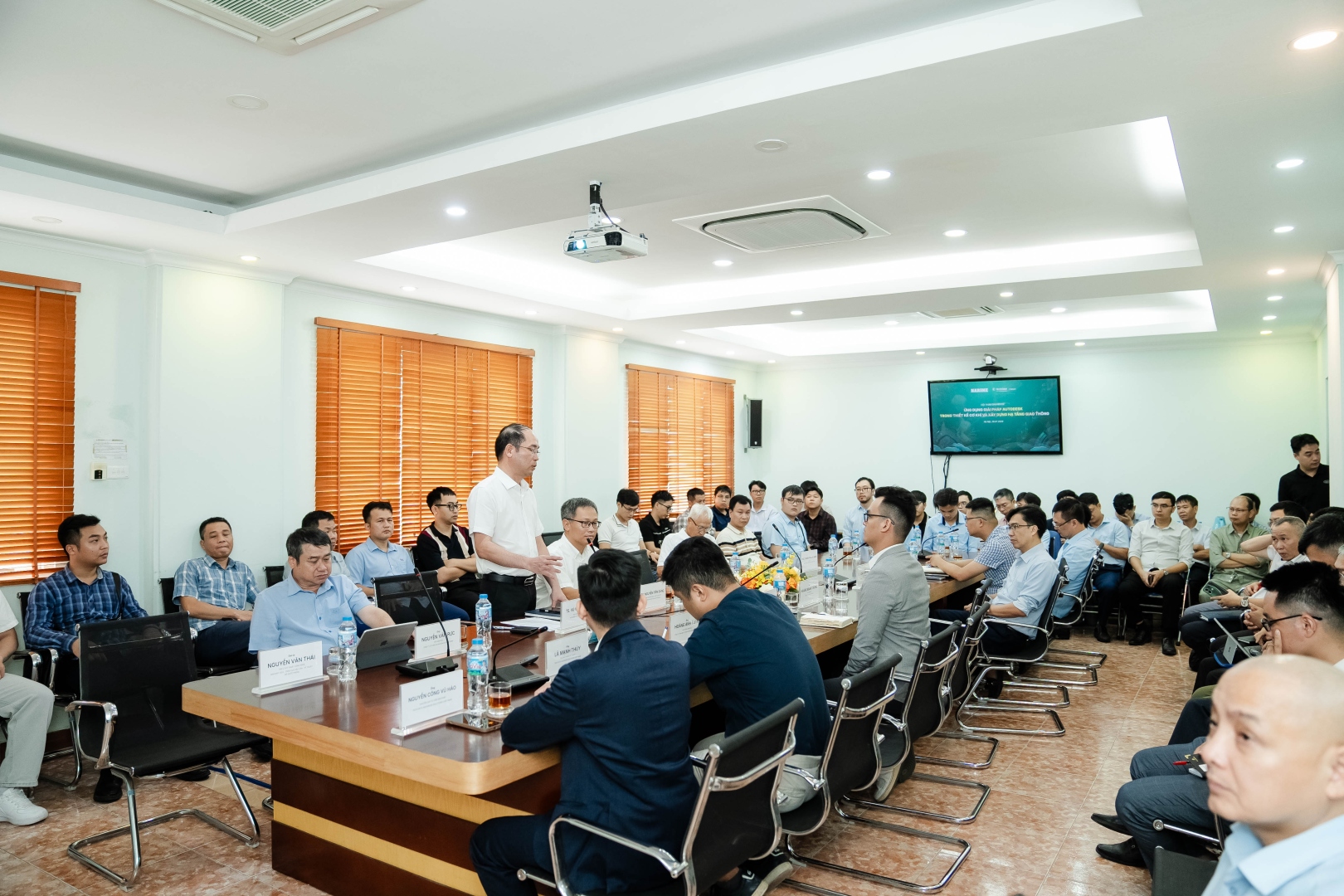
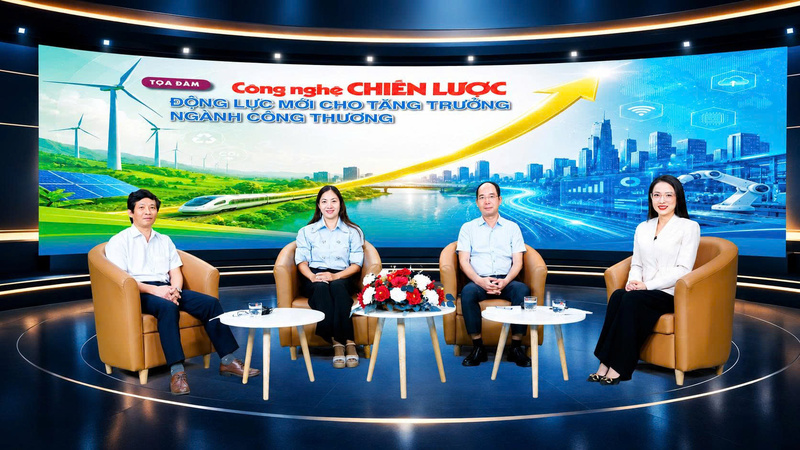
On June 18, Industry and Trade Newspaper organized a Seminar on the topic: Strategic Technology - A New Driver for Growth of the Industry and Trade Sector.
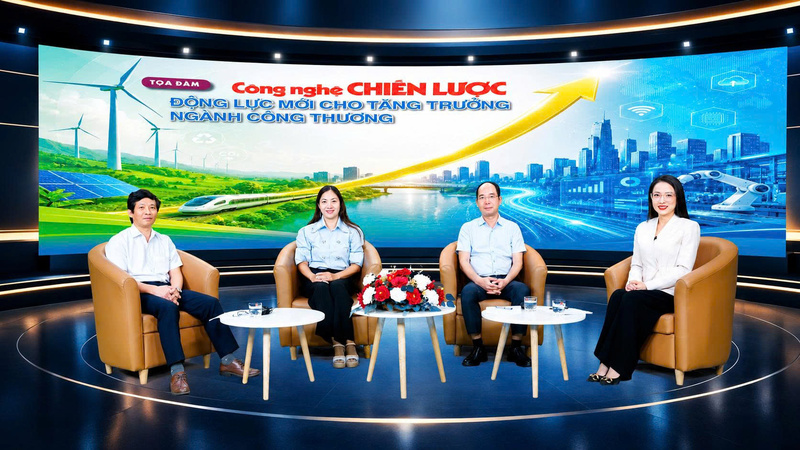
Seminar: Strategic Technology - A New Driver for Growth of the Industry and Trade Sector. Photo: Quoc Chuyen
At the seminar, Dr. Tran Thi Thu Hien, Deputy Head of the Information and Communication Department, Institute of Strategic Research and Industry and Trade Policy, said that the difference of strategic technology compared to regular technology is that it not only creates a new product but also changes the competitiveness of the entire economy.
"Any country that masters strategic technology will have an advantage in controlling supply chains, improving labor productivity, increasing production value, and reducing dependence on external sources." - Dr. Tran Thi Thu Hien said.
According to Dr. Tran Thi Thu Hien, in the current context, competition between countries is no longer mainly based on resources or cheap labor but has shifted to competition in technology, data, innovation, and the ability to create new industries. Therefore, developing strategic technology is an investment in long-term competitiveness.
For Vietnam, this is also an opportunity to shift the growth model from breadth to depth. If we effectively leverage technologies such as artificial intelligence, semiconductors, new energy, advanced materials, big data, or automation, we can not only improve productivity but also gradually participate in high-value-added stages of the global value chain.

Dr. Tran Thi Thu Hien, Deputy Head of the Information and Communication Department, Institute of Strategic Research and Industry and Trade Policy. Photo: Quoc Chuyen
However, it is important to recognize that strategic technology is not an end in itself. Its greatest value lies in its ability to be transformed into production capacity, innovation capability, and the actual competitiveness of enterprises and the economy.
Sharing the same view, Dr. Vu Van Khoa, Vice Director of the National Research Institute of Mechanical Engineering (NARIME), expressed that from the perspective of a science and technology research unit, we believe that developing strategic technologies is particularly important for the goal of building a self-reliant, modern, and high-value-added industry in Vietnam.
"First, mastering strategic technologies will help Vietnam reduce dependence on imported technology, gradually enhance self-reliance in designing, manufacturing, and operating key industrial systems. This is a fundamental factor to ensure economic security and improve the resilience of production against fluctuations in the global supply chain." - Dr. Vu Van Khoa affirmed.
Furthermore, strategic technology is the driving force behind the transition from a growth model based on cheap labor to a growth model based on knowledge, innovation, and productivity. Instead of mainly participating in processing and assembly stages with low added value, we have the opportunity to move up to design, manufacturing, system integration, and intellectual property ownership.
For the Industry and Trade sector, fields such as smart manufacturing, industrial robots, clean energy and new materials, offshore wind power equipment, modern railway technology, deep mineral processing, or advanced testing and calibration systems are all strategic technologies capable of creating breakthroughs in productivity and added value.
In particular, the process of developing strategic technologies will create a great demand for domestic research, development, and innovation with close connections among the State, enterprises, research institutes, and universities. This is an important condition for building national technological capacity and creating products, solutions, and inventions bearing the Vietnam brand.
Driving force for developing strategic technologies
According to Dr. Vu Van Khoa, Decision No. 21/2026/QD-TTg has correctly identified technologies capable of creating a leap in productivity, competitiveness, and technological self-reliance of the country. These are also the fields that the National Research Institute of Mechanical Engineering has been focusing on and investing in research for many years.
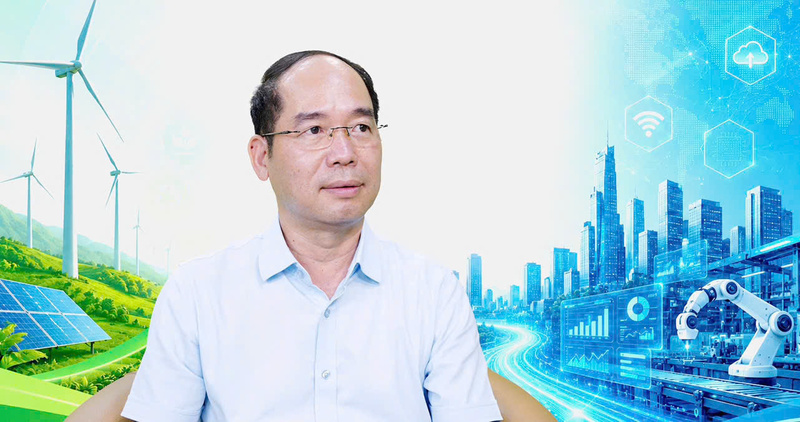
Dr. Vu Van Khoa, Vice Director of the National Research Institute of Mechanical Engineering (NARIME). Photo: Quoc Chuyen
For example, in the field of digital technology, robotics and automation, in recent years, NARIME has focused on researching and developing smart manufacturing solutions oriented towards Industry 4.0. Many automatic production line systems, smart warehouses, and smart logistics solutions designed and manufactured by the Institute have been put into actual operation at enterprises.
Also at the seminar, Assoc.Prof.Dr. Trinh Trong Chuong, Head of the Department of Science, Technology and Innovation, Hanoi University of Industry (HaUI) shared that Hanoi University of Industry has focused resources on implementing new training majors/programs to catch up with and meet current strategic technology trends. Currently, HaUI is training 72 majors and training programs, focusing on high-tech industry and digital economy.
In particular, Hanoi University of Industry has deployed training and research in three strategic engineering technology fields: semiconductor microchips, renewable energy and artificial intelligence, and biotechnology, aiming to provide high-quality human resources for key national industries and future global development trends.
Among them, semiconductor microchips are a core technology field of the digital era, playing a foundational role in developing artificial intelligence, deploying IoT systems, and processing big data... with increasingly high requirements for microchip performance. Therefore, this is a sector with a huge demand for high-quality human resources, not only in Vietnam but globally.
Assoc.Prof.Dr. Trinh Trong Chuong believes that to meet the requirements of developing strategic technologies, strengthening the connection between: Schools, Research Institutes - State - Enterprises Accordingly, it is necessary to synchronously implement the following solutions: Building a substantive cooperation mechanism among the three parties; innovating training programs according to market needs; developing joint research and innovation centers; promoting research and technology transfer ordering mechanisms; perfecting the innovation ecosystem; improving state mechanisms and policies...
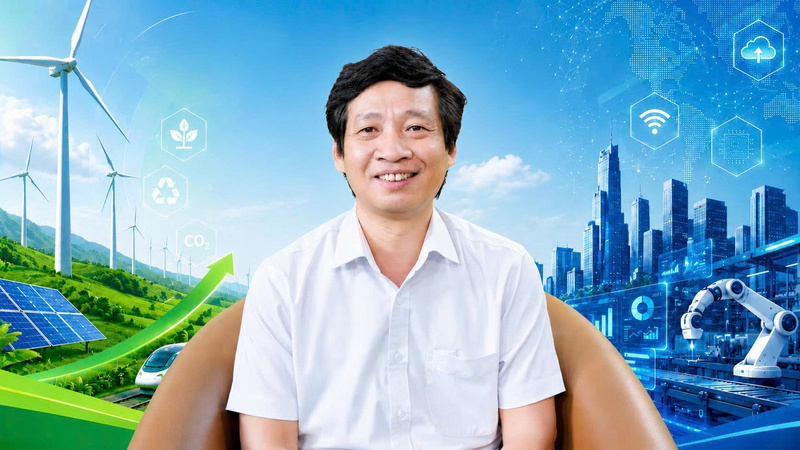
Assoc.Prof.Dr. Trinh Trong Chuong, Head of the Department of Science, Technology and Innovation, Hanoi University of Industry (HaUI). Photo: Quoc Chuyen
Dr. Vu Van Khoa shared that to develop strategic technologies in the mechanical field, it is necessary to shift from the mindset of supporting individual projects to building a complete innovation ecosystem, in which enterprises are the center, research institutes and universities are the forces that create knowledge and technology, while the State plays the role of creating and guiding the market.
One of the important solutions is to strengthen research programs under the ordering mechanism from enterprises and from national key programs and projects. This helps research tasks originate from the practical needs of production and the market, while creating clear output for science and technology products.
Dr. Tran Thi Thu Hien commented that developing strategic technologies should be approached as a long-term national development policy, not just a science and technology policy.
First, it is necessary to prioritize developing high-quality human resources, especially leading experts in fields such as AI, semiconductors, robotics, new energy, and advanced materials. This is a decisive factor in the ability to absorb and create technology.
Next is to innovate financial mechanisms for research and development in a more flexible direction, accept controlled risks, and encourage enterprises to invest in R&D through tax incentives and innovation funds.
On May 6, 2026, the Prime Minister issued Decision No. 808/QD-TTg assigning the task of developing strategic technologies to 10 ministries and central agencies to implement 20 science, technology and innovation tasks for the development of strategic technologies.
Among them, the Ministry of Industry and Trade was assigned 3 tasks: First, ensuring energy security for high growth; modernizing the electricity system - green, smart and self-reliant fuels. Second, industrial self-reliance, increasing the localization rate and upgrading the green, smart, high value-added production value chain. Third, modernizing domestic and foreign trade with data, smart logistics and reliable supply chains.
Source: Industry and Trade Newspaper
Related News


