

Home
News - Events News and Activities Enhancing the value of the mechanical engineering industry in the development of Vietnam's railway system
Featured News

Enhancing the value of the mechanical engineering industry in the development of Vietnam's railway system
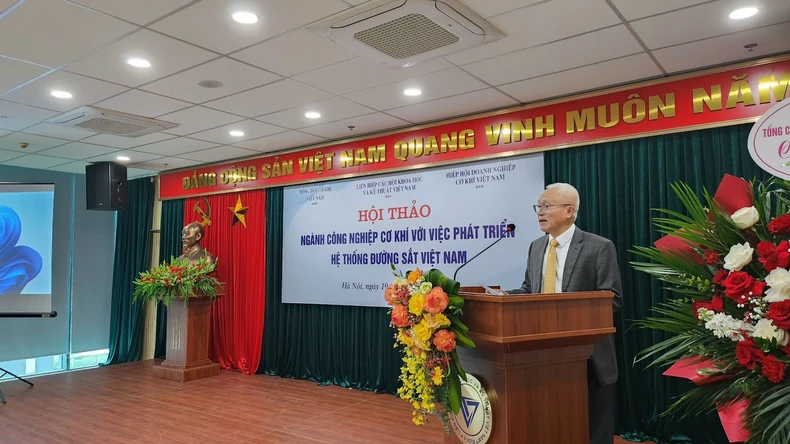
On December 19, the Vietnam Union of Science and Technology Associations, in coordination with the Vietnam Association of Mechanical Enterprises (VAMI) and the Vietnam General Association of Mechanical Engineering, organized a seminar titled "The Mechanical Engineering Industry and the Development of the Vietnam Railway System".
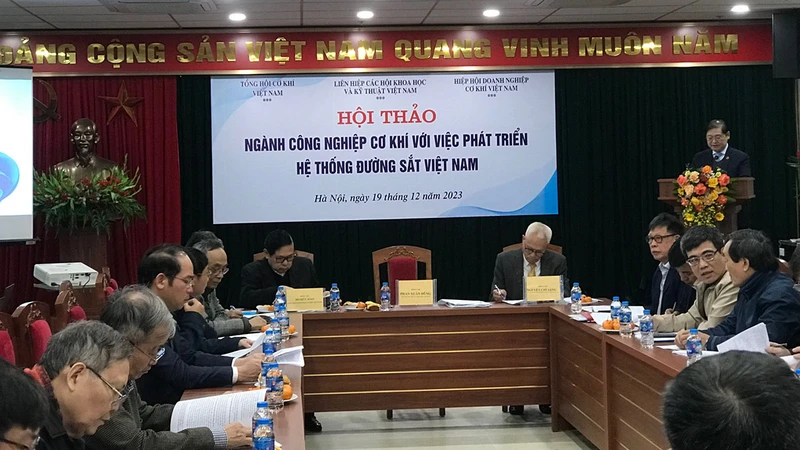
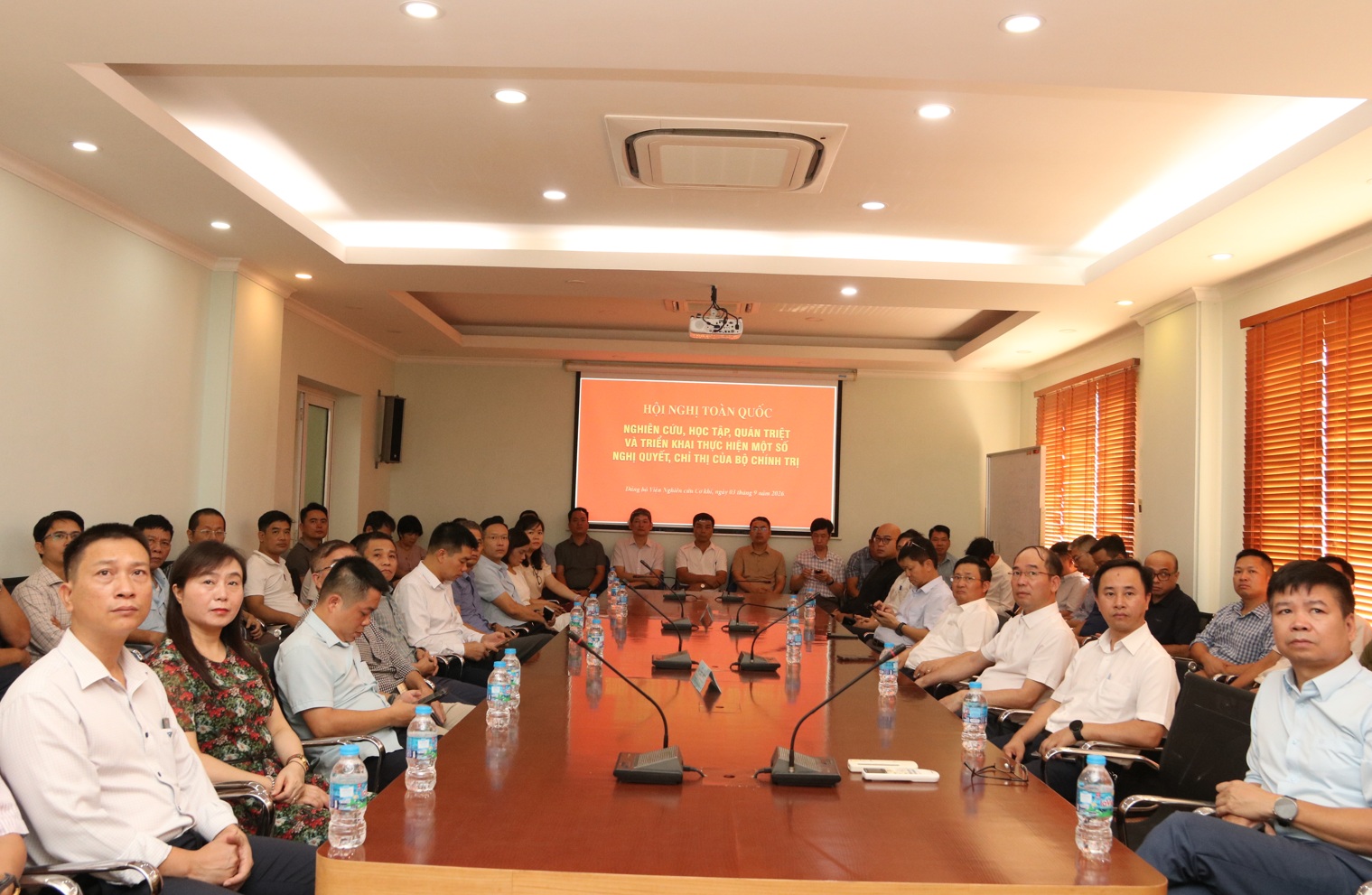
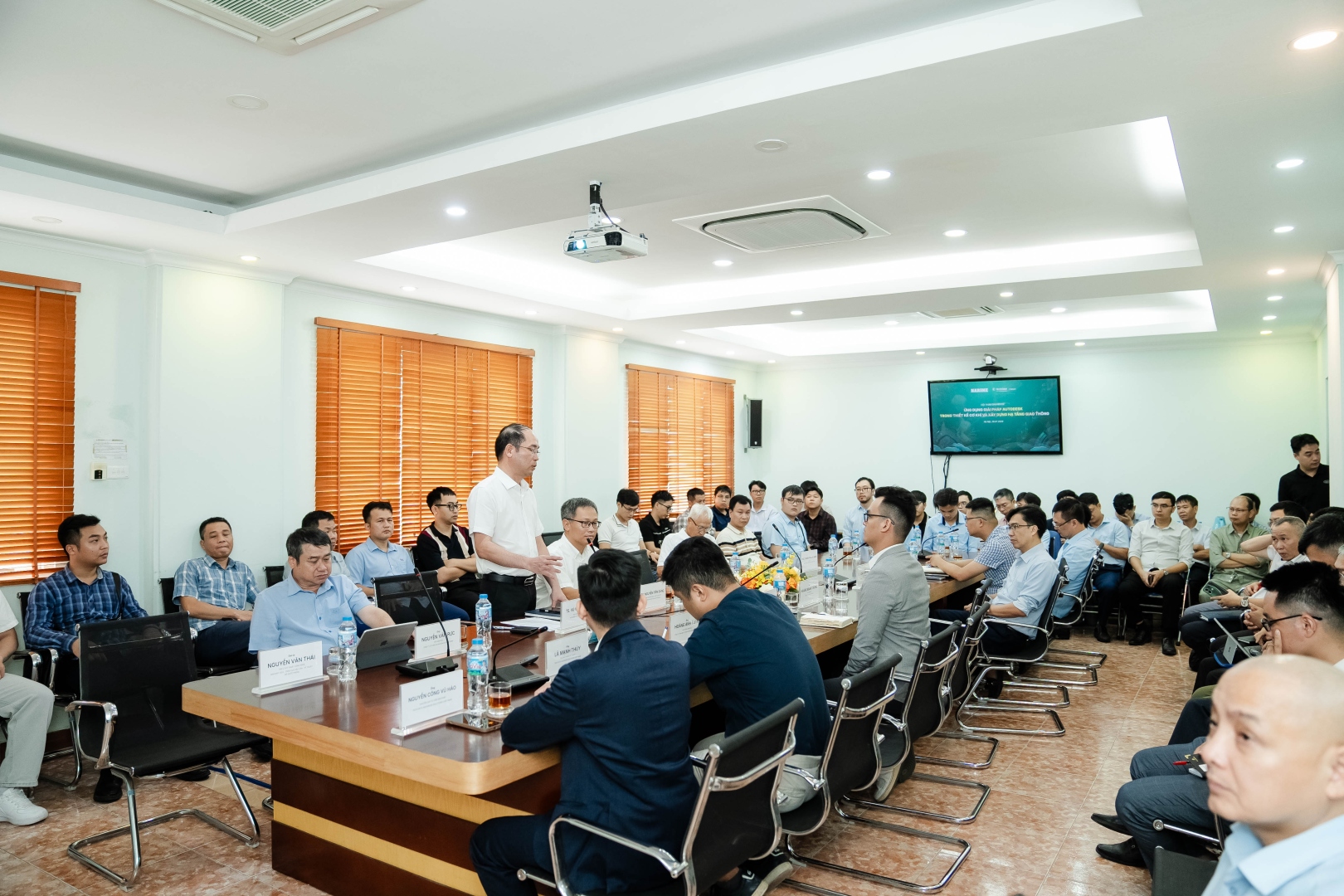
Overview of the seminar.
The figure of over 111 billion USD in investment capital for the Vietnam railway sector in the coming period is enormous. So how can domestic mechanical manufacturing enterprises seize this "golden opportunity," create domestic jobs, and promote the development of the mechanical engineering industry?
The Potential Remains Very Large
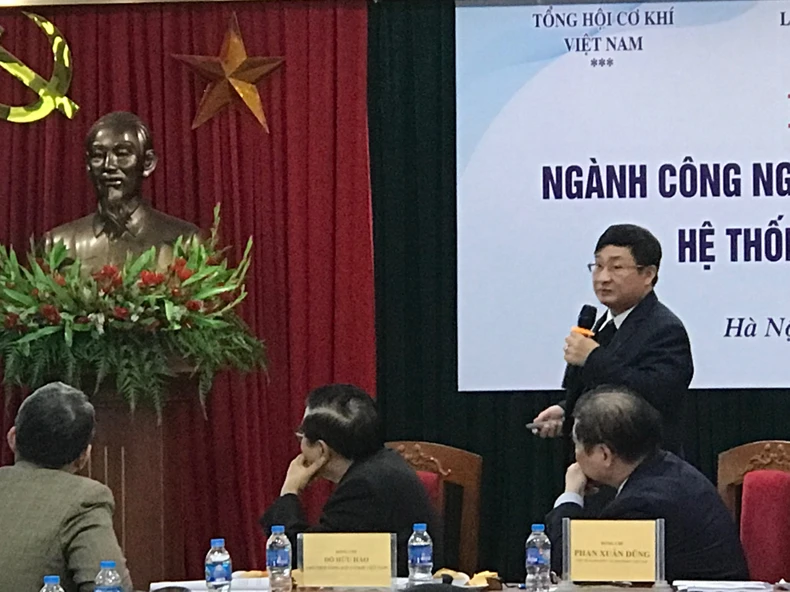
Dr. Phan Dang Phong, Director of the National Research Institute of Mechanical Engineering (Ministry of Industry and Trade), stated that according to the Vietnam railway network plan for the period 2021-2030, with a vision to 2050, the total investment is approximately nearly 62 billion USD; similarly, according to the plan for the urban railway line in Hanoi, the total future investment is about 37 billion USD; the urban railway line in Ho Chi Minh City will be about 12.6 billion USD. Thus, the potential for developing the domestic urban railway industry is very large. This is also a golden opportunity for domestic mechanical manufacturing enterprises if they know how to seize it.
 |
|
Dr. Phan Dang Phong, Director of NARIME, presenting at the seminar.
|
According to Mr. Phong, if there are appropriate priority mechanisms and policies for the railway industry, the localization rate could reach about 80%. This is a very large market that is currently being left open for foreign investors.
Domestic mechanical enterprises are often not allowed to participate, or their participation is very limited. At the same time, the mechanical manufacturing industry for equipment in the railway sector is almost non-existent and cannot develop.
Nevertheless, the domestic mechanical manufacturing industry also has many "bright spots" in the localization of domestic equipment. Some domestic enterprises have undertaken tasks with a level of difficulty similar to that of EPC general contractors for coal-fired thermal power, thermal power, gas power, and hydropower projects, such as Vietnam Machinery Installation Corporation (LILAMA), the Institute of Machine and Industrial Instruments Joint Stock Company (IMI), and the National Research Institute of Mechanical Engineering (NARIME)...
Specifically, domestic units have achieved self-reliance in designing and manufacturing hydraulic mechanical equipment for over 29 medium and large hydropower projects in the country, including the Son La (2,400 MW) and Lai Chau (1,200 MW) hydropower plants. Or at the Song Hau 1 Thermal Power Plant project with a capacity of 1,200 MW (Hau Giang), invested by Vietnam Oil and Gas Group (PVN), with LILAMA as the EPC general contractor, completed after more than 7 years of construction, marking the maturity of both the hands and minds of domestic engineers and workers in rising to become EPC general contractors for major, key national projects.
Creating a Market for Domestic Mechanical Enterprises
Dr. Phan Dang Phong believes that it is necessary to develop a mechanism and policy to concretize this issue, such as investing in strengthening existing facilities to be capable of building new and repairing railway equipment; selecting a number of suitable contractors to implement EPC in Vietnam with conditions for equipment localization according to a schedule; standardizing management standards and train operation management software to ensure consistency across lines; and establishing other incentive mechanisms to encourage equipment localization...
 |
|
VAMI Chairman Dr. Nguyen Chi Sang speaking at the seminar.
|
Chairman of the Vietnam Association of Mechanical Enterprises (VAMI), Dr. Nguyen Chi Sang, also stated that Vietnam must absolutely master the construction and development of the railway system. Mastery here should not be rigidly interpreted as 100% control but rather an appropriate localization rate and technology transfer. This will not only bring self-reliance in project construction but also significantly reduce costs during construction, maintenance, and the development of national industry.
Mr. Sang also believes that Vietnam has the capability to master various items in the development of the railway system, such as design consultancy, which can undertake 50% in the first 3 projects and 80% in subsequent projects; project management: 70% in the first 2 projects and 90% in subsequent projects; construction items: 80% in the first project and 95% in subsequent projects; equipment systems: 40% for the first two projects and 50-60% for subsequent projects; and operation, exploitation, and maintenance: 100% with technology transfer from suppliers under equipment and technology supply contracts...
VAMI recommends immediate actions, specifically: developing a system of standards for the railway industry; building a comprehensive and unified roadmap for localizing the railway system: high-speed railways, national railways, and urban railways; and developing and issuing solutions for Vietnamese enterprises to participate in the Railway System Development Program...
At the same time, opinions from the seminar will be compiled and sent to relevant ministries and sectors to soon promote the localization of urban railway equipment and regain market share for the domestic mechanical manufacturing industry.
From a more general perspective, for the domestic mechanical manufacturing industry to deeply participate in the global production chain in general and the urban railway sector in particular, the role of the State as a "midwife" is very important.
Chairman of the Vietnam General Association of Mechanical Engineering, Do Huu Hao, proposed that the State must create a market and protect the domestic market for domestic mechanical enterprises through laws and sub-law documents; soon amend the Bidding Law in a direction more favorable to domestic units; introduce new financial regulations to make it easier for enterprises to access capital, especially for mechanical enterprises with the specific need for long-term, low-interest capital; and facilitate human resource training for enterprises...
More specifically, LILAMA General Director Le Van Tuan, Vice Chairman of VAMI, boldly proposed that the State and the Government need to have a separate, clear mechanism for mechanical products manufactured domestically.
The State should issue a Decree stipulating that all goods, equipment, and materials that can be produced domestically shall not be allowed for import. This work must be supplemented, managed, and strictly supervised from the stage of planning, approval of investment projects, as well as supplemented in the Investment Law and the Bidding Law...
Source: Nhan Dan Newspaper
Related News
- Discuss solutions to promote foundational industries in the new period
- Research results on the application of robots in a detergent powder manufacturing plant
- Specific mechanisms and policies are needed to develop mechanical engineering products with large market capacity in the period 2026-2045.
- Mastering Heat Exchange Equipment: A New Step Forward for Vietnam's Mechanical Engineering Industry


