

Home
News - Events News and Activities Advancing the equipment manufacturing industry, promoting the renewable energy sector
Featured News
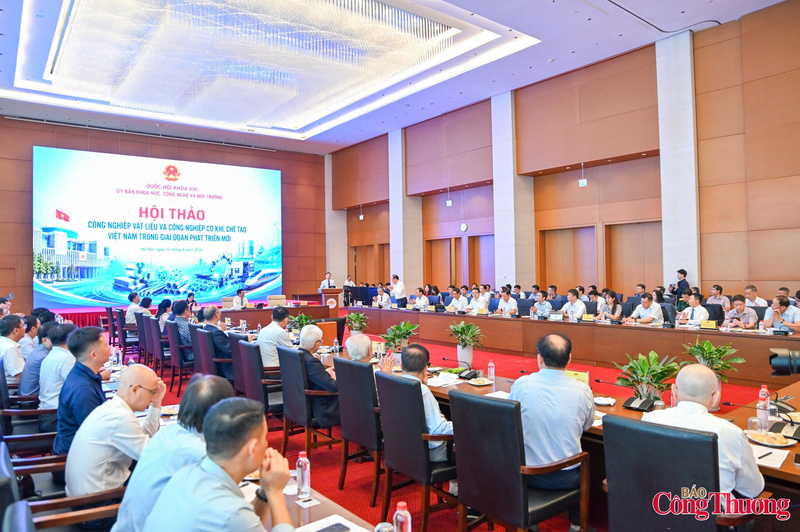

Advancing the equipment manufacturing industry, promoting the renewable energy sector
28/3/2026
Driving Force for Renewable Energy Development
The National Research Institute of Mechanical Engineering (Ministry of Industry and Trade) has conducted the project: "Research to propose tasks and solutions for developing the equipment manufacturing industry serving the renewable energy industry for coastal and island areas of Vietnam for the period up to 2030, with a vision to 2045", led by Dr. Vu Van Khoa as project director.
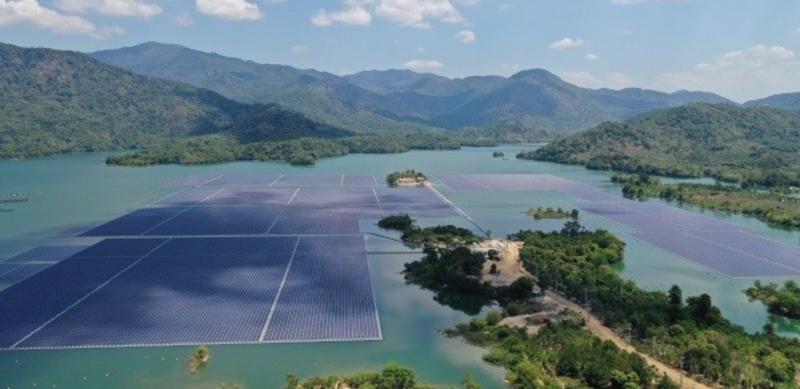
The National Research Institute of Mechanical Engineering has affirmed its capability in the field of providing floating solar equipment. Photo: Q.N
According to the National Research Institute of Mechanical Engineering, the demand for energy, especially electricity, in the world as well as in Vietnam is always very large. Ensuring electricity supply for all aspects of life is always a key concern in socio-economic development. Particularly, our country currently has a large population, high population density, and economic growth is forecast to remain at a high level continuously until 2030 and further to 2045, hence the energy demand is increasing.
In reality, there are many energy sources for electricity generation (fossil energy, hydropower, wind energy, solar energy, etc.). However, in the context of increasingly depleted fossil fuel sources, producing electricity from other alternative energy sources that are safe for the environment, human health, stable, and sustainable in the long term has been and is being invested in research and development, which is very necessary. These are renewable energy sources or new energy sources - currently an inevitable development trend worldwide.
Renewable energy sources include energy from wind, water, sun, biomass, geothermal, etc., which are considered inexhaustible sources for producing energy in general and electricity in particular.
Vietnam is a country located in a strong, stable Asian monsoon region with a coastline stretching over 3,200 km, and is assessed to have great potential for developing coastal and island wind power. The coastal and island areas of Vietnam also always have large solar thermal radiation sources, with strong radiation intensity lasting 4-5 hours per day, which are very favorable conditions for developing the solar power industry.
In addition to these natural geographical conditions, Vietnam has a large population, abundant labor resources, and a young labor force structure, making it very favorable for developing the electricity production industry from renewable energy sources.
Similar to other countries worldwide, the Government of Vietnam, along with ministries and sectors, has issued many mechanisms and policies, and formulated development strategies for the renewable energy industry.
Typically, the National Power Development Plan for the period 2021-2030, with a vision to 2050 (Power Plan VIII), clearly states: strongly develop renewable energy sources for electricity production, reaching a proportion of about 30.9-39.2% by 2030, aiming for a renewable energy ratio of 47% provided that commitments under the Political Declaration establishing the Just Energy Transition Partnership (JETP) with Vietnam are fully and substantially implemented by international partners. The orientation towards 2050 sets a renewable energy ratio of 67.5-71.5%.
To effectively develop the renewable energy industry, a development strategy for the mechanical engineering manufacturing sector in general and the equipment manufacturing industry specifically for the renewable energy industry is needed, thereby contributing to increasing the localization rate of equipment.
"For the mechanical engineering manufacturing sector serving the renewable energy industry, up to now, there have been no comprehensive, detailed, and adequate mechanisms, policies, or development strategies, except for the bright spot of existing policy mechanisms in developing the hydraulic mechanical equipment manufacturing industry serving hydro power plants" - the National Research Institute of Mechanical Engineering stated.
Therefore, researching and proposing mechanisms, policies, building key tasks and solutions for developing the mechanical engineering industry, especially the equipment manufacturing industry serving the renewable energy industry, is very necessary and has practical significance, contributing as an important scientific theoretical basis for formulating mechanisms, policies, and implementation solutions to develop the domestic mechanical engineering manufacturing industry.
Great Potential for the Mechanical Engineering Manufacturing Industry
Through practical research on the project content, it is evident that our country has many advantages in terms of natural and human potential, as well as policy mechanisms for developing renewable energy, but also faces numerous difficulties arising from the level of science and technology, human resources, and policies that are no longer appropriate.
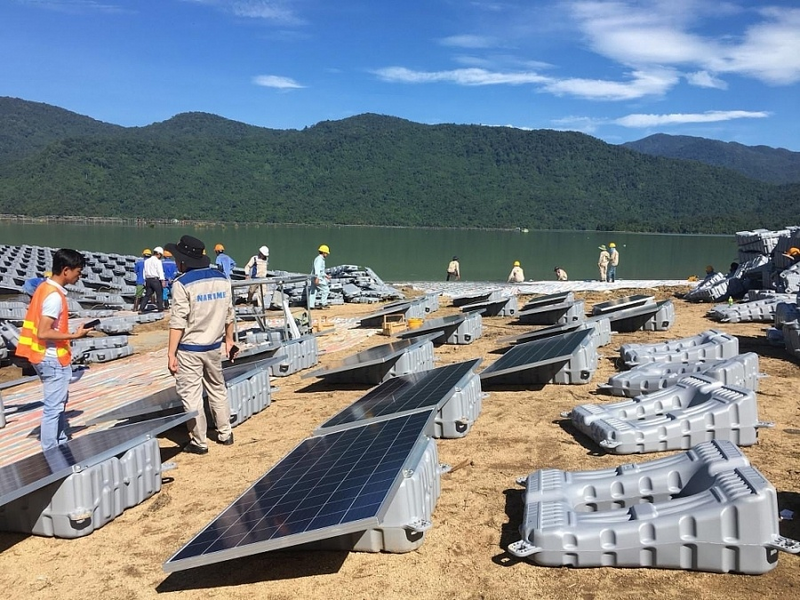
Design and manufacturing of floating buoy and mooring systems for solar power projects. Photo: Q.N
To develop the renewable energy industry well, it is necessary to concurrently develop the mechanical engineering industry in general and the equipment manufacturing industry serving the renewable energy industry in particular. The demand for renewable energy in the immediate and future periods is very large, thereby indicating a wide development potential for the domestic equipment manufacturing industry.
The National Research Institute of Mechanical Engineering believes that the current localization rate of equipment in the two fields of wind power and solar power is not high; we still have to import 100% of critical equipment (turbines-generators, blades, photovoltaic cells, etc.).
To effectively develop the equipment manufacturing industry serving the renewable energy industry for coastal and island areas of Vietnam for the period up to 2030, with a vision to 2045, the project has made several proposals.
First, propose development orientation: Promote the development of supporting industries, processing and manufacturing industries to well serve the renewable energy industry; enterprises need to invest in research, application of new and advanced technologies in production; train high-quality human resources, strengthen international cooperation for development and technology transfer in the field of renewable energy; prioritize offshore wind power development; orient pioneering enterprises to lead the process of equipment localization.
Second, propose mechanisms and policies: The project has proposed mechanisms, policies, as well as implementation solutions to well develop the equipment manufacturing industry serving the renewable energy sector.
Third, propose the development and implementation of a comprehensive, overall strategy for the equipment manufacturing industry. To implement the content of the comprehensive, overall strategy, it is necessary to formulate key, priority tasks.
Fourth, the project has formulated key, priority tasks to concretely implement the steps in the overall strategy. Thereby, a set of documents and draft legal texts for implementation (draft project, decision) have also been prepared.
The proposals on policy mechanisms and implementation solutions are built based on existing mechanisms and policies in Vietnam, supplemented and amended to meet the urgent requirements for developing new renewable energy sources and align with international standards.
Also through the implementation of the project, the National Research Institute of Mechanical Engineering recommends that management agencies promptly consider the proposals and soon issue legal documents so that enterprises can invest early in the equipment manufacturing field serving the renewable energy sector.
For scientists, it is necessary to build a training system specializing in the field of renewable energy and equipment manufacturing, in order to create a high-quality workforce that meets development needs.
For enterprises, they need to boldly invest in technology and equipment to participate in renewable energy projects and equipment manufacturing; simultaneously, invest in training by sending specialized personnel to study in countries with advanced science, and establish investment and development funds for scientific research activities.
The specific objective of the project is to assess the current situation, potential, and propose tasks, policy mechanisms, and solutions for developing the equipment manufacturing industry serving the renewable energy industry for coastal and island areas of Vietnam for the period up to 2030, with a vision to 2045.
Source: Cong Thuong Newspaper
Related News
- Discuss solutions to promote foundational industries in the new period
- Research results on the application of robots in a detergent powder manufacturing plant
- Specific mechanisms and policies are needed to develop mechanical engineering products with large market capacity in the period 2026-2045.
- Mastering Heat Exchange Equipment: A New Step Forward for Vietnam's Mechanical Engineering Industry


