

Home
News - Events News and Activities NARIME masters the technology of designing and manufacturing automotive body-in-white welding lines.
Featured News
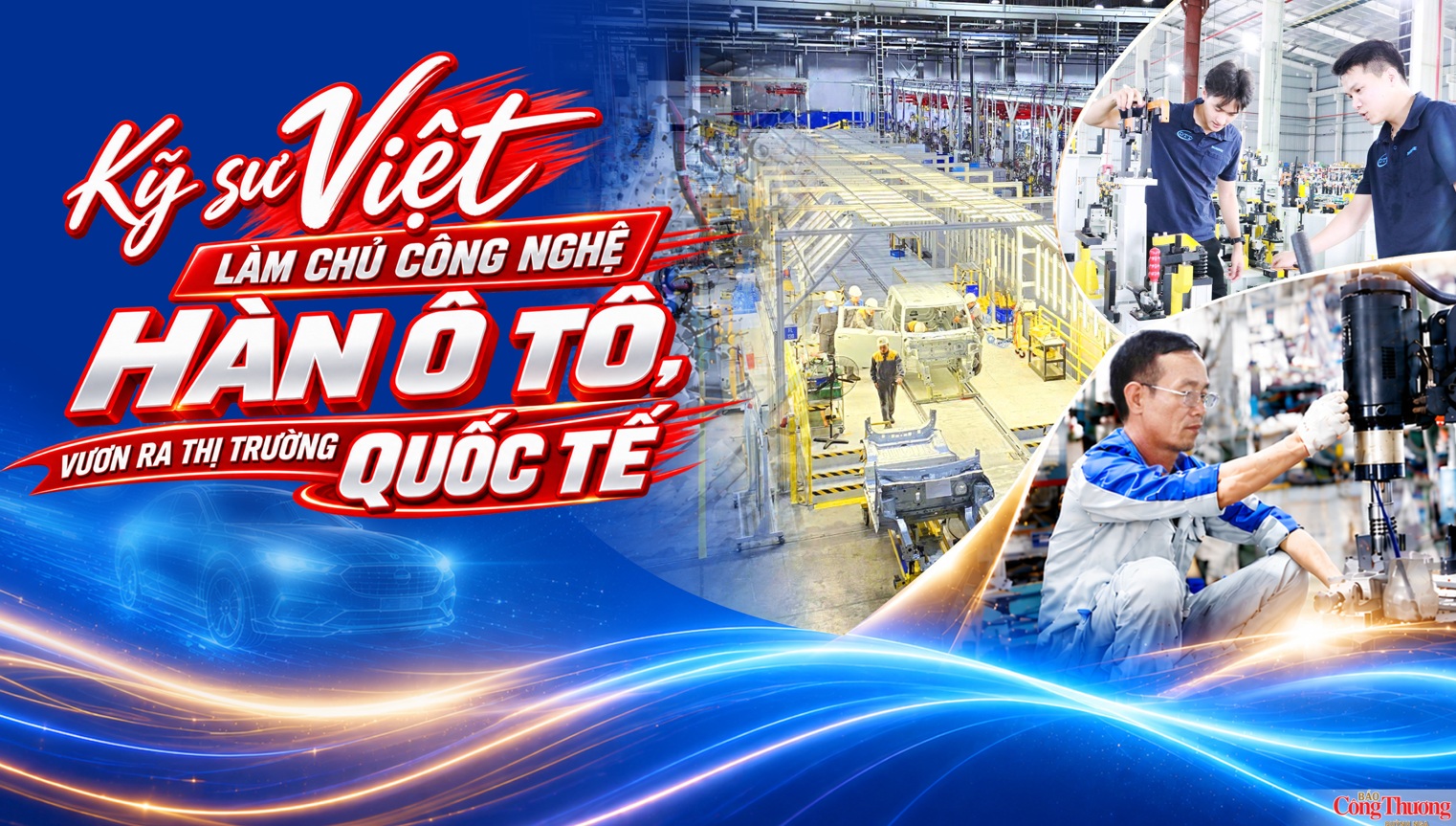

NARIME masters the technology of designing and manufacturing automotive body-in-white welding lines.
The Heavy Mechanical Engineering Center, National Research Institute of Mechanical Engineering (NARIME), has affirmed its capability to master the technology of designing, manufacturing, and integrating automotive body welding lines.
Mastering Core Technology Capabilities
Speaking with a reporter from the Industry and Trade Newspaper, Mr. Nguyen Van Minh, Director of the Heavy Mechanical Engineering Center, National Research Institute of Mechanical Engineering (Ministry of Industry and Trade), stated that in the development process of Vietnam's automotive industry, mastering core technology lines—especially body welding lines, painting lines, and assembly lines—has become a vital requirement, determining the industry's self-reliance, competitiveness, and depth of localization.
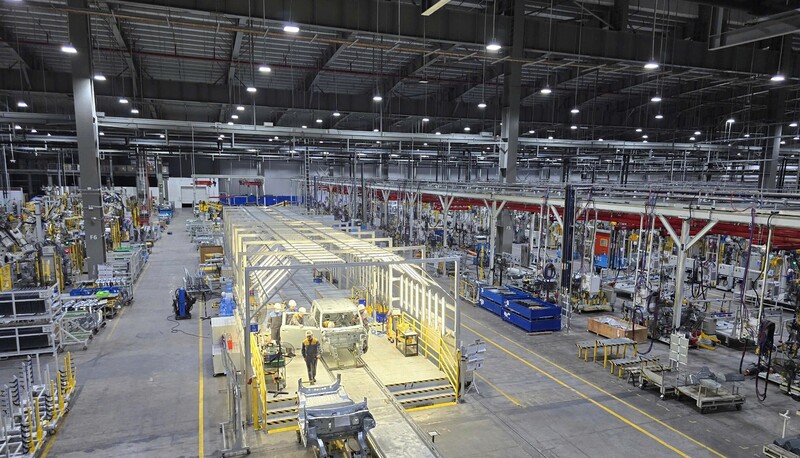
NARIME has supplied equipment lines, welding jigs, and inspection jigs for many electric vehicle models
The practical implementation of major projects in recent years shows that if we cannot master these technology stages, we will always be in a passive, dependent position and bear very high investment costs. "Starting from that awareness, the Heavy Mechanical Engineering Center - NARIME has persistently pursued the path of mastering the design, manufacturing, and integration of automotive body welding lines, gradually taking on the role of EPC general contractor for domestic projects" - Mr. Nguyen Van Minh said.
According to Mr. Nguyen Van Minh, the Heavy Mechanical Engineering Center has achieved many accomplishments in recent times, especially in the field of designing, manufacturing, and integrating automotive body welding lines. On that basis, it has drawn practical experience during the implementation of EPC contracts for welding lines and is gradually approaching EPC for painting lines...
The Center particularly focuses on building and mastering core technology capabilities. As early as 2012, the Center began its roadmap to master body welding line technology, starting with the design and manufacture of welding jigs (JIG). The initial team consisted of only about 12 engineers, trained directly by Japanese and Korean experts. To date, the engineering team has grown to over 70 people, capable of designing precision welding jigs according to the standards of many major car manufacturers, integrating industrial robots, welding guns, control and automation systems, as well as building complete automatic body welding lines.
This capability is clearly demonstrated through the practical projects the Center has implemented. The first project the Center undertook for VinFast was the 10.5-meter electric bus body frame welding line in 2019. Building on this success, the Center continued to undertake the design, manufacture, and supply of welding lines for many electric vehicle models such as VF e34, VF8, VF9, VF5, VF6, VF7, VF3, LIMO7; electric bus lines of 6 meters, 8.6 meters, 10.5 meters, and 12 meters; along with new projects like Minivan and VF7.1.
Contributing to Building the Automotive Industry
Sharing two typical, landmark projects of the Heavy Mechanical Engineering Center in 2025, Mr. Nguyen Van Minh mentioned the first project as the VF3 welding line in Ha Tinh. This is the first synchronous welding line fully executed by a Vietnamese contractor, from design, manufacturing, installation to operation. Notably, the time from contract signing to welding the first product was only 5 months—a record in terms of progress, clearly demonstrating the capability to master technology and organize project implementation.
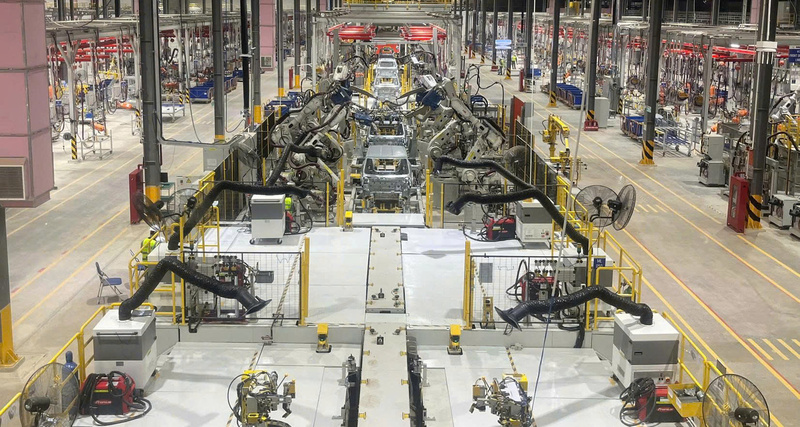
Increasing localization rate, contributing to building Vietnam's automotive industry
The second project is the welding line for the LIMO7 vehicle model—a project with a very high level of automation, integrated on the foundation of a line previously implemented by the foreign contractor FFT but without technical documentation handover. Under those conditions, the Center's engineering team proactively surveyed, researched, disassembled the system, and successfully integrated the entire line, bringing it into stable operation.
From the practical implementation of the above projects, the Heavy Mechanical Engineering Center has drawn several important lessons in executing EPC contracts for welding lines as well as painting lines. Accordingly, to master EPC for welding lines, it is mandatory to master jigs, welding technology, robots, and automation—fields of high complexity.
"In the initial stage, cooperation with experienced partners is necessary; however, in parallel, capable engineers must be assigned to directly participate in the project to learn, accumulate experience, and gradually master the technology" - Mr. Minh said.
Mastering jig design, robots, and automation helps the Center reduce product costs, be proactive when body data changes, shorten on-site calibration time, and ensure geometric stability in mass production. Welding stations, jigs, structures, and conveyors are designed with a modular mindset, allowing easy expansion for other vehicle models, reducing changeover costs, and suiting the specific nature of EPC in the automotive industry.
Building on the success of welding lines, this serves as a foundation for the Heavy Mechanical Engineering Center to gradually participate in EPC packages for painting lines, focusing on training human resources to master technology and system integration capabilities, seeking and cooperating with suitable partners, coordinating investment in infrastructure and equipment... This is a necessary step for the Center to gradually perfect its overall EPC capability for automotive plants.
"The Heavy Mechanical Engineering Center has mastered the technology of designing, manufacturing, and integrating automotive body welding lines; it has sufficient practical capability to implement EPC contracts for welding lines and is gradually approaching EPC for painting lines" - the Director of the Heavy Mechanical Engineering Center affirmed.
More importantly, these results show that domestic research and manufacturing units can fully undertake the role of EPC general contractor for projects with high scientific and technological content, if assigned the task and provided with suitable conditions. This is an important basis for increasing the localization rate, reducing dependence on foreign contractors, and contributing to building a self-reliant and sustainable automotive industry in Vietnam.
From a traditional mechanical research unit, NARIME has risen to become an important technology partner in the electric vehicle supply chain. The successful cooperation with VinFast is not only a milestone for the National Research Institute of Mechanical Engineering but also demonstrates the maturity of the domestic supporting industry.
Source: Industry and Trade Newspaper
Related News
- Discuss solutions to promote foundational industries in the new period
- Research results on the application of robots in a detergent powder manufacturing plant
- Specific mechanisms and policies are needed to develop mechanical engineering products with large market capacity in the period 2026-2045.
- Mastering Heat Exchange Equipment: A New Step Forward for Vietnam's Mechanical Engineering Industry


