

Home
News - Events Science & Technology News Mechanical Manufacturing Industry: Enhancing Capacity, Embracing Integration
Featured News

Mechanical Manufacturing Industry: Enhancing Capacity, Embracing Integration
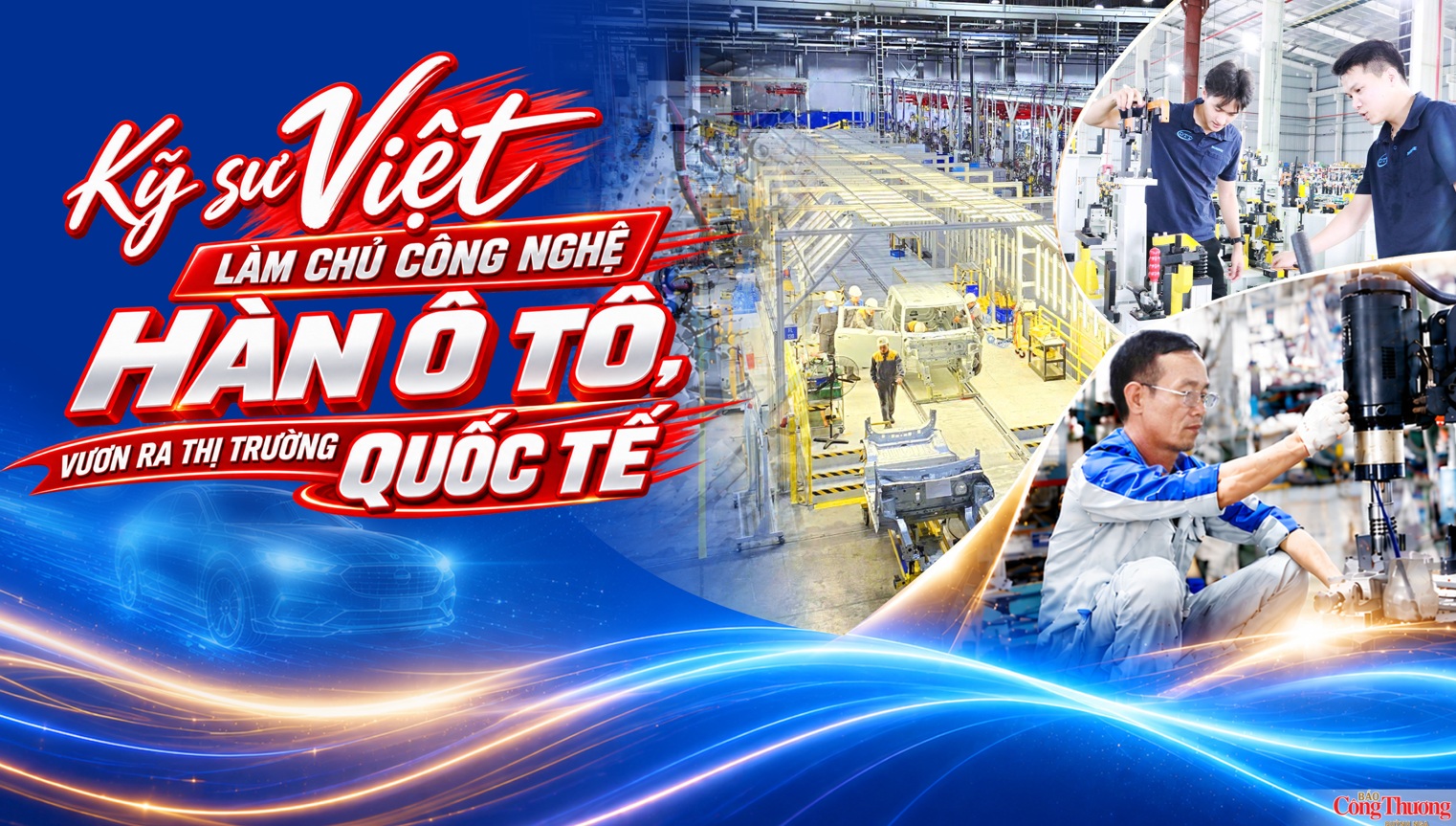
According to the assessment of the Ministry of Science and Technology, a number of domestic mechanical engineering manufacturing units are now capable of acting as general contractors for major projects worth billions of USD, and some products have achieved quality standards equivalent to imported products, meeting conditions for export and competing with foreign products.
Proactive Localization
Through science and technology results, several research institutes, corporations, general companies, and mechanical engineering manufacturing enterprises have affirmed their brand and position not only in the domestic market but also globally.

National Research Institute of Mechanical Engineering leads in research and manufacturing of equipment for thermal power plants
As evidence for this, the Ministry of Science and Technology cited the example of the results of the project to build a new 120 m self-elevating jack-up rig (Tam Dao 05), together with basically mastering the design and fabrication of steel structures, Petroleum Drilling Rig Joint Stock Company (PVShipyard) has localized the drilling tower assembly, rig legs, and electrical panel system.
This is a premise towards semi-submersible rig products and various types of self-elevating mobile drilling rigs/vessels bearing the Vietnamese brand, as well as development models and application of design and manufacturing technology for mobile oil and gas drilling rigs serving marine economic development and national defense in the next period.
Alternatively, the National Research Institute of Mechanical Engineering (Ministry of Industry and Trade) has cooperated and linked with developed countries such as Japan and the Russian Federation to design, manufacture, test, install, and operate electrostatic precipitator (ESP) systems. This ESP system has quality equivalent to European standards, capable of bidding for equipment supply for thermal power plant projects in Vietnam and exporting to the Myanmar Metallurgical Plant Project.
The successful research and manufacturing of electrostatic precipitators has increased the localization rate from 76% to 94% by weight and from 65.18% to 79.6% by value (including installation value), or from 50% to 64% by value (excluding installation value).
In the field of mechanical engineering manufacturing serving the transportation sector, a value chain has been formed for producing components, supporting parts, and assembling high-quality buses with up to 80 seats, achieving a localization rate of up to 40%, and expanding the manufacturing of utility trucks, heavy trucks, and specialized vehicles meeting the requirements for producing vehicles with quality equivalent to that of ASEAN countries.
Specifically, through the support of the national-level science and technology project "Research on Design and Manufacturing of High-Class Sleeper Buses Bearing the Vietnamese Brand," Truong Hai Auto Corporation (Thaco) has initially mastered the calculation, design, and complete simulation of bus structure, thereby shortening the vehicle design time compared to before.
Another example is Hai Duong Pump Manufacturing Joint Stock Company, which has manufactured specialized pumps for the oil and gas, thermal power, chemical industries, and high-capacity pumps for mine drainage and flood prevention; mastered the manufacturing technology for pumps with a flow rate of up to 50,000 m³/h and pumps with a maximum head of up to 500 m; meeting most of the economy's pump demands, achieving a localization rate of 95–100%.
Sharing with a Vietnam Economic reporter, Dr. Phan Dang Phong – Director of the National Research Institute of Mechanical Engineering (NARIME) – affirmed: To date, the Institute has become a trusted partner of many multinational corporations such as Honda, Toyota, Doosan… as well as domestic corporations such as EVN, TKV, VinGroup… Some of the Institute's products and solutions have directly competed and won bids against major foreign companies, whereas previously the Institute participated as a subcontractor.
Mr. Dao Phan Long, Vice President and General Secretary of the Vietnam Association of Mechanical Engineering Enterprises, stated: Vietnam has developed a number of mechanical engineering products, including: The steel structure fabrication and machinery installation sub-sector is capable of effectively participating in the construction of industrial and agricultural works; the shipbuilding sub-sector can build ocean-going vessels meeting international standards; the automobile, motorcycle, and bicycle manufacturing and assembly sub-sector has partially met domestic demand; the power machinery and agricultural machinery manufacturing sub-sector has produced some small-capacity internal combustion engines for agricultural tillage machinery…
In recent years, with efforts to change production methods and governance structures, research units and mechanical engineering enterprises have gradually increased the localization rate, producing many complex, high-value, and high-tech mechanical products. Some products have achieved standards and quality equivalent to foreign products. Accordingly, some Vietnamese mechanical engineering enterprises have joined several global mechanical supply chains…
Impetus for the Mechanical Engineering Sector before Integration
The above evidence shows that the domestic mechanical engineering sector has achieved significant results, contributing to the country's industrialization and modernization. However, many experts believe that in the current context of deep integration, domestic mechanical engineering enterprises will have to compete fiercely with multinational corporations possessing strong potential in mechanical products. Accordingly, to promote the development of the mechanical engineering manufacturing sector, it is necessary to create a development market for key mechanical engineering fields; provide tax incentives for enterprises using domestically manufactured machinery; increase import taxes on foreign machinery…

To promote the development of the domestic mechanical engineering sector, the supporting "hand" of the State is needed
According to Mr. Do Phuoc Tong, Chairman of the Ho Chi Minh City Association of Mechanical and Electrical Enterprises (HAMEE): The Government needs to regard mechanical engineering as a foundational industry with a particularly important role in socio-economic development. It is necessary to build a mechanical engineering sector capable of competing and rising within the market mechanism and international economic integration, as well as to issue more appropriate policies to encourage and focus on product groups with advantages and in line with the global international integration roadmap.
Assessing that the mechanical engineering industry greatly needs the "hand" of the State to develop, Mr. Do Phuoc Tong opined: The Government and enterprises must form a unified bloc from an overall perspective to discuss necessary measures or activities that need to be properly deployed and implemented. In my opinion, many strong and synchronous solutions are needed, including: Developing raw material sources for production. In this regard, the Government needs to have appropriate tax policies for importing raw materials and supplies for mechanical engineering production; call for FDI investment to participate in the production of raw materials for the mechanical engineering sector.
In addition, support enterprises in accessing loans to invest in machinery, equipment, and production workshops (medium and long-term loans); it is necessary to plan, create conditions, and provide preferential regimes for enterprises in the supporting industry and mechanical engineering manufacturing to enter industrial parks and industrial clusters at reasonable costs so that mechanical engineering enterprises can develop; establish mechanisms to promote technology and technical transfer from FDI enterprises to Vietnamese enterprises; support enterprises to participate in national trade promotion programs…
At the same time, the State needs to create favorable conditions and provide support for domestic and foreign organizations and individuals to participate in the development of mechanical engineering human resources; provide financial support for training to improve the technical skills of engineers and technicians in enterprises producing supporting industrial products. Furthermore, it is necessary to enhance the role of trade associations to become focal points connecting the parties: Connecting and linking enterprises in the same industry; connecting schools, institutes, and enterprises for training; serving as a bridge between enterprises and government agencies…
Also according to Mr. Do Phuoc Tong: Participating in the global supply chain is a major goal that almost all enterprises must aim for if they want to integrate and develop. Therefore, enterprises and research units in the mechanical engineering field need to fully understand the demands of the global market, clearly understand customer needs such as: Quantity required, product specifications, added service value, expected improvements… From there, units will recognize their position as well as limitations that need to be overcome in order to meet the requirements of the global supply chain.
Source: http://kinhtevn.com.vn/nganh-co-khi-che-tao-nang-cao-nang-luc-don-song-hoi-nhap-45308.htmll%C3%AAn
Related News
- Discuss solutions to promote foundational industries in the new period
- Research results on the application of robots in a detergent powder manufacturing plant
- Specific mechanisms and policies are needed to develop mechanical engineering products with large market capacity in the period 2026-2045.
- Mastering Heat Exchange Equipment: A New Step Forward for Vietnam's Mechanical Engineering Industry


