

Home
News - Events News and Activities National Research Institute of Mechanical Engineering: 60 years of establishment and growth
Featured News

National Research Institute of Mechanical Engineering: 60 years of establishment and growth
The National Research Institute of Mechanical Engineering (NARIME), formerly the Mechanical Design and Manufacturing Institute, was established on July 6, 1962. Over 60 years of construction and development, NARIME has overcome countless difficulties and challenges, continuously striving for innovation and improving the quality of scientific research and technology development. Throughout this journey, the Institute has always affirmed its pioneering role in implementing the Party and State's policy of mechanization, industrialization, and modernization, accumulating extensive knowledge and experience to become the leading unit in scientific research and technological development in the field of Mechanical Engineering and Automation. It has made significant contributions to laying the foundation and creating breakthroughs for the development of the nation's mechanical engineering industry.
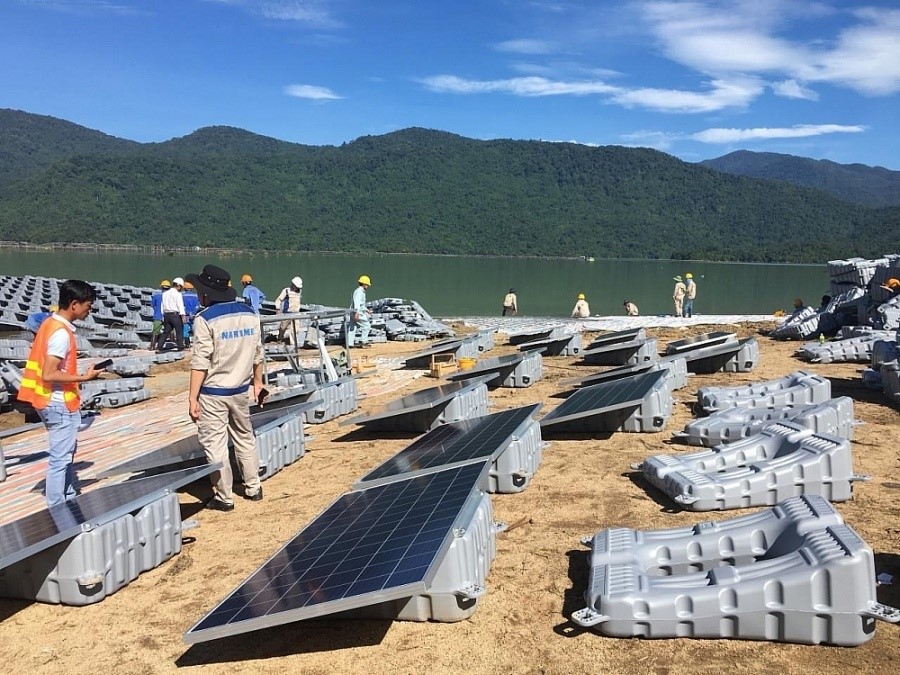
NARIME successfully implemented the turnkey Floating Pontoon and Mooring System for the Da Mi Solar Power Project.
1. Innovation for Development
In the early days after its establishment, NARIME continuously innovated and rose up, making its modest contribution to the overall development of the mechanical engineering industry. At that time, our country's mechanical engineering industry was still backward, with outdated machinery and equipment and low product quality. The Institute set the goal of introducing advanced, suitable basic technologies to replace outdated technologies in production, improving productivity, quality, and reducing product costs, creating many competitive mechanical products in the domestic market.
Over time, research topics were closely linked to production, stemming from production requirements, thereby initially serving the economic sectors effectively. Through each topic, each research project, design, and product manufacturing, the Institute's scientific staff gained more knowledge and professional experience. As a result, many skilled engineers and experts emerged in fields such as cement equipment, paper production, fiber and textiles, tea processing, sugarcane and beer production, automatic welding technology, metal forming, restoration of large parts, etc.
During the early socialist period, when institutes operated under orders from the Government, Ministries, and Sectors to research and master necessary scientific and technological issues, the National Research Institute of Mechanical Engineering successfully designed and manufactured sugar cane processing plants, designed, manufactured, and tested various tractors, tea processing machines, diesel engines, gasoline engines for agricultural machinery, and marine engines for ships.
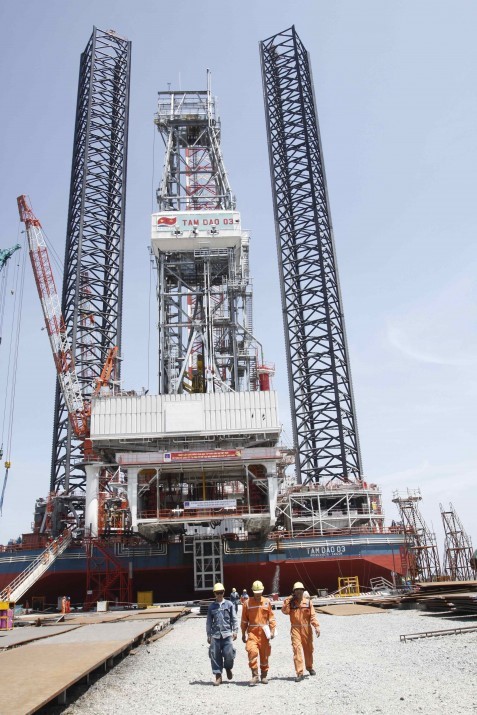
Tam Dao 03 drilling rig designed and manufactured by NARIME and PVSHIPYARD.
Under the market mechanism, the Institute operates as a public science and technology organization, partially self-financing its recurrent and investment expenditures. The Institute has performed well in advising the governing Ministry on development orientations for several mechanical engineering fields, formulating strategies and plans for the development of the mechanical engineering industry. In addition, the Institute has focused on researching cutting-edge technologies such as pressure processing, welding technology, manufacturing synchronous equipment and replacement spare parts for imported goods in industries like construction materials, textiles, paper, transportation, chemical fertilizers, etc.
Continuing this success, since 2002, the Institute has carried out traditional tasks, implemented science and technology programs, localized industrial plant systems and equipment, and focused on research to master consulting, design, manufacturing, and equipment installation for fields such as hydropower, thermal power, bauxite, new energy, automation, and the automotive and motorcycle industries. Particularly, with the strong wave of the Fourth Industrial Revolution (Industry 4.0) globally and the deep integration of our economy, the Institute has strengthened activities to build capacity in consulting, designing, and manufacturing complex technological equipment for synchronous equipment lines in prioritized sectors, building its own capacity and enabling many units to take on the role of general contractor for synchronous equipment manufacturing projects. This has opened a new direction for the Institute's activities and positively impacted the development of the mechanical engineering industry. The Institute has proactively and actively undertaken projects of great political and economic significance, such as hydropower, thermal power, oil and gas drilling rigs, mineral extraction, new energy, supporting industries for the automotive sector, and automated warehouse systems. Thereby, it has contributed to proactive investment processes and significantly reduced investment costs, bringing direct and indirect benefits to the country.
2. Leading in Technology
Starting as a design unit, initially only providing designs for manufacturing some production tools, sampling some machine tools, electric motors, water pumps for agriculture, then advancing to sampling for manufacturing some equipment and mechanical equipment lines for the textile industry, sugar mills, and vertical kiln cement plants, the Institute has now developed remarkably and is recognized as a leading scientific research organization, fully capable of undertaking consulting, design, and general contracting for major projects in the country's key economic programs. NARIME has contributed to Vietnam's mechanical engineering industry achieving commendable results in the program to localize equipment for industrial sectors. The Institute has led in technology and fully mastered the design of hydro-mechanical equipment, supplying dozens of hydropower projects, including the two largest in Vietnam: Lai Chau Hydropower Plant (1,200 MW capacity) and Son La Hydropower Plant (2,400 MW capacity). The success of these projects has created more jobs for the domestic mechanical engineering industry and brought high economic efficiency to the projects.
The Institute has also gradually mastered the technology for designing and manufacturing electrostatic precipitators, ash and slag discharge equipment, coal handling and transport equipment, and desulfurization equipment for thermal power plants, cement plants, and steel mills with any emission flow rate. This includes projects such as Vung Ang 1 Thermal Power Plant, Thai Binh 1 Thermal Power Plant, and Song Hau 1 and Nghi Son 2 Thermal Power Plants. Notably, the project to research, design, manufacture, integrate, and successfully operate the coal handling and transport system for Song Hau 1 Thermal Power Plant, with a localization rate of 50.6% equivalent to technology equipment from G7 countries, was the first of its kind in Vietnam, opening a new development direction for the domestic manufacturing industry. The success of these projects marked the beginning of designing and manufacturing a series of other equipment for thermal power projects currently under investment or planned. Currently, the Institute has been trusted by Doosan Group (South Korea) with a contract to supply the ash and slag discharge system for Vung Ang 2 Thermal Power Plant and is expected to continue with a contract to supply the coal supply system for Quang Trach 1 Thermal Power Plant in 2022.
In the bauxite industry, the Institute has mastered the technology for design, manufacturing, and technical services for two bauxite projects, Tan Rai and Nhan Co, with a synchronized belt conveyor system spanning 4.9 km and a capacity of 720 tons/hour. It has also successfully participated as the EPCM general contractor for these two projects, affirming its ability to assume the role of general contractor in expanding or newly investing in similar projects.
Currently, the Institute is also a reputable unit in Vietnam in the field of system integration, calculation, design, programming of control systems, supply, training, and commissioning of numerous automation systems for sections or entire plants in paper, cement, hydropower, and thermal power industries. The Institute's strengths are also demonstrated in other research areas such as diagnostics and active monitoring of rotating parts in industrial plants; design and manufacturing of assembly lines, molds, and jigs for the automotive and motorcycle industries; design and manufacturing of floating pontoon and mooring systems for floating solar power projects; mastering waste treatment and waste-to-energy technology, etc.
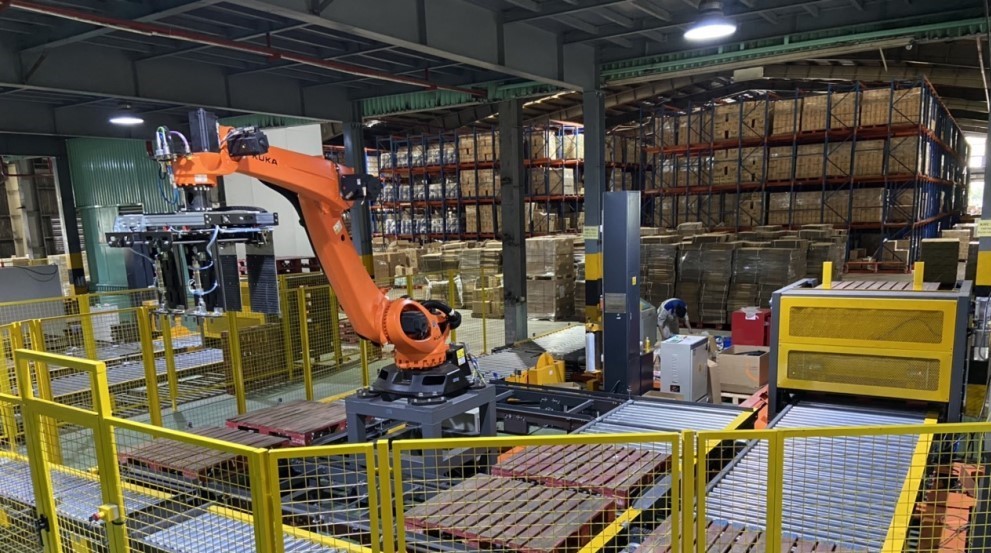
Robotic palletizing system supplied by NARIME.
Following the principle of closely linking research activities with socio-economic programs, on average each year the Institute undertakes about 7 to 12 scientific and technological topics/tasks at various levels, along with hundreds of domestic and international scientific publications. The topics carried out by the Institute have met the goals of localization, saving foreign currency, avoiding dependence on foreign suppliers, and ensuring proactive production planning. Many topics, after implementation and application in projects, factories, and production facilities, have yielded significant results and received high acclaim.
To get closer to Industry 4.0, the Institute has established a research group for products related to robotics and high technology, aiming to master technology in automatic and flexible production systems and intelligent storage systems for industry. The Institute has produced an automatic storage system for the LIX factory with a capacity of 400 tons/hour.
3. Strong Potential
Over 60 years of construction and growth, the National Research Institute of Mechanical Engineering has achieved numerous scientific research accomplishments, with research results applied in production practice, yielding high economic efficiency. The Institute's activities have directly impacted the development strategy of Vietnam's mechanical engineering industry, promptly meeting the requirements and tasks of the country's key economic programs. In recognition of these great contributions, the Institute has been awarded many prestigious titles by the Party, State, Government, and governing Ministry, such as the Second and Third Class Independence Orders; First, Second, and Third Class Labor Orders; and numerous Certificates of Merit.
Additionally, the Institute has excelled in proposing the formulation of strategies, policies, development plans, environmental regulations, and the compilation and development of national standards and technical regulations. These efforts have been highly appreciated by the Ministry of Industry and Trade and experts inside and outside the Ministry, serving as a scientific, theoretical, and practical basis for guiding the management activities of the Industry and Trade sector, such as "Survey and assessment of the implementation status of the Government's key mechanical product program; proposing suitable development solutions during Vietnam's WTO integration" and "Research on the content and capacity standards of units meeting the requirements of EPCM general contractor for industrial projects."
As a unit operating across diverse technological fields, the Institute possesses extensive experience and cutting-edge, outstanding technologies applied in production and in key industries of the national economy, earning customer trust. With this advantage, the Institute has become a training ground for the country's human resources; many scientific research institutions and mechanical factories have been established from the Institute's units. Currently, the Institute has 15 specialized subsidiary units for research, design, and consulting in various disciplines, with over 400 scientific and technical staff. NARIME's staff not only thoroughly understand the manufacturing capabilities of domestic mechanical enterprises but have also made leaps in research and design capacity, fully capable of acting as EPCM general contractors in many fields; they can exploit and link enterprises in production division and cooperation; and maintain cooperative relationships with many foreign partners for market exploitation and technology transfer.
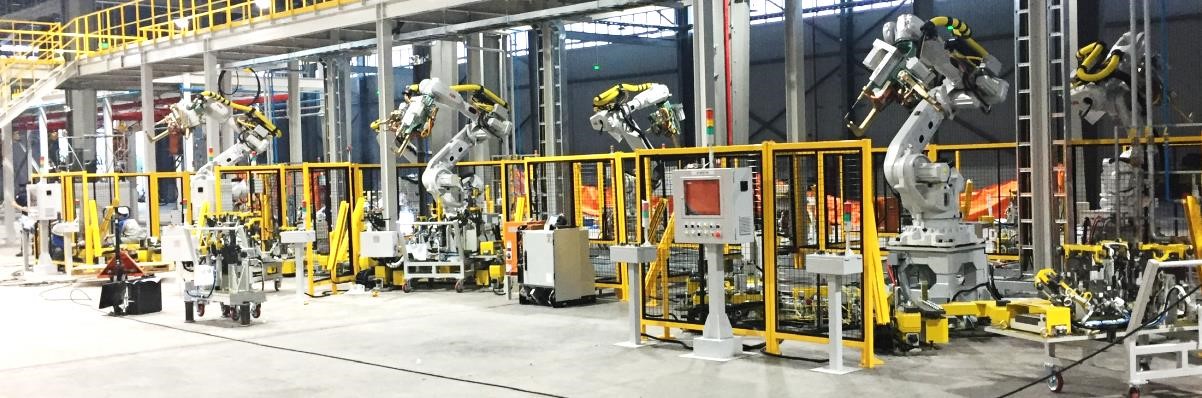
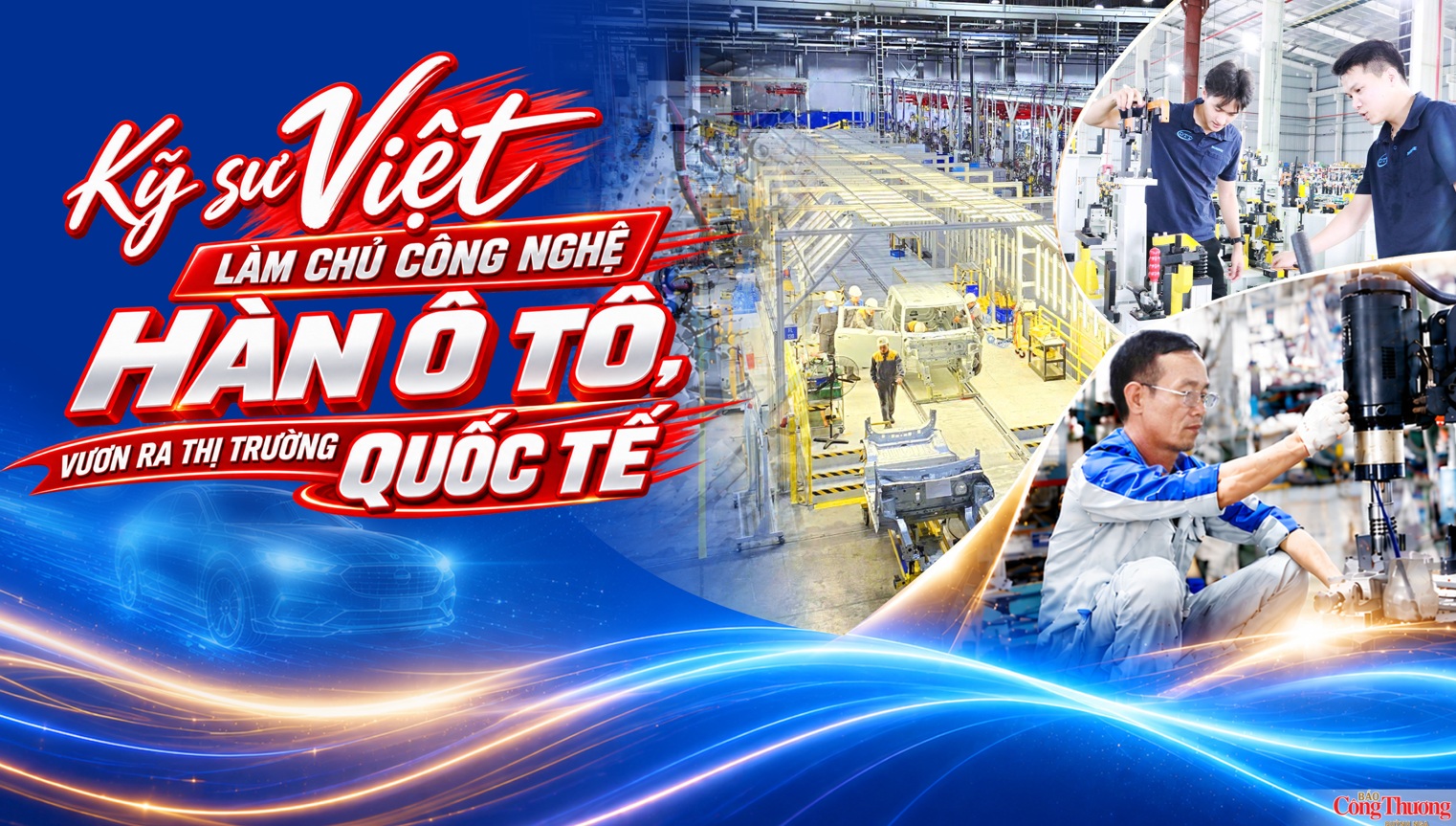
Welding station for Sub parts of 5-seat electric car frame, designed and manufactured by NARIME for VINFAST automobile factory.
To date, the Institute has become a trusted partner of many multinational corporations such as Honda, Toyota, Doosan, as well as domestic corporations like EVN, TKV, VinGroup. Some of the Institute's products and solutions have directly competed with and won bids against major foreign companies, whereas previously the Institute participated as a subcontractor.
4. Ready to Step Forward
To align with the general development trend and catch up with the Industry 4.0 wave, the Institute's development orientation for the next period will be concretized into specific solutions and actions: Developing robotic systems and intelligent warehouse systems applied in industrial storage; fully mastering bauxite-aluminum processing technology (applied to Lam Dong and Nhan Co alumina plants); establishing the floating pontoon and mooring system for solar power plants as a traditional product; synchronously manufacturing electrostatic precipitators, ash and slag discharge systems, coal supply systems, and desulfurization systems for thermal power plants—these are also the Institute's traditional products. Along with maintaining its role in designing and manufacturing traditional equipment for the cement, chemical, hydropower, oil and gas, and mining industries; designing and manufacturing assembly lines, molds, and jigs for the automotive and motorcycle industries; mastering new energy and renewable energy equipment technology, the Institute will continue to maintain and develop research and production cooperation relationships with domestic and foreign economic groups and corporations to develop consulting, design, technology transfer, equipment and spare parts manufacturing activities, aiming to become a reputable EPC and EPCM contractor domestically and regionally.
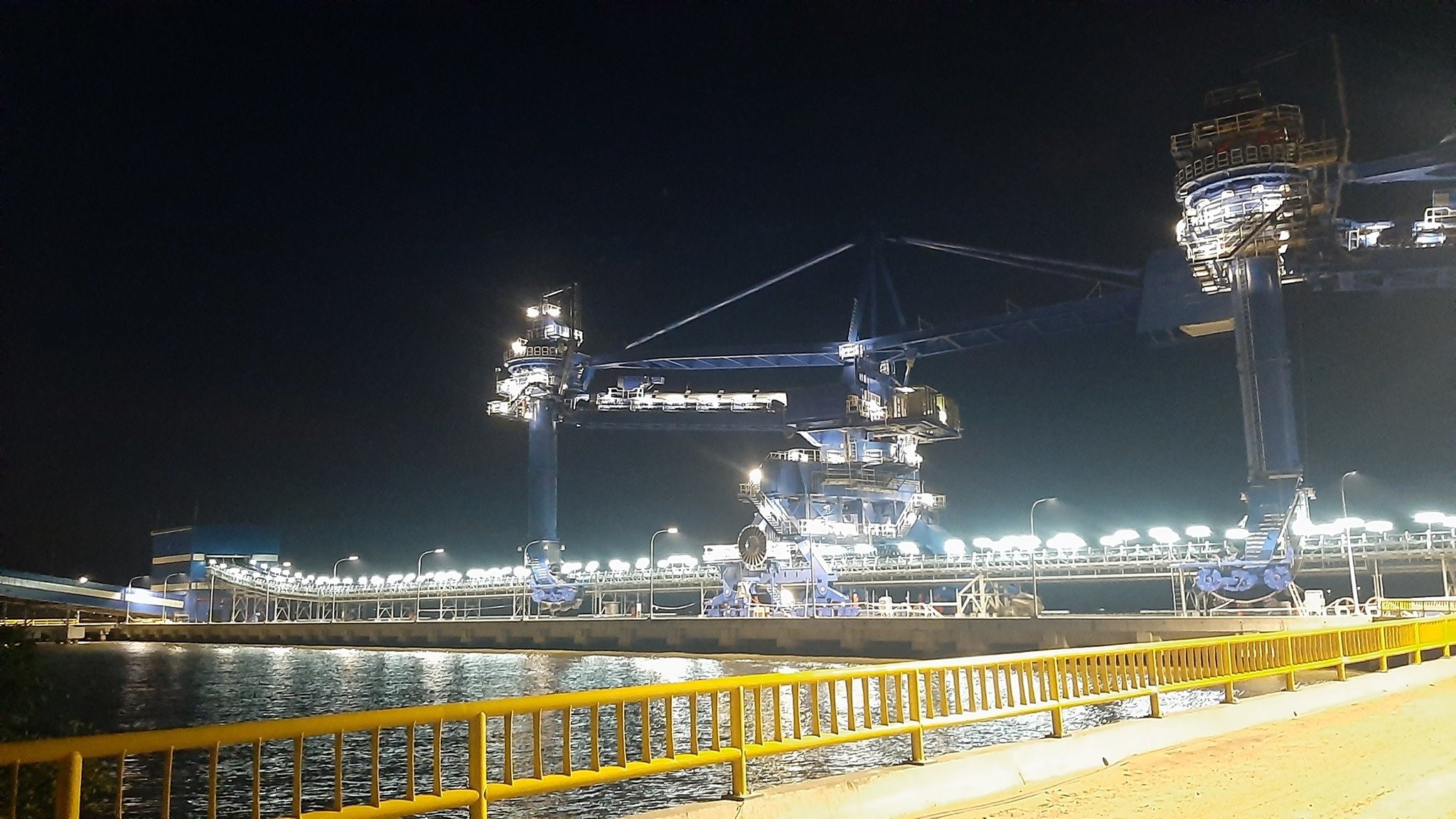
Ship unloader with capacity of 850 t/h - Song Hau 1 Thermal Power Plant supplied by NARIME.
With the experience passed down from previous generations, along with the guidance of the Government, the Ministry of Industry and Trade, the Ministry of Science and Technology, and the continuous efforts of the entire staff, NARIME will always be creative and develop sustainably, contributing more to economic development programs, increasingly serving the cause of national industrialization and modernization, and worthy of being the leading institute in Mechanical Engineering and Automation.
Dr. Phan Dang Phong - Secretary of the Party Committee
Director of the National Research Institute of Mechanical Engineering
Source: Vietnam Mechanical Engineering Magazine
Related News
- Discuss solutions to promote foundational industries in the new period
- Research results on the application of robots in a detergent powder manufacturing plant
- Specific mechanisms and policies are needed to develop mechanical engineering products with large market capacity in the period 2026-2045.
- Mastering Heat Exchange Equipment: A New Step Forward for Vietnam's Mechanical Engineering Industry


