

Home
News - Events Research Institute under the Ministry of Industry and Trade: Successfully Mastering Technology
Featured News

Research Institute under the Ministry of Industry and Trade: Successfully Mastering Technology
Committing to linking research with practice, research institutes under the Ministry of Industry and Trade have actively contributed to improving the technological level of the industry and the country.
Scientific research closely aligned with practice
Ministry of Industry and Trade currently manages 13 institutes, including 2 that have undergone equitization. Each institute has a relatively specialized and independent scope and field of activity within a specific industrial sector, playing important roles and making significant contributions to the development process of domestic industries.
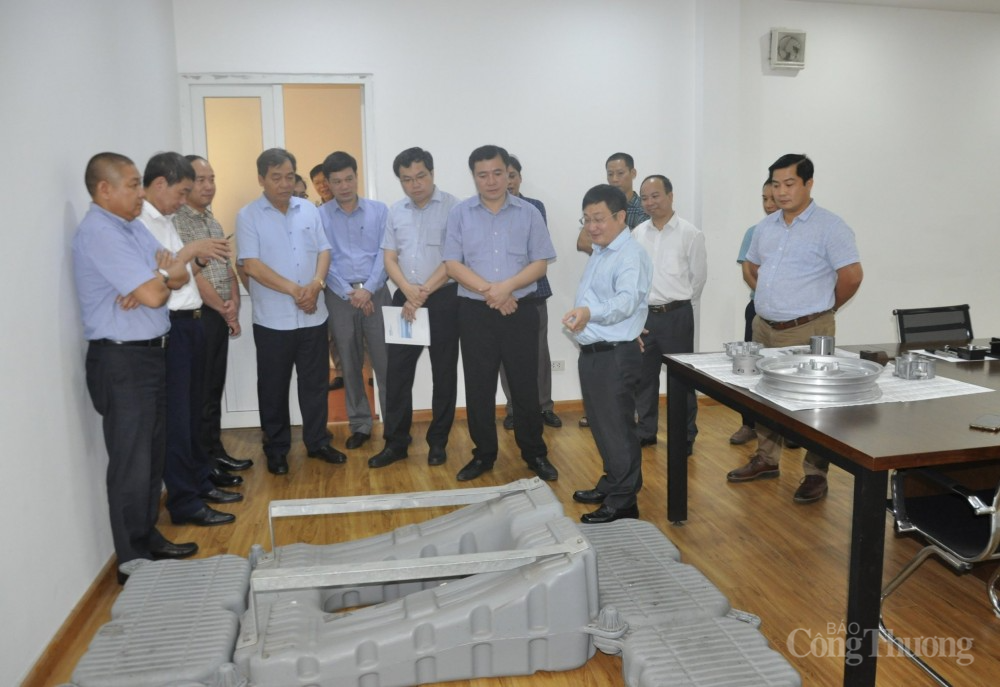
| Deputy Minister of Industry and Trade Nguyen Sinh Nhat Tan visits and works with the National Research Institute of Mechanical Engineering |
In recent times, adhering to the motto of linking scientific and technological research tasks with the country's socio-economic development programs and meeting market demands, the institutes have actively contributed to the process of innovation and improvement of technical and technological levels of enterprises in the industry of Industry and Trade.
In fact, many research projects have been effectively applied to production and business operations at enterprises, especially at corporations and general companies, helping to improve productivity, quality, and competitiveness of enterprises, as well as creating a foundation for the lead organizations to continue developing scientific and technological research resources.
Sharing with a reporter from Cong Thuong Newspaper, Dr. Phan Dang Phong - Director of the National Research Institute of Mechanical Engineering (NARIME) cited that in the field of automation serving the 4.0 industrial revolution, the National Research Institute of Mechanical Engineering has focused on researching and mastering technologies in smart production lines at automobile, motorcycle, and chemical manufacturing plants.
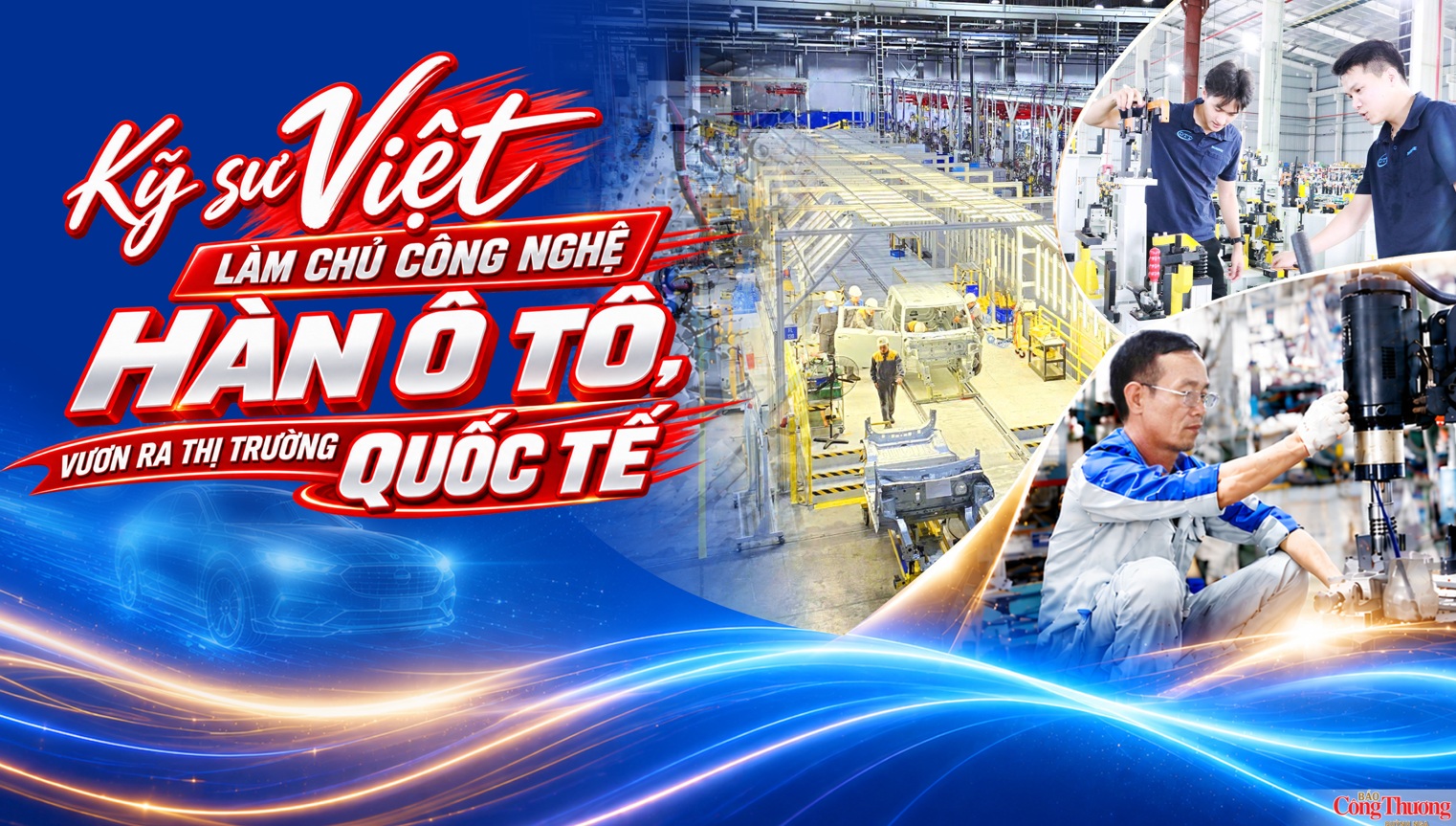
Recently, notable successes include researching and mastering the technology of several large projects such as: an automatic motorcycle rim assembly production line for a Vietnamese automobile and motorcycle parts manufacturing company, a robot welding jig and assembly line for passenger cars - SUVs and a welding jig and assembly line for electric bus bodies for Vinfast, and an automatic production line at LIX Company...
"The Institute has gradually asserted itself in the field of smart manufacturing, contributing to reducing product costs, bringing high economic efficiency to investors, enabling proactive changes in production technology when new requirements arise, and creating stable jobs, generating about 200 billion VND per year for the Institute solely in this field" - Dr. Phan Dang Phong informed.
In the field of thermal power, the success of state-level science and technology tasks undertaken by the National Research Institute of Mechanical Engineering, such as: researching, designing, manufacturing, and putting into operation auxiliary equipment systems for coal-fired power units with a capacity of about 600 MW, has also created several traditional products like coal supply systems, ash and slag disposal systems, and electrostatic precipitators, bringing significant socio-economic benefits.
This has created more jobs for domestic mechanical engineering enterprises, reduced product costs by at least 10% compared to similar imported equipment, and reduced the trade deficit by over 100 million USD for a single 1200 MW coal-fired thermal power plant.
Dr. Dao Duy Anh, Director of the Institute of Mining and Metallurgy Science and Technology, stated that in recent years, the Institute has implemented hundreds of research tasks on technology and equipment innovation; provided consultancy on technology innovation; and consulted on the establishment and development of mineral exploration and processing projects, actively contributing alongside the entire Vietnamese mining industry in gradually transitioning technology and equipment towards modern, advanced, efficient, and environmentally friendly operations.
Specifically, several major mineral exploration and processing projects in Vietnam developed in recent years with the Institute's participation have contributed to technology and equipment innovation and modernization, such as: the Quy Xa iron ore beneficiation plant in Lao Cai province with a capacity of 1 million tons/year; the Sin Quyen No. 2 copper ore flotation plant with a capacity of 1.4 million tons/year in Lao Cai province; the ultra-fine zircon grinding plant with a capacity of 36 thousand tons/year in Binh Thuan province...
Similarly, in the paper industry sector, projects carried out by the Institute of Paper and Cellulose Industry in coordination with other units have brought high efficiency, such as: Research on creating biological preparations to decompose tree resins in acacia and eucalyptus wood chips as raw materials for environmentally friendly pulp production in Vietnam; research on enzyme grinding aid preparation technology from heat-resistant bacteria and actinomycetes and its application on tissue paper production lines, which has genuinely created science and technology products meeting part of the industry's development requirements, helping to save energy and chemicals, protect the environment, and contribute to reducing the trade deficit.
Need impetus from policy and internal capacity
Dr. Phan Dang Phong assessed that the aforementioned successes of the research institutes, in addition to the institutes' own efforts, owe a significant factor to the orientation provided by the Government, ministries, and sectors. Because without the Government's orientation towards localization and without the research projects on mastering science and technology supported by the Ministry of Science and Technology and the Department of Science and Technology, Ministry of Industry and Trade, the institutes would certainly face great difficulty in achieving those successes.
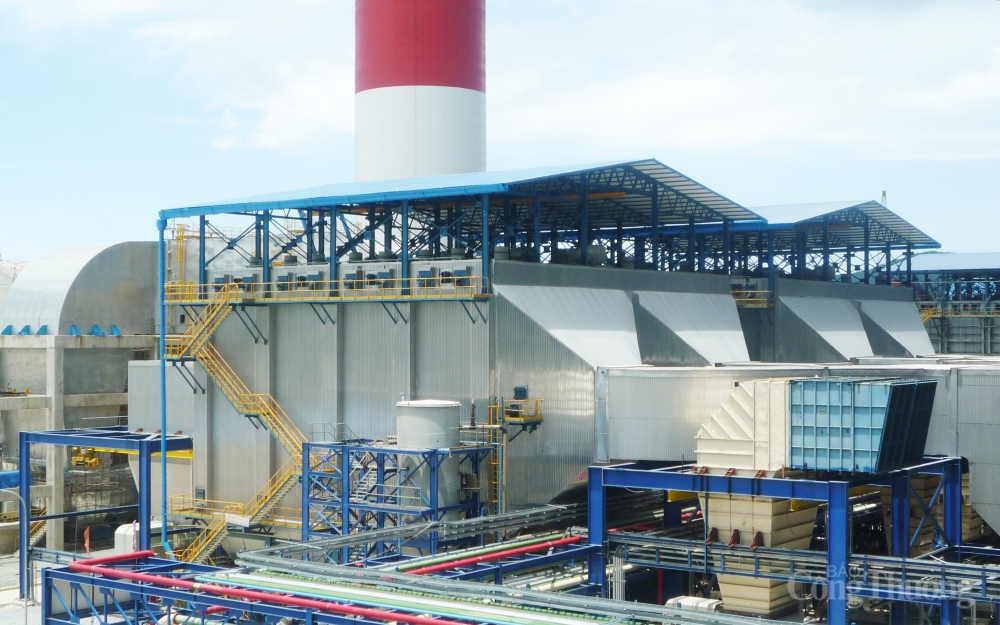
| The electrostatic precipitator system at Thai Binh 1 thermal power plant supplied by the National Research Institute of Mechanical Engineering |
However, although the research units under the Ministry of Industry and Trade have made many efforts in localization and technology mastery, up to the present time, most of the complete equipment lines for industries still depend on foreign contractors, leading to a very low proportion of domestic work, not exceeding 20%, mainly concentrated on simple products that do not generate high added value.
Meanwhile, in the coming years, according to development plans for the electricity, oil and gas, mineral exploration and processing, paper, construction material production, new energy and renewable energy industries, the market capacity for developing mechanical equipment remains very large, especially complete equipment lines for domestic industries. This is an opportunity to leverage domestic research potential.
Dr. Phan Dang Phong believes that, in developing equipment for thermal power plants, a decisive State policy is necessary to protect the market for the domestic mechanical engineering sector. For instance, when considering assigning units as investors for coal-fired thermal power plant projects (including BOT projects), it should be accompanied by a commitment that the following items must be fully executed domestically: the coal supply system, the ash and slag disposal system, the electrostatic precipitator system, the circulating cooling water system, and the main distribution station and transformers.
On the other hand, to promote their core role in the network of scientific and technological organizations under the Industry and Trade sector, the development strategies of the institutes in the coming years need to be formulated in line with the development orientation and restructuring goals of each industry, as well as with the National Strategy for Science and Technology Development and the Industry and Trade Sector's Strategy for the 2021-2030 period. The focus should be on building sufficiently strong applied research institutes with source technologies corresponding to each industrial sector and capable of fulfilling the country's major socio-economic development strategy towards 2030 with a vision to 2045.
Mr. Le Viet Cuong, Deputy Director of the Institute of Energy, shared that the Institute's science and technology tasks have closely followed the industry's development goals, bringing certain efficiencies and contributing to the development orientation, operational management, production, and business of the electric energy industry.
However, because the Institute of Energy must cover all its recurrent expenditures independently, activities such as investment, upgrading laboratories, purchasing equipment and calculation software, and human resource training... still face many limitations and have not met the actual development needs of the Institute. "The Institute will face difficulties in its development process without the attention, support, and investment from the Ministry of Industry and Trade and relevant ministries and sectors" - Mr. Le Viet Cuong said.
Also according to Mr. Le Viet Cuong, the mechanisms and policies for the operation of public service units in general and the model of self-financing public science and technology organizations in particular, implemented under Decree No. 16/2015/ND-CP, Decree No. 54/2016/ND-CP and related legal documents, are limited in terms of synchrony and consistency and lack regulations on specific characteristics, leading to limitations on the institutes' autonomy and proactiveness.
Dr. Phan Dang Phong - Director of the National Research Institute of Mechanical Engineering: Along with the decisive direction of the Ministry of Industry and Trade in the process of restructuring the research institutes under its management, the partnership of domestic universities and mechanical engineering enterprises, and the efforts of scientists, we believe that the research institutes in the coming years will become leading science and technology enterprises in their respective fields, contributing to the success of the nation's industrialization and modernization cause.
Source: Cong Thuong Newspaper
Related News
- Discuss solutions to promote foundational industries in the new period
- Research results on the application of robots in a detergent powder manufacturing plant
- Specific mechanisms and policies are needed to develop mechanical engineering products with large market capacity in the period 2026-2045.
- Mastering Heat Exchange Equipment: A New Step Forward for Vietnam's Mechanical Engineering Industry


