

Home
News - Events Building a Self-Reliant Mechanical Engineering Industry: The Indispensable Role of the State as a 'Midwife'
Featured News
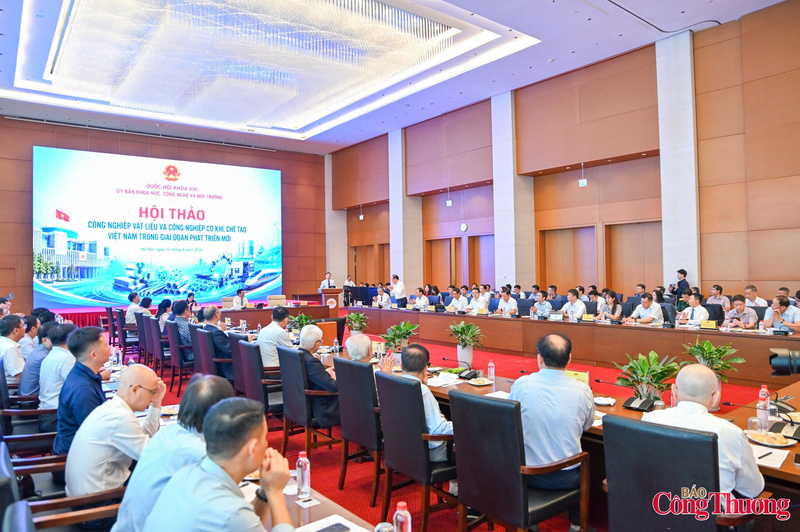
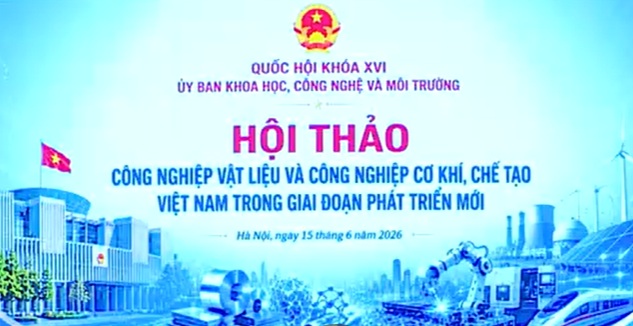

Building a Self-Reliant Mechanical Engineering Industry: The Indispensable Role of the State as a 'Midwife'
To build a self-reliant mechanical engineering industry, the supporting role of the State is extremely important. This has been demonstrated over more than 30 years of national renewal.
To learn more about the above topic, a reporter from Industry and Trade Newspaper had a discussion with Dr. Phan Dang Phong – Director of the National Research Institute of Mechanical Engineering, Ministry of Industry and Trade.
As an expert closely associated with the national mechanical engineering industry, over the past time, many high-tech mechanical products of Vietnam have gradually taken shape on the market. How do you perceive this issue?
I feel very proud that Vietnam has been able to achieve self-reliance and self-sufficiency in producing some technologically difficult products that were previously the privilege of foreign countries. For example, Vinfast recently successfully manufactured environmentally friendly electric cars recognized by the global market. Or the Petroleum Drilling Rig Manufacturing Joint Stock Company (PV Shipyard) has designed and successfully manufactured the Tam Dao 3 and Tam Dao 5 jack-up rigs using its own internal resources.
 |
|
Dr. Phan Dang Phong, Director of the National Research Institute of Mechanical Engineering - Ministry of Industry and Trade
|
In addition, several other domestic mechanical enterprises have taken the initiative to produce key mechanical equipment, such as: the National Research Institute of Mechanical Engineering (NARIME), and the Vietnam Machinery Installation Corporation (LILAMA) have manufactured equipment for hydropower plants, thermal power plants, cement plants, etc.
This is clear evidence affirming the State's sound support policies for development, such as: Decision No. 68/QD-TTg dated January 18, 2017, approving the program for supporting industrial development from 2016-2025; Decision No. 1791/QD-TTg dated November 29, 2012, approving the mechanism for pilot design and domestic manufacture of equipment for thermal power plants in the period 2012-2025; the Government's Mechanism 797-400 for hydropower projects commencing in 2003-2004 (including two Prime Ministerial Decisions: Decision 797/CP-CN dated June 17, 2003, on power projects commencing in 2003-2004, and Decision No. 400/CP-CN dated March 26, 2004, on implementing the mechanism for hydropower projects).
It can be said that these two decisions marked a new breakthrough in management mechanisms for the implementation of hydropower plant construction. These very flexible management mechanisms originate from the practical needs of ensuring progress, quality, and enhancing the awareness and responsibility of individuals, ministries, levels, sectors, and localities for hydropower plant construction projects.
 |
|
Pressure pipeline of the A Luoi hydropower project designed and manufactured by the National Research Institute of Mechanical Engineering
|
Through these mechanisms and policies, domestic companies have grown stronger over the years and are now capable of undertaking complex tasks that were previously usually handled by foreign entities.
Thus, Vietnam's manufacturing and processing industry has made important contributions to the growth and development of the economy. What does this signify, sir?
In recent years, the Vietnamese industrial sector has developed remarkably; enterprises have set their own directions according to national economic development plans and master plans. Alongside this is the State's support in technology, including the reception and transfer of some foundational technologies. Consequently, Vietnam's industrial sector has achieved significant accomplishments that play a leading role.
For instance, in the hydropower sector, the Prime Minister issued Decision 797 concerning projects commencing in 2003-2004, which included a very important policy: promoting the internal capacity of domestic investors in building hydropower projects. The document emphasized technology transfer for hydro-mechanical equipment, with the first project being the A Vuong Hydropower Plant. The State supported 152,000 USD for purchasing and receiving the technology transfer.
To date, mechanical enterprises have successfully achieved self-reliance in designing and manufacturing the entire domestic hydro-mechanical component. Notable examples include the Son La Hydropower Project (2,400 MW), the Lai Chau Hydropower Project (1,200 MW)... From this self-reliance, we have now implemented over 29 medium and large hydropower projects, with revenue from the hydro-mechanical component alone exceeding VND 8,000 billion. Notably, the cost of our domestic design and manufacturing is at least 30% lower than the import cost at the time we could not yet produce these items.
Thus, it means we have significantly reduced imports, and more importantly, we have increased the autonomy of domestic enterprises in repairing, maintaining, and replacing programs and equipment currently in operation.
Similarly, under Decision 1791 on the pilot mechanism for designing and manufacturing thermal power plant equipment, there are now 11 items that the Prime Minister has assigned to mechanical enterprises for self-reliance. Specifically, for manufacturing mechanics, we have achieved self-reliance in 7 items: coal supply system, ash and slag discharge system, electrostatic precipitator system, circulating cooling water system, flue gas discharge system, distribution substation and main transformer, and fire protection system.
 |
|
Slag discharge system of Song Hau 1 Thermal Power Plant
|
From this self-reliance, each thermal power project with a capacity of about 1,200 MW involving these 7 items accounts for approximately 250 million USD. Thus, Vietnam reduces its trade deficit by 250 million USD in foreign exchange per project. Furthermore, thanks to this self-reliance, whereas previously we only manufactured low-cost components that barely covered wages, now enterprises can handle the entire process of design, manufacturing, assembly, and construction of complex, high-tech components, thereby generating higher added value. Consequently, enterprises have funds to reinvest in their production workshops, enhance competitiveness, and dare to directly compete through bidding against contractors from China or G7 countries.
In the field of renewable energy, domestic enterprises have also recently achieved self-reliance in designing and manufacturing the floating pontoon and mooring system for the floating solar power project - the Da Mi Solar Power Plant project (47.5 MW capacity). In such a project, the floating pontoons and mooring systems account for about 40-50% of the project's investment value. Our self-reliance in that part means we have created more domestic jobs, reduced costs, decreased imports, and led to proposals for mechanisms and policies to retain work for domestic workers.
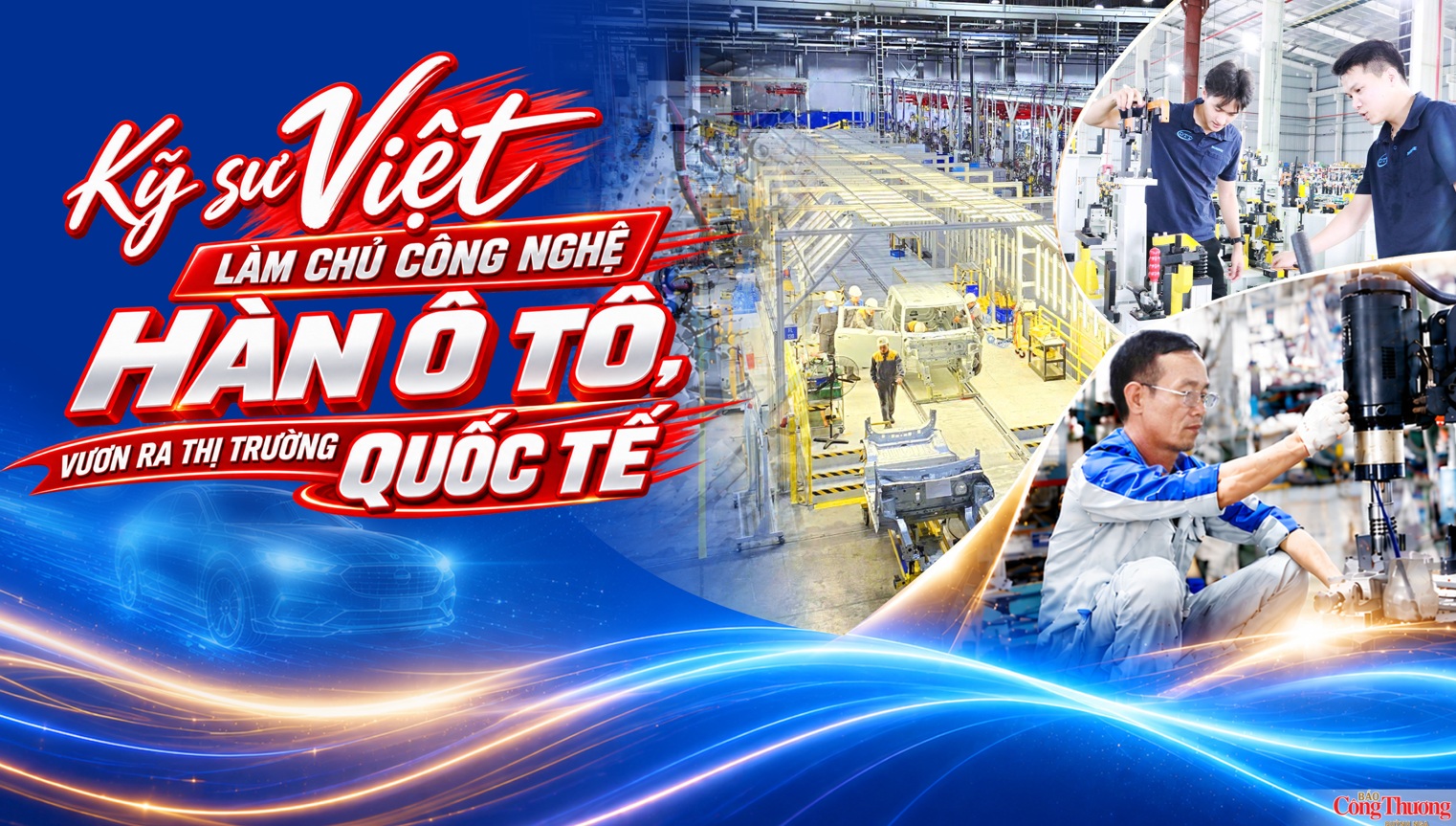
Regarding transport vehicles or agricultural machinery, Vinfast has launched the V8 and V9 electric car product lines. I am very proud that Vietnamese people have produced high-tech products of quality comparable to world standards from countries with developed mechanical and machine-building industries such as Germany, the USA, Japan, etc., and they have been welcomed by the global market. Vinfast also has a very good policy of prioritizing domestic contractors for their equipment supply chain. For example, NARIME receives orders from Vinfast each year to manufacture jigs for the car assembly line; this work has brought NARIME an average annual revenue of 300-400 billion VND.
From reality, it is evident that domestic enterprises, with the State's support in technology transfer, especially foundational technologies, have gradually grown stronger and dared to take on difficult tasks previously the privilege of foreign enterprises. As a result, Vietnamese enterprises can grow, invest further, and expand globally in the coming time. This affirms the correct direction of the Party and the Government towards becoming a developed industrial country by 2050; thus, we must have our own products and our own industry.
For NARIME, which is not only a leading mechanical science research institution in the country but also a technology transfer unit for many industrial production fields, could you share more about NARIME's activities in this regard?
For NARIME, we orient our development based on the plans and strategies for the country's economic sectors, while also selecting scientific and technological topics with State support to create NARIME's traditional products.
For example, in the hydropower field, the Institute was assigned by the Ministry of Industry and Trade to take the lead in the design and reception of technology transfer for the first hydropower project, A Vuong Hydropower Plant, and subsequently for over 29 other medium and large hydropower projects and plants.
In parallel, the Institute has cooperated with domestic units such as COMA, MIE, and LILAMA to carry out manufacturing services. This is a very complete collaboration between researchers, manufacturers, and technical service providers to create a finished product. For instance, we collaborated with LILAMA to design and manufacture the coal supply system, ash and slag discharge system, and circulating cooling water system for the Song Hau 1 Thermal Power Plant. In July 2022, the Prime Minister attended the inauguration and commercial operation of the plant, highly praising its localization rate.
 |
|
Floating pontoon and mooring system for the floating solar power project - Da Mi Solar Power Plant
|
Additionally, NARIME has collaborated with LILAMA to lead a science and technology project for the design and manufacture of a 700,000-ton/year cement plant and the fabrication of some key equipment. The project was completed and has been operating very well to date. As a result, we, together with LILAMA and several other domestic units, have continued to supply equipment to other domestic cement plants, such as the Nghi Son Cement Plant (a joint venture between Vietnam Cement Corporation and a Japanese partner) where we won a bid against a Chinese contractor; the Bim Son Cement Plant for the Warehouse component; or the Tam Dao 3 project where we collaborated with PV Shipyard on detailed design under the guidance of a foreign contractor – a very complex component requiring international classification society certification for operation at sea. These examples illustrate NARIME's contributions to the scientific and technological development of Vietnam's industrial sector.
In your view, what is important for Vietnamese enterprises to achieve self-reliance and self-sufficiency?
I believe the most important thing is to have sufficient human resources ready to participate in receiving technology transfer. Let me give an example: when we buy equipment for a project, it is easy to spend money to purchase the basic design or the detailed design, but the crucial issue is how we can "digest" those designs so that for the next project we do not have to buy them again and can do it ourselves. To achieve this, enterprises must prepare the workforce to carry out that task.
NARIME has over 300 employees, more than 40% of whom have English communication skills and have been trained at specialized scientific and technical schools. For each job, NARIME assigns the appropriate personnel with specific expertise in that field to work alongside foreign experts. Because when we receive technology transfer, we partly buy the technology, and partly the foreign experts come here to transfer it. When they are here and we carry out the detailed design, we need a workforce capable of negotiating and receiving information to implement the work.
Therefore, in my assessment, human resources are the key and most important factor for enterprises to achieve self-reliance, self-sufficiency, and resilience.
Source: Industry and Trade Newspaper
Related News
- Discuss solutions to promote foundational industries in the new period
- Research results on the application of robots in a detergent powder manufacturing plant
- Specific mechanisms and policies are needed to develop mechanical engineering products with large market capacity in the period 2026-2045.
- Mastering Heat Exchange Equipment: A New Step Forward for Vietnam's Mechanical Engineering Industry


