

Home
Special resolution needed to pave the way for the development of the mechanical engineering and manufacturing industry.
Featured News

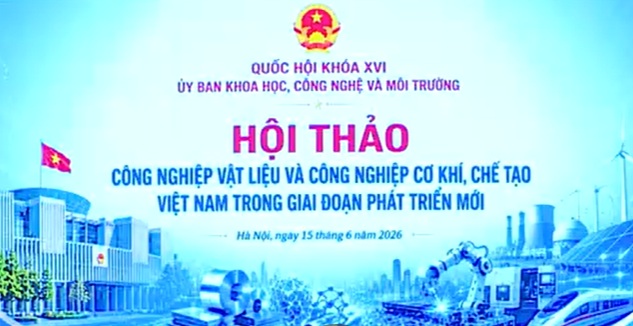

Special resolution needed to pave the way for the development of the mechanical engineering and manufacturing industry.
15/6/2026
NARIME President Phan Dang Phong stated that the issuance of a National Assembly Resolution on specific mechanisms and policies for developing mechanical engineering products is an urgent requirement.
"Golden Opportunity" for the Domestic Mechanical Engineering Industry
At the Workshop "Material Industry and Mechanical Engineering and Manufacturing Industry of Vietnam in the New Development Phase" organized by the National Assembly's Committee on Science, Technology and Environment, Mr. Phan Dang Phong, President of the National Research Institute of Mechanical Engineering (NARIME), Ministry of Industry and Trade, delivered a presentation on the topic "Need for a National Assembly Resolution on Specific Mechanisms and Policies for Developing Key Mechanical Engineering Products in the 2026-2045 Period."
Looking back at the past journey, Vietnam's mechanical engineering industry has made significant strides in scale. Citing data from the General Statistics Office and the Ministry of Industry and Trade, President Phan Dang Phong noted that within just 7 years, the industry's total production scale nearly doubled, from USD 61.8 billion in 2018 to approximately USD 122.6 billion in 2025. Accompanying this was a breakthrough in exports of machinery, equipment, and spare parts, surging from USD 14.6 billion to USD 59.2 billion, helping to sharply reduce the trade deficit from USD 15.2 billion to only about USD 2 billion.
Currently, the "backbone" of this processing and manufacturing industry rests on a network of over 43,600 establishments, providing employment for more than 1.57 million workers. These figures show that the Vietnamese mechanical engineering industry has expanded rapidly and integrated deeply into international trade.
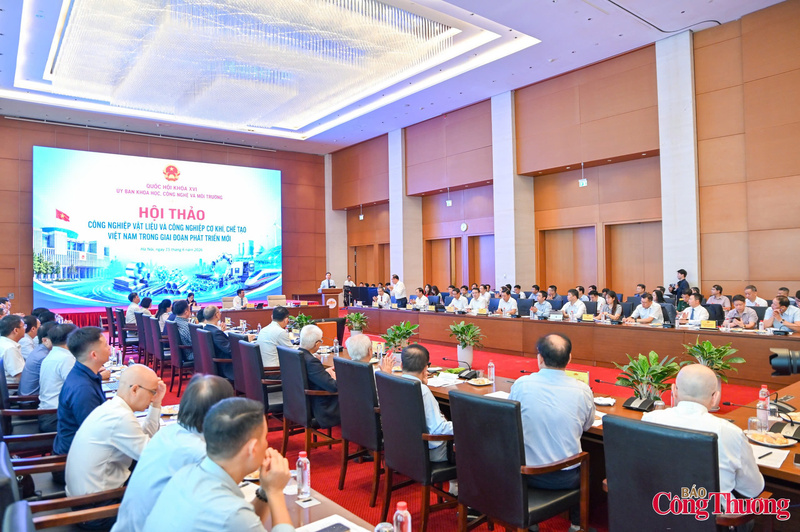
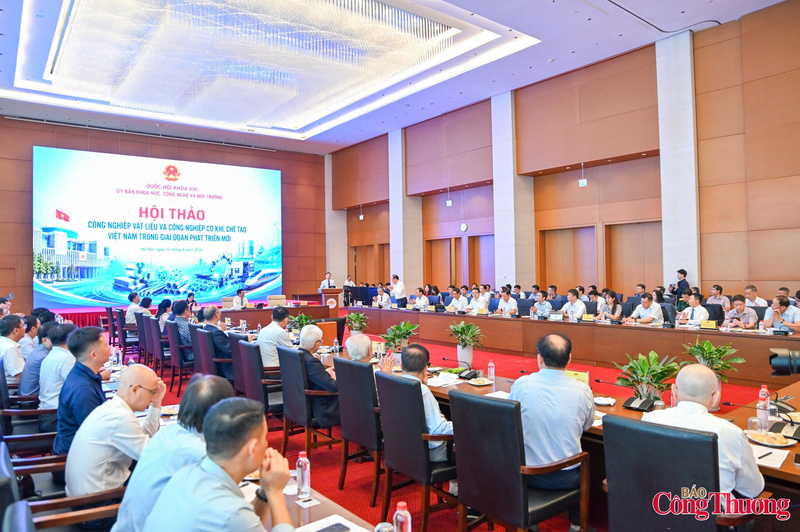
National Assembly Vice Chairman Nguyen Hong Diên chairs the Workshop “Material Industry and Mechanical Engineering and Manufacturing Industry of Vietnam in the New Development Phase”.
However, behind these bright colors lies a troubling reality: the development foundation of Vietnam's mechanical engineering industry is not yet truly solid, as the FDI sector still dominates approximately 92-93% of export value and about 75% of import value in recent years. Domestic enterprises, despite accounting for a large number, are still struggling at the lower end of the value chain. The localization rate in complete equipment lines remains low, below 20%, mainly concentrated in simple stages such as steel structures, manufacturing individual parts, or installation.
Also according to President Phan Dang Phong, Decision No. 319/QD-TTg on the Strategy for Developing Vietnam's Mechanical Engineering Industry to 2025, with a vision to 2035, set targets to enhance self-reliance capacity, meeting about 45% of domestic market demand by 2035; simultaneously forming strong mechanical engineering corporations and capable consulting-manufacturing complexes to undertake the role of EPC general contractor in large-scale energy, industrial, and infrastructure projects.
But up to the present time, the implementation results have only reached an average level. The reason is that Vietnam has not yet formed strong mechanical engineering corporations or consulting-manufacturing complexes capable of undertaking the role of EPC General Contractor for large projects. Furthermore, the capacity for overall design and system integration - the "heart" that creates the highest added value - remains weak.
Currently, even for leading enterprises such as THACO, LILAMA, or NARIME, the role of leading and mastering the supporting industrial ecosystem has not yet met expectations. When foreign partners hold core technology, design, and control software, Vietnamese enterprises are implicitly pushed into the position of "subcontractors" for processing stages.
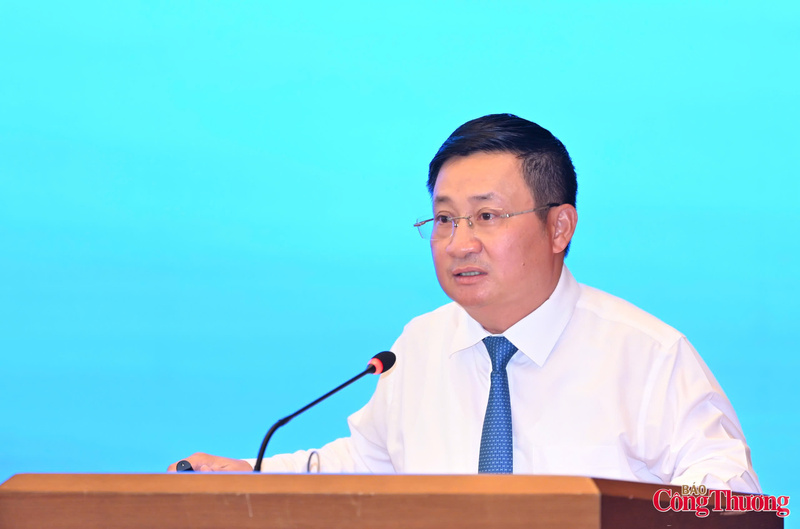
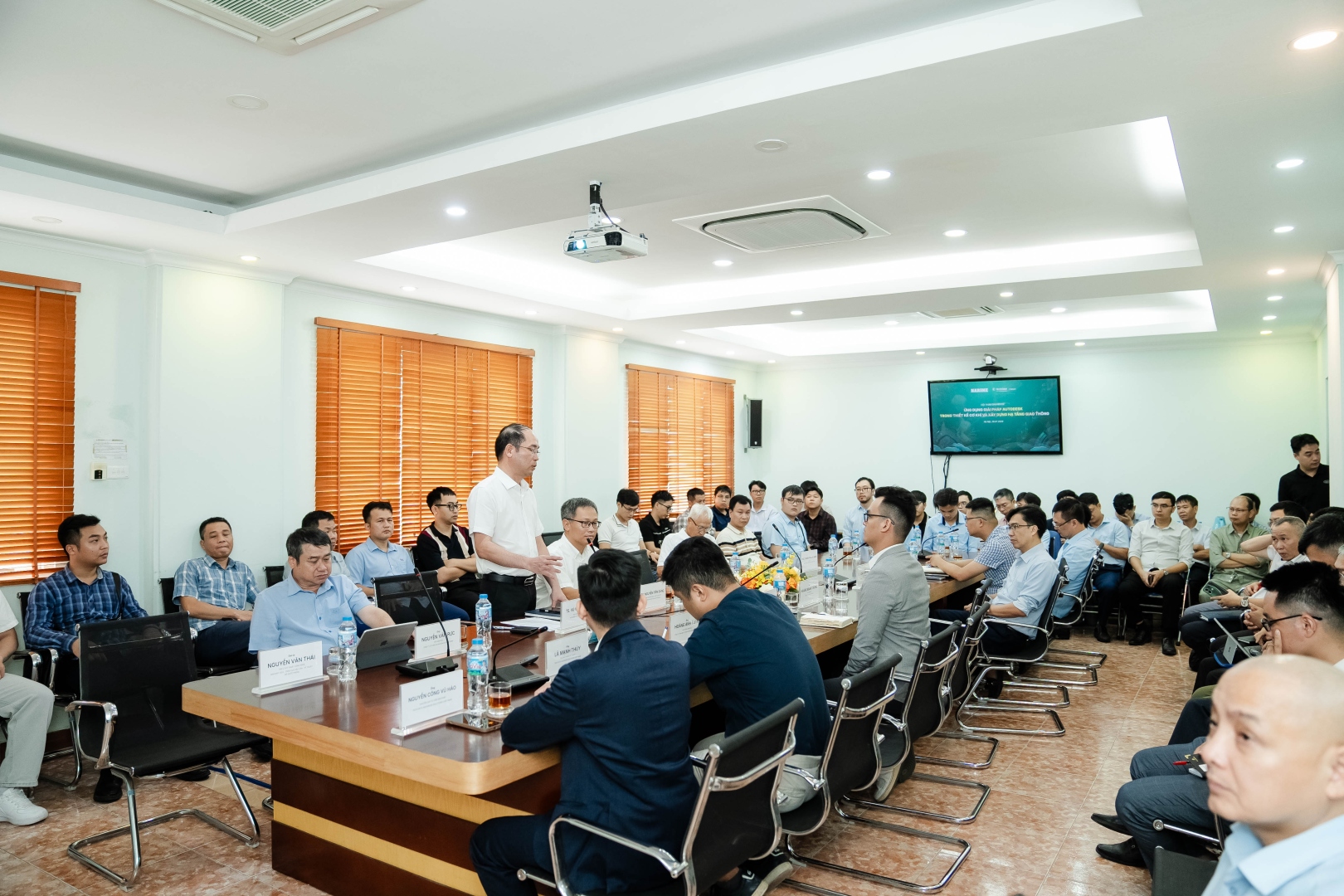
President of the National Research Institute of Mechanical Engineering Phan Dang Phong delivers a presentation on the topic “Need for a National Assembly Resolution on Specific Mechanisms and Policies for Developing Key Mechanical Engineering Products in the 2026-2045 Period”.
The NARIME President pointed out a decisive cause: Vietnam is caught in a vicious cycle: "Weak capacity due to lack of opportunity, lack of opportunity due to weak capacity." Lacking "large orders" from national key projects, domestic enterprises have no environment to challenge themselves, accumulate experience, and reinvest in R&D. Additionally, the lack of self-sufficiency in foundational materials such as high-quality steel plates and alloy steel keeps the supply chain in a passive and vulnerable state to global geopolitical fluctuations.
According to an average growth scenario of about 10%/year with 2025 as the base year, the 2026-2045 period is forecast to be a "golden opportunity" with the domestic mechanical engineering market size estimated at a colossal USD 7,821 billion. These are not just figures on paper but real demand from mega infrastructure and energy projects. Among them, the key automotive market is about USD 721 billion; offshore wind power about USD 183.6 billion; the three sectors of urban railways, inter-regional railways, and high-speed railways about USD 161.4 billion; mineral exploitation and processing about USD 42 billion; gas/LNG power about USD 42 billion; nuclear power about USD 113.2 billion; and prefabricated metal production USD 216 billion.
This scale is large enough to create a historic transformation for the mechanical engineering and manufacturing industry. However, according to President Phan Dang Phong, without clear implementation mechanisms, the majority of this value will continue to flow to foreign investors. For instance, in the offshore wind power sector, Vietnamese enterprises can currently perform well on foundations and substations, but key stages such as turbines, system integration, and operational management remain entirely dependent on foreign entities.
Need for a Specific Resolution to Pave the Way for Mechanical Engineering Development
To break the vicious cycle and capture the domestic market, the President of the National Research Institute of Mechanical Engineering stated that issuing a National Assembly Resolution on specific mechanisms and policies for developing key mechanical engineering products in the 2026-2045 period is an urgent requirement. The goal is to break the vicious cycle of "weak capacity due to lack of opportunity, lack of opportunity due to weak capacity"; turn the nation's large projects into actual orders for domestic enterprises; and create momentum for investment in design, system integration, testing, certification, and project management.
"This mechanism should not be scattered but needs to focus on 'spearheads' with high spillover effects such as railways, offshore wind power, shipbuilding, and the aluminum processing industry," proposed President Phan Dang Phong. Emphasizing the breakthrough contents that need to be considered in the Resolution, President Phan Dang Phong specified:
First, create a market through "national orders": Key projects should be considered a challenging environment. In the 2026-2035 period, at least the first 3 projects in each priority sector should be selected to assign tasks or conduct conditional tenders to domestic contractor consortia. The goal is that after project completion, Vietnamese enterprises must be self-reliant in design and project management.
Second, conditional and focused support: Incentives for finance, R&D, and testing must be tied to output results and specific localization criteria.
Third, self-sufficiency in foundational materials: Prioritize investment in producing steel plates and specialized steel for railways, shipbuilding, and energy to build a resilient supply chain.
Fourth, legitimate technical barriers: Establish technical standards consistent with international commitments to protect the domestic market from the influx of low-quality goods.
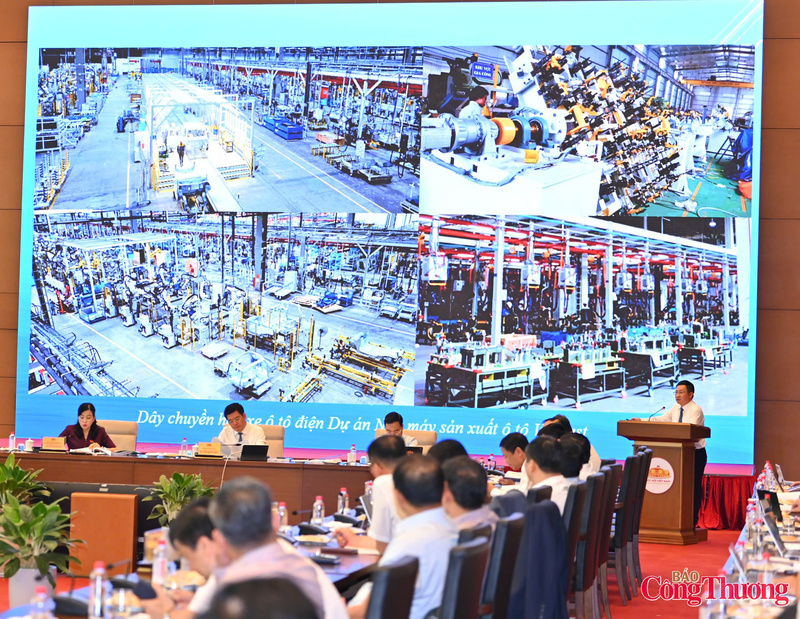
President Phan Dang Phong stated that the goal of the resolution is to break the vicious cycle of “weak capacity due to lack of opportunity, lack of opportunity due to weak capacity”.
President Phan Dang Phong emphasized that the 2026-2045 period opens a special opportunity for Vietnam's mechanical engineering industry to break through thanks to a series of large-scale projects in the fields of railways, energy, mining, shipbuilding, processing and manufacturing industry, agriculture, and logistics.
However, opportunities can only be transformed into national competitive capacity when domestic enterprises participate in high-value-added stages such as design, system integration, equipment manufacturing, and project management. Therefore, issuing a National Assembly Resolution on specific mechanisms and policies for developing key mechanical engineering products in the 2026-2045 period is necessary to create a breakthrough in technological capacity, enhance the localization rate, and form mechanical engineering enterprises capable of competing at regional and international scales.
The production scale of the mechanical engineering industry increased from approximately USD 61.8 billion in 2018 to approximately USD 122.6 billion in 2025, nearly doubling; in which, exports of machinery, equipment, tools, and spare parts increased from USD 14.6 billion to USD 59.2 billion; the trade deficit decreased from USD 15.2 billion to about USD 2.0 billion. This result shows that Vietnam's mechanical engineering industry has expanded rapidly in both production and international trade.
Source: Cong Thuong Newspaper
Related News


