

Home
News - Events For the mechanical engineering manufacturing industry to achieve a breakthrough, a "policy lever" is needed.
Featured News
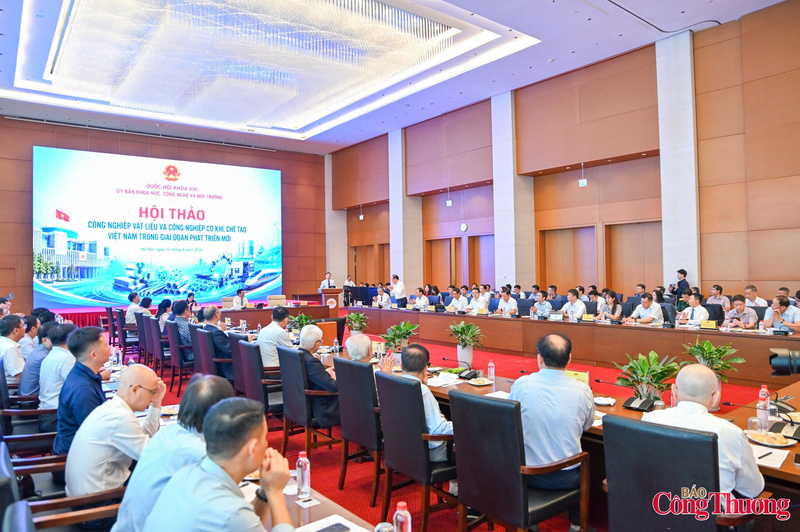
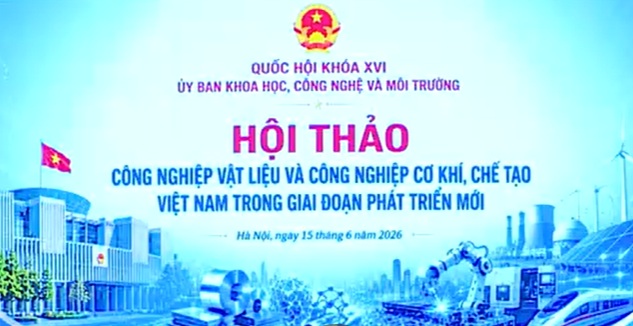

For the mechanical engineering manufacturing industry to achieve a breakthrough, a "policy lever" is needed.
 |


|
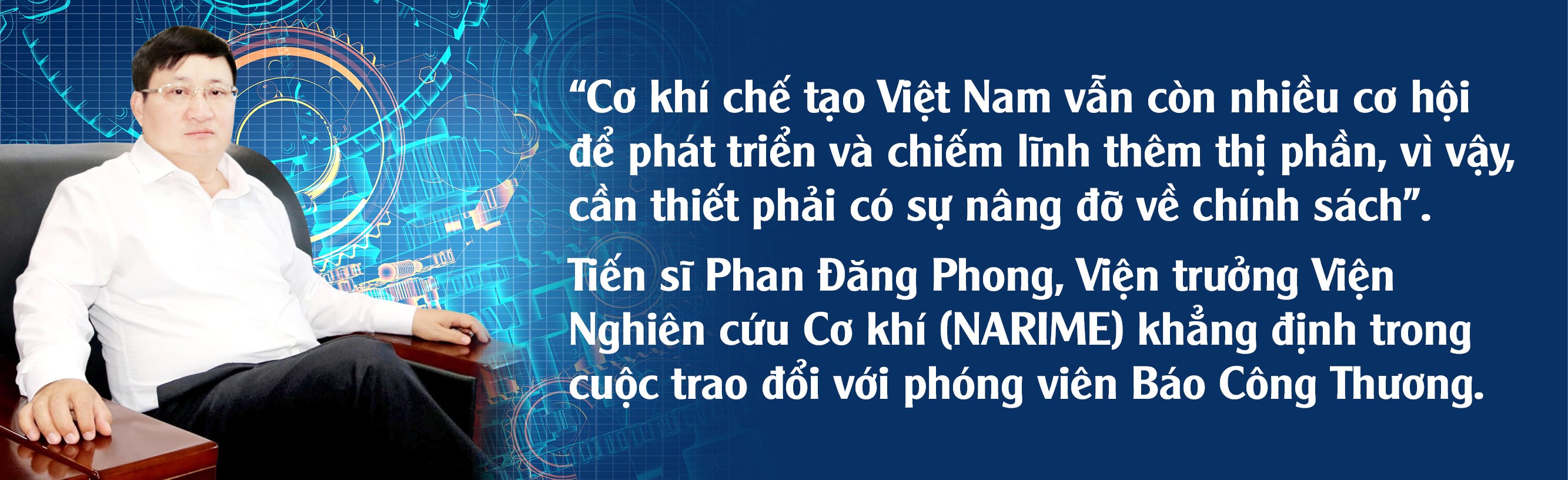
Dr. Phan Dang Phong: In recent times, Vietnam's mechanical engineering industry has developed with many positive changes, gradually mastering technology, expanding investment to improve product quality, increasing the localization rate, and developing the market. Many products that previously had to be entirely imported have now been gradually replaced by products manufactured by the domestic mechanical engineering industry. Enterprises and research institutes have demonstrated strong capabilities in several fields, such as complete equipment lines in certain industrial sectors, various types of molds, mechanical components, electrical cables, plastic components, and technical rubber... In particular, they have gradually participated in the production and supply chain for major enterprises such as Toyota, Thaco, Thanh Cong, VinFast… creating momentum to drive the development of other industries and the economy, thereby directly and indirectly creating jobs for millions of workers. According to some studies, domestically produced metal components have met approximately 15-40% of the component demand for automobile production (depending on the vehicle type). For the railway sector, regarding locomotives, freight cars, and passenger cars, if orders have suitable volumes, domestic units can participate in manufacturing with a localization rate of up to 60%. |
|
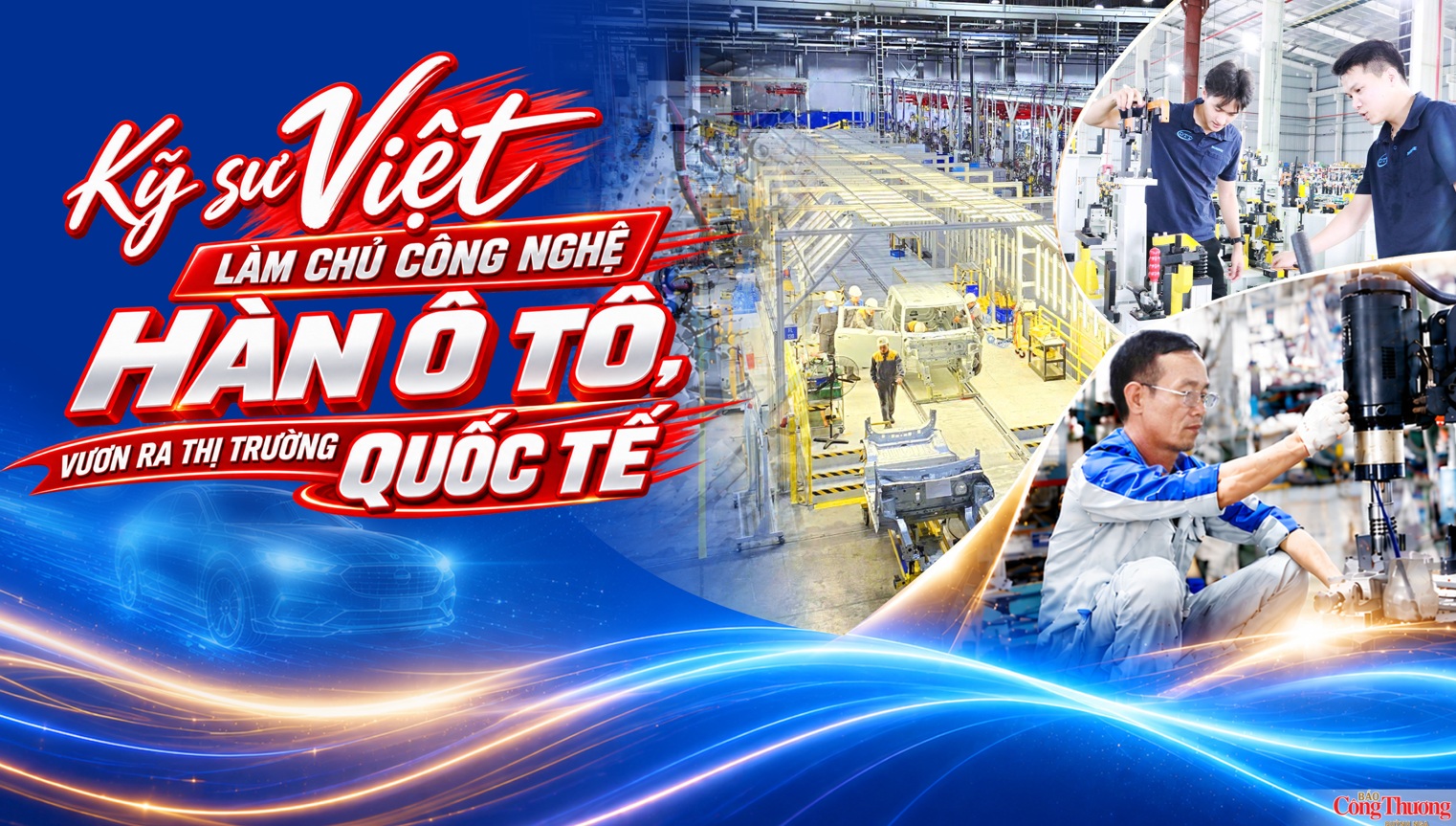
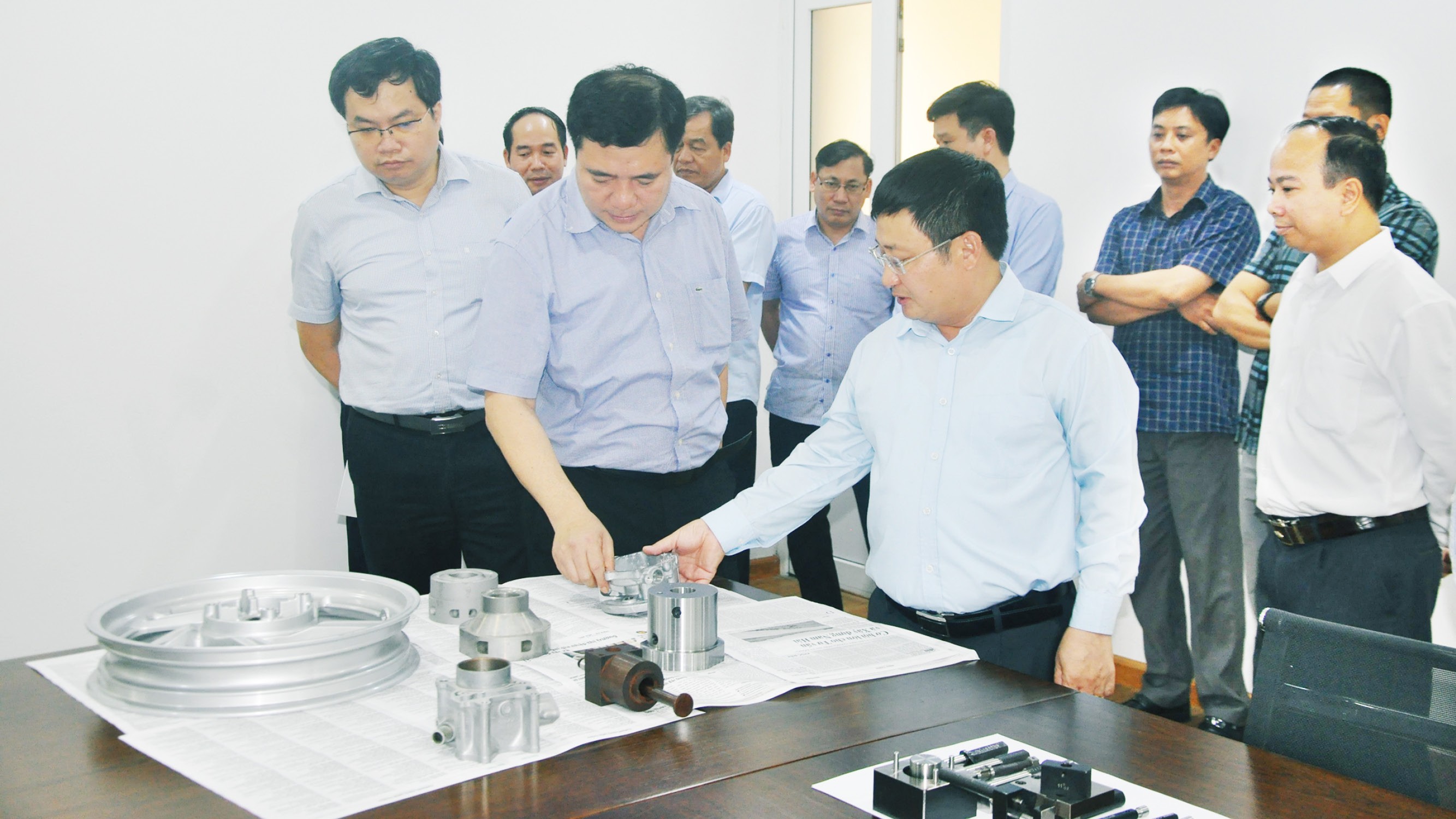
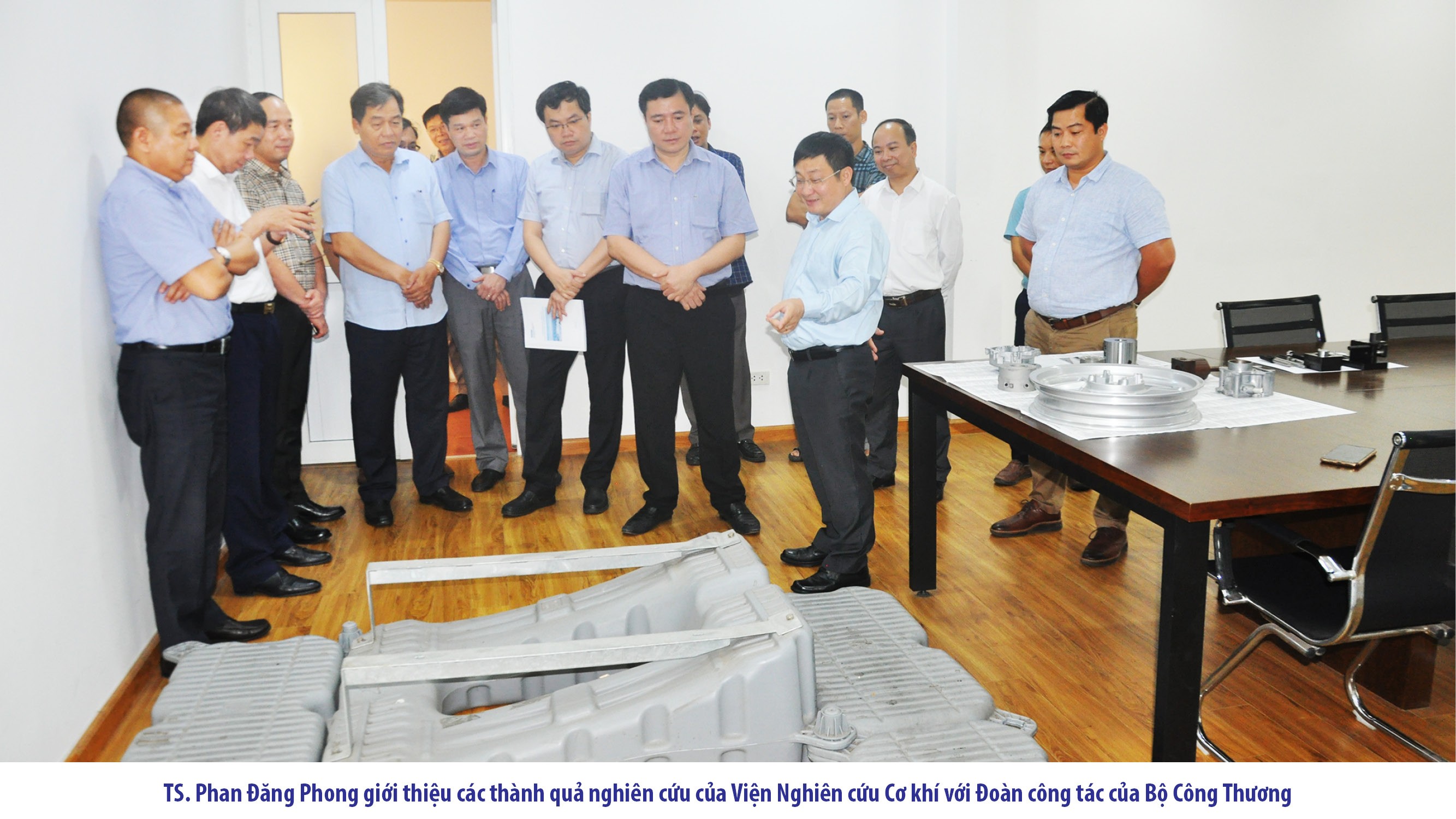
For example, currently, NARIME is supplying complete equipment lines and main welding jigs, replacing foreign contractors for large domestic automobile manufacturing plants. Specifically, NARIME has been and is designing, manufacturing, integrating, installing, and providing operation guidance for equipment lines and welding jigs for VinFast's electric vehicle models (such as VFe34; VF8; VF9; VF5; VF6; VF7; VF3) - tasks that were previously only undertaken by major foreign contractors (from Thailand, Japan, Germany, etc.), with no domestic unit capable of handling them. Furthermore, we have also successfully implemented numerous automation projects, applying artificial intelligence (AI) to production processes in industrial factories, such as: the "Design, supply, installation, and operation guidance of an automatic robot palletizing system" project for LIX Detergent Joint Stock Company; the "SCADA system for monitoring the entire detergent production plant" project; the "Manufacture, supply, and installation of an automatic weighing and bagging system for Unilever detergent" project… The success of these projects has brought high economic efficiency to investors, saved human resources, and contributed to modernizing the production processes of existing lines. |
 |

|
Dr. Phan Dang Phong: In recent times, with preferential support mechanisms and policies from the Government, the Ministry of Science and Technology, and the Ministry of Industry and Trade in research and technology transfer activities, along with the efforts of the National Research Institute of Mechanical Engineering in investing to enhance capacity and master technology, we have achieved several successes in scientific and technological research activities in the mechanical engineering and manufacturing sector for many fields such as hydropower, thermal power, bauxite, cement, solar power… Many science and technology products implemented by NARIME have been granted exclusive invention patents and exclusive utility solution patents. For example, in the hydropower sector, the Institute, together with domestic mechanical engineering units, has independently designed and manufactured hydraulic mechanical equipment for over 29 medium and large hydropower projects in the country, including the Son La (2400 MW) and Lai Chau (1200 MW) hydropower plants. This has created more jobs for the domestic mechanical engineering industry, with revenue from this segment reaching approximately VND 8,000 billion, contributing to reducing product costs from 4.4 USD/kg of product to 1.5 USD/kg of product, and contributing to early power generation by 3 years for Son La Hydropower Plant and 1 year for Lai Chau Hydropower Plant, bringing high economic efficiency to the projects. |
|
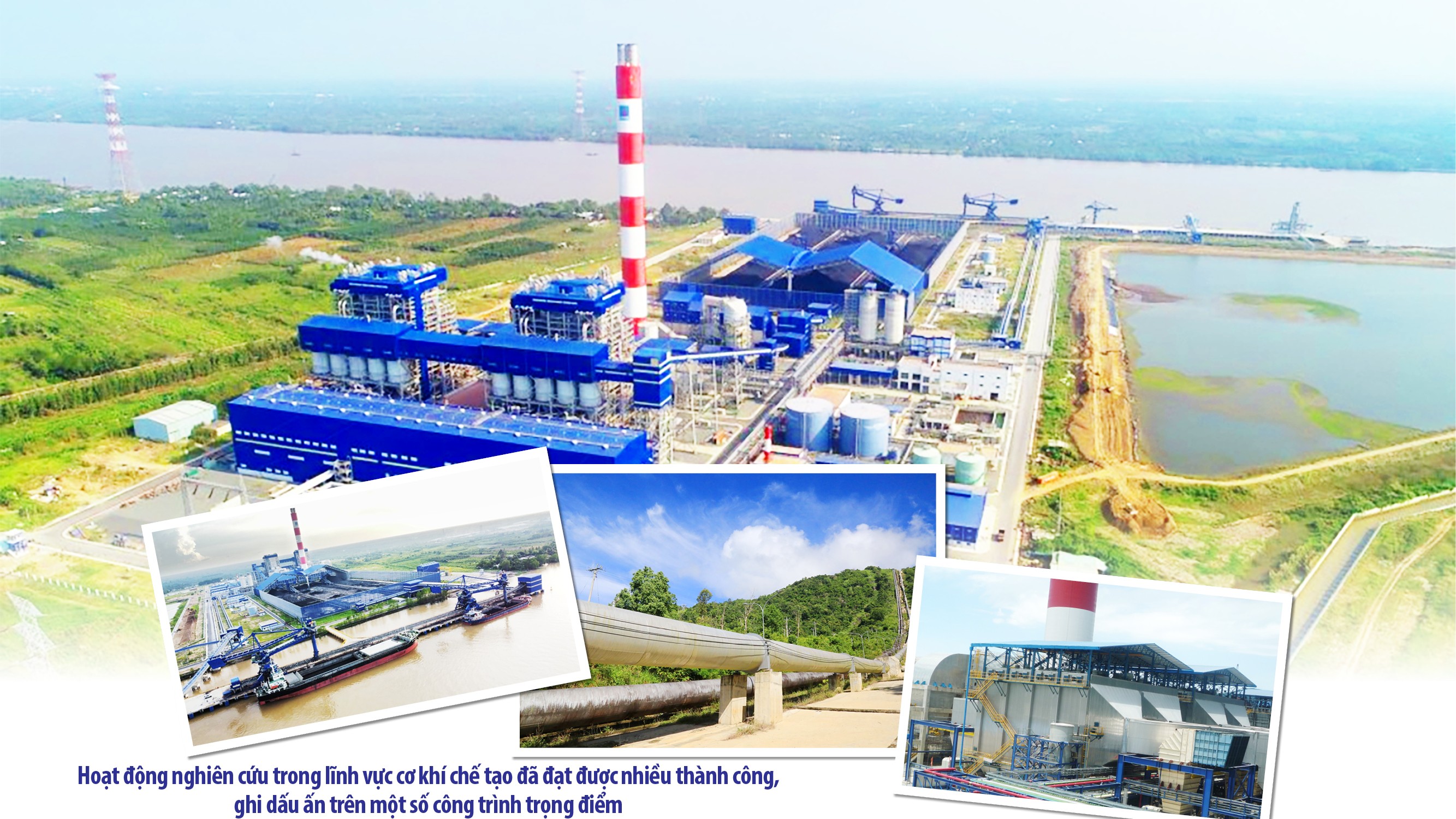
Furthermore, in the thermal power sector, NARIME has gradually mastered the technology for designing and manufacturing electrostatic precipitator systems, ash and slag disposal systems, coal handling systems, and fire protection systems for the Vung Ang 1, Thai Binh 1, Song Hau 1, and Nghi Son 2 thermal power plants. Notably, the project to research, design, manufacture, integrate, and successfully commission the coal handling and transport system for the Song Hau 1 Thermal Power Plant, with a localization rate of 50.6%, equivalent to technological equipment from G7 countries, is the first project of its kind implemented domestically, opening a new development direction for the domestic mechanical engineering manufacturing industry. In the field of construction materials production, the Institute coordinated with Vietnam Machinery Installation Corporation to implement a large-scale science and technology project: "Research, design, and manufacture of key equipment for a synchronous rotary kiln cement production line with a capacity of 2500 tons of clinker/day, replacing imports, implementing the localization process" with 3 topics (automatic bagging machine, large-capacity dust filter equipment, and automatic control of the plant equipment line), which was successfully applied to the Song Thao rotary kiln cement project, achieving a localization rate of about 40% of the value… |


|
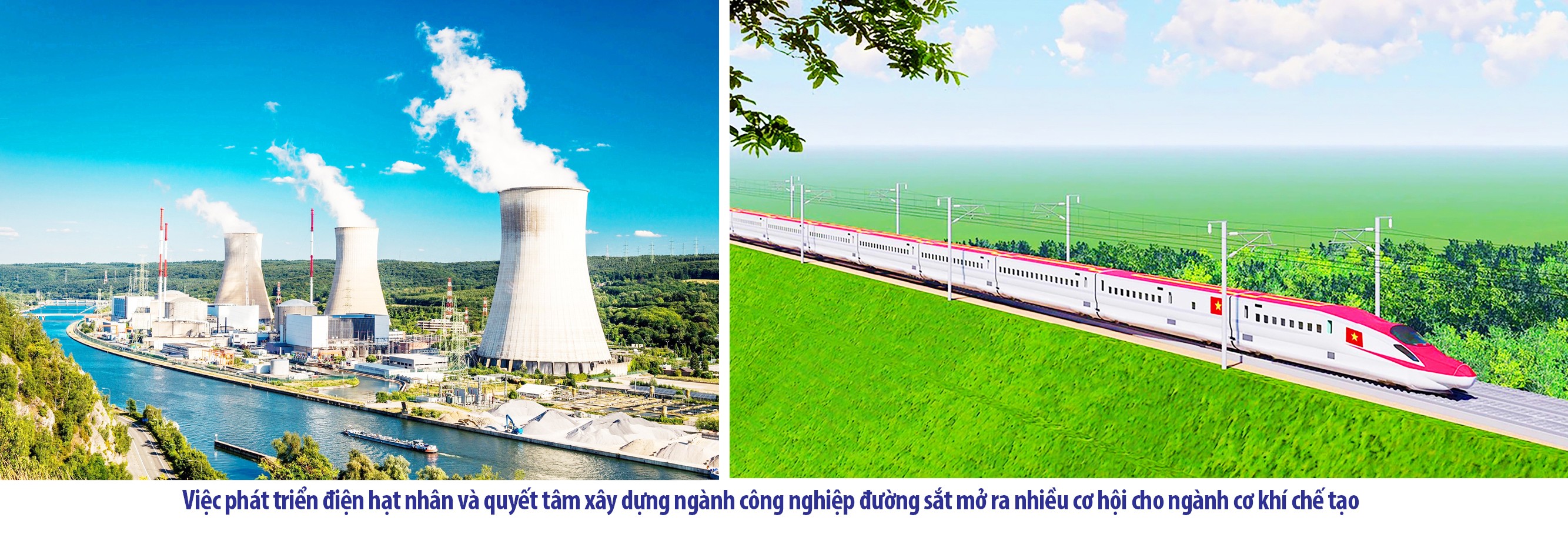
Dr. Phan Dang Phong: Studies show that the market potential of the mechanical engineering industry is very large. From now until 2030, the demand of Vietnam's mechanical engineering market is about 310 billion USD, with the automotive market alone accounting for 120 billion USD. This industry also has many opportunities to benefit from waves of production relocation, coupled with the ability to expand markets and attract investment as Vietnam participates in many free trade agreements. What domestic mechanical engineering enterprises need most now is for the State to create a market, especially for large-scale markets such as the urban railway sector, inter-regional railways, gas power plants, offshore wind power projects, nuclear power, and raw material production… For instance, if there are reasonable preferential mechanisms and policies for development in the urban railway industry, the domestic localization rate could reach over 79% - 83%, equivalent to 39.18 - 41.16 billion USD. This is a very large market, but foreign equipment suppliers still dominate, and domestic mechanical engineering enterprises have very limited participation. Additionally, Vietnam's choice to restart the nuclear power development plan also opens opportunities for the mechanical engineering manufacturing industry. The Government and the Ministry of Industry and Trade need to develop a research program for developing nuclear power equipment, including a cluster of scientific and technological topics and projects. When each of these topics is successfully implemented, we will move towards completing the localization process for nuclear power plants. |
|
I also want to emphasize the need for policies that encourage the acquisition and mastery of technology in first-of-a-kind projects. Specific policies to enhance the participation of Vietnamese enterprises in the EPC consortium for nuclear power plants and railways in the coming period will be a good condition for us to initially access, learn from international experience, and move towards mastering the technology. Furthermore, some preferential mechanisms regarding finance, investment, tariffs, etc., are very reasonable and beneficial for mechanical engineering enterprises. However, when applied in practice, there are still many obstacles, even delays and lags, making it very difficult for enterprises to utilize them. Some policies are still relatively strict and not truly suitable, so enterprises find them very difficult to access. On the other hand, it is necessary to review and summarize the implementation process of the Vietnam Mechanical Engineering Industry Development Strategy to 2025, with a vision to 2035, in order to consider, adjust, and supplement some contents of the strategy to suit the new situation, especially adjusting and supplementing key mechanical engineering products to suit the domestic and international economic and social situation. Based on the adjusted Mechanical Engineering Industry Development Strategy, it is necessary to develop a comprehensive state program to support research and technology mastery in each specific priority development field. The topics/projects registered and approved annually will closely follow the objectives set out in this program. Clearly, Vietnam's mechanical engineering still has many opportunities to develop and capture more market share. Therefore, policy support from ministries, sectors, and the State is essential in creating markets, linking product commercialization, and enhancing technological capacity for enterprises. The issuance of policies to encourage the consumption of domestic mechanical engineering products mastered by Vietnamese research units is always what domestic research units look forward to. Along with that, research institutes and specialized mechanical engineering units need to develop research programs and invest in scientific and technological potential to research, receive technology transfer, and eventually master the design and manufacture of complete equipment lines in these fields.
|
Source: Cong Thuong Newspaper
Related News
- Discuss solutions to promote foundational industries in the new period
- Research results on the application of robots in a detergent powder manufacturing plant
- Specific mechanisms and policies are needed to develop mechanical engineering products with large market capacity in the period 2026-2045.
- Mastering Heat Exchange Equipment: A New Step Forward for Vietnam's Mechanical Engineering Industry


