

Trang chủ
Hoạt động nghiên cứu HOẠT ĐỘNG NGHIÊN CỨU
Tin nổi bật

HOẠT ĐỘNG NGHIÊN CỨU
Ultrasonic-assisted Electrical Discharge Machining (UV-EDM) has emerged as a promising technique for improving machining efficiency and electrode life, particularly when processing hard conductive materials. This study presents a hybrid multi- criteria optimization framework that integrates Non- dominated Sorting Genetic Algorithm II (NSGA-II) and the Multi-Attributive Border Approximation Area Comparison (MABAC) method to optimize two conflicting performance measures: Material Removal Rate (MRR) and Electrode Wear Rate (EWR).
This study investigates ultrasonic vibration-assisted (UV) CNC milling of hardened 90CrSi steel cylindrical surfaces, with emphasis on ultrasonic horn design, experimental analysis, and multi-objective optimization of machining parameters, addressing the need for an inte- grated framework combining system design, experimental validation, and multi-objective optimization. A quarter-wavelength ultrasonic horn was designed and experimentally validated to operate at a frequency of 20 kHz. By adjusting the horn–workpiece system, stable vibration amplitudes were achieved to enable effective ultrasonic-assisted milling of cylindrical surfaces. Milling experiments based on a Box–Behnken design were conducted to examine the effects of vibration amplitude, cutting speed, feed rate, and radial depth of cut on material removal rate (MRR) and surface roughness (Ra). Surrogate models using response surface methodology (RSM) and Gaussian process regression (GPR) were developed to predict machining performance. A GPR-assisted NSGA-II algorithm was then applied to simultaneously maximize MRR and minimize Ra, resulting in a well-defined Pareto front that reveals the trade-off between machining productivity and surface quality.
This study investigates the modeling and single-objective optimization of surface roughness (Ra) and material removal rate (MRR) in electrical discharge machining (EDM) of external cylindrical surfaces of hardened 90CrSi tool steel. The machining process is enhanced using ultrasonic vibration assistance and graphite electrodes to improve surface integrity and productivity. Gaussian Process Regression (GPR) and Response Surface Methodology (RSM) were employed to construct predictive models for Ra and MRR based on key process parameters, including vibration amplitude (A), pulse-on time (Ton), pulse-off time (Toff), peak current (IP), and servo voltage (SV). The GPR model provided superior predictive performance for surface roughness, while RSM was more effective in modeling MRR. Optimization results showed that the minimum Ra of 1.6216 µm was achieved at A = 2.7743 µm, Ton = 8.0000 µs, Toff = 11.8294 µs, IP = 8.1723 A, and SV = 4.7936 V. Meanwhile, the maximum MRR of 12.1989 g/h was obtained at A = 3.5339 µm, Ton = 16.0000 µs, Toff = 8.0000 µs, IP = 15.0000 A, and SV = 4.0000 V. The findings provide valuable insights into parameter selection for improving EDM performance on external cylindrical surfaces of high-hardness steels.
Nghiên cứu mô phỏng phân bố nhiệt trong công nghệ sản xuất bồi đắp
Xác định chính xác nhiệt độ trong quá trình in rất quan trọng đối với sản xuất bồi đắp. Nhiệt độ quá nhỏ hay quá lớn đều ảnh hưởng đến chất lượng sản phẩm in. Để đảm bảo chất lượng sản phẩm in, nhiệt độ trong quá trình in phải lớn hơn nhiệt độ chảy của vật liệu in. Nghiên cứu này xác định ảnh hưởng của các thông số công nghệ in tới phân bố nhiệt độ khi in vật liệu bột Ti6Al4V theo phương pháp in nóng chảy laser chọn lọc (SLM).
Khoa học, công nghệ và đổi mới sáng tạo đã được đặt vào đúng vị trí chiến lược
Điều có ý nghĩa lớn nhất với đội ngũ các nhà khoa học hiện nay không chỉ là cơ chế hay chính sách cụ thể, mà còn là niềm tin chiến lược của Đảng, Nhà nước, Quốc hội.
Các tấm màng đàn hồi tự lựa là cấu phần cốt lõi trong hệ thống cân bằng tải thủy tĩnh của ổ đỡ chặn tại các nhà máy thủy điện công suất lớn. Trong quá trình vận hành, những chi tiết này phải chịu tải trọng dọc trục rất lớn và áp suất thủy lực cao, đòi hỏi vật liệu chế tạo phải có các tính chất cơ học vượt trội, độ bền mỏi cao cũng như khả năng chống ăn mòn trong môi trường dầu thủy lực. Nghiên cứu tập trung vào việc phân tích và lựa chọn vật liệu; tối ưu hóa công nghệ tạo hình kim loại tấm bằng phương pháp dập vuốt qua nhiều công đoạn cho thép không gỉ austenit SUS 304; đồng thời xây dựng quy trình thử tải tĩnh tại hiện trường với yêu cầu kỹ thuật nghiêm ngặt để xác nhận hiệu năng và độ tin cậy của sản phẩm. Kết quả nghiên cứu không chỉ giải quyết bài toán nội địa hóa một phụ tùng chiến lược, giảm thiểu sự phụ thuộc vào nhập khẩu thiết bị, mà còn mở ra triển vọng ứng dụng công nghệ này cho các nhà máy thủy điện khác, góp phần đảm bảo an ninh năng lượng và nâng cao năng lực công nghệ cơ khí chính xác trong nước.
Nâng cấp hệ thống xử lý khí thải tại các nhà máy nhiệt điện thuộc EVN
Bài báo trình bày nghiên cứu về hiện trạng phát thải và các giải pháp kỹ thuật nhằm nâng cấp hệ thống xử lý khí thải tại các nhà máy nhiệt điện thuộc Tập đoàn Điện lực Việt Nam (EVN).
Hoàn thiện thiết kế, công nghệ chế tạo và chế tạo thiết bị lọc bụi tĩnh điện
Trong giai đoạn hiện nay, nhằm đáp ứng cho chương trình phát triển kinh tế xã hội của đất nước, nhiều nhà máy nhiệt điện đã, đang và sẽ được đầu tư xây dựng mới.
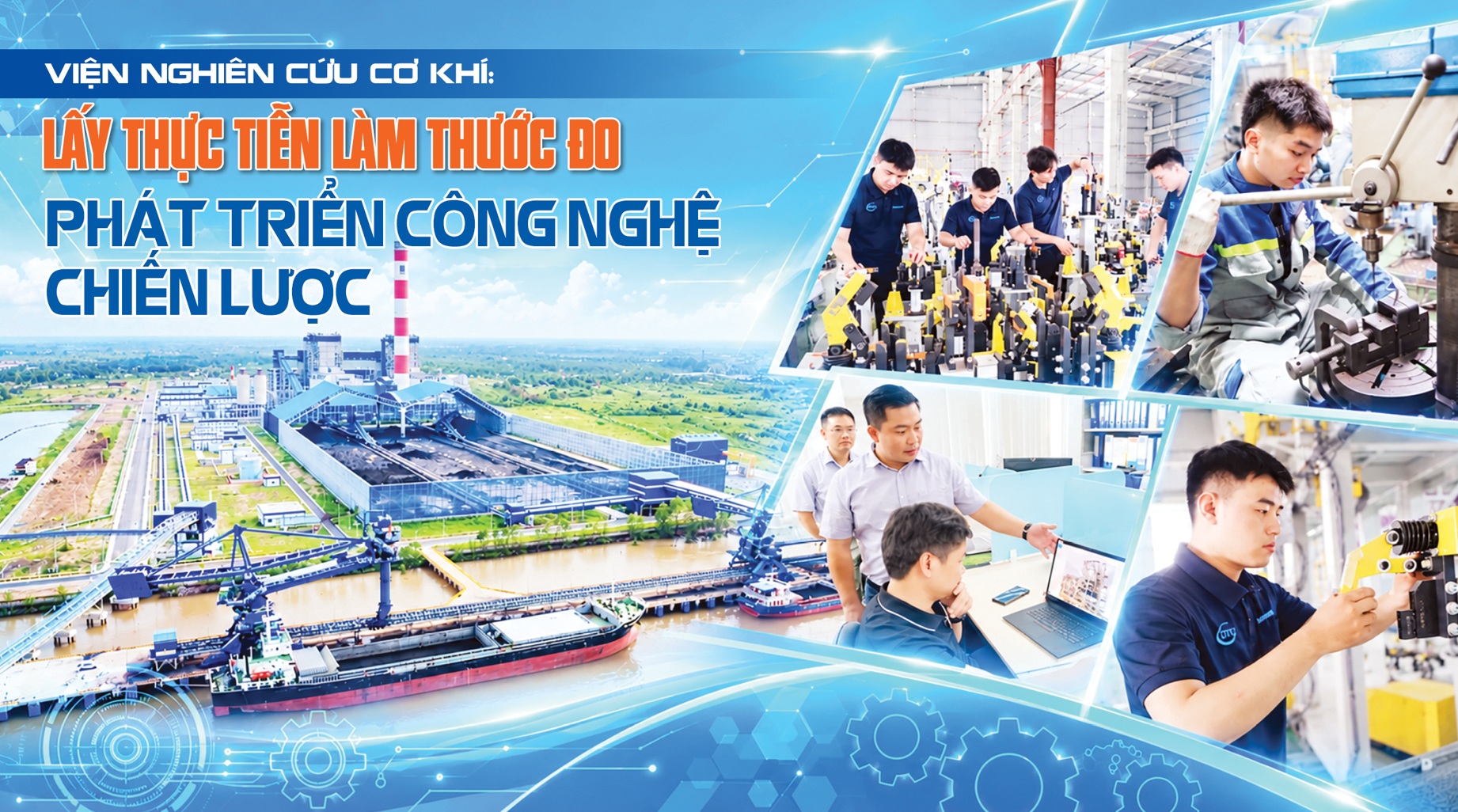
Viện Nghiên cứu Cơ khí: Đẩy mạnh hoạt động khoa học, công nghệ và đổi mới sáng tạo
Những năm gần đây, nhờ đẩy mạnh hoạt động nghiên cứu khoa học, ứng dụng và chuyển giao công nghệ, đổi mới sáng tạo…, Viện Nghiên cứu Cơ khí đã trở thành tổ chức nghiên cứu khoa học và triển khai hàng đầu của Việt Nam trong lĩnh vực cơ khí, tự động hoá…,
The scientific purpose of this study is to optimize 3 main parameters: hammer mass (m), hammer drop height (h) and filter chamber inlet dust concentration (η) of the Electrostatic precipitator (ESP), to meet the dust removal acceleration (a) and the hammer rapping force (F), ensure the working life span of the discharge electrode frames and the collecting electrode plates. This issue is evaluated as a multi-objective problem


