



At the end of August 2026, following the engineers of the National Research Institute of Mechanical Engineering (Ministry of Industry and Trade), we were present at the experimental production workshop, completing and applying the Institute's scientific and technological research results in the automotive field at the Dong Phu Yen Industrial Cluster, Phu Nghia commune, Hanoi.
In a campus of about 1.5 hectares, the sound of machinery is constantly echoing. Engineers and workers are diligently and urgently completing the final stages of a shipment consisting of equipment lines and welding jigs for car bodies to be handed over to the VinFast factory in Hai Phong for production.
Each product is thoroughly inspected before packaging and shipping. Not only serving the domestic market, the enterprise had previously exported a batch of welding jigs to Indonesia worth millions of USD. At the same time, it is preparing the next orders for domestic and international markets. Behind these products are the results of scientific research and technology mastery of the National Research Institute of Mechanical Engineering (NARIME).
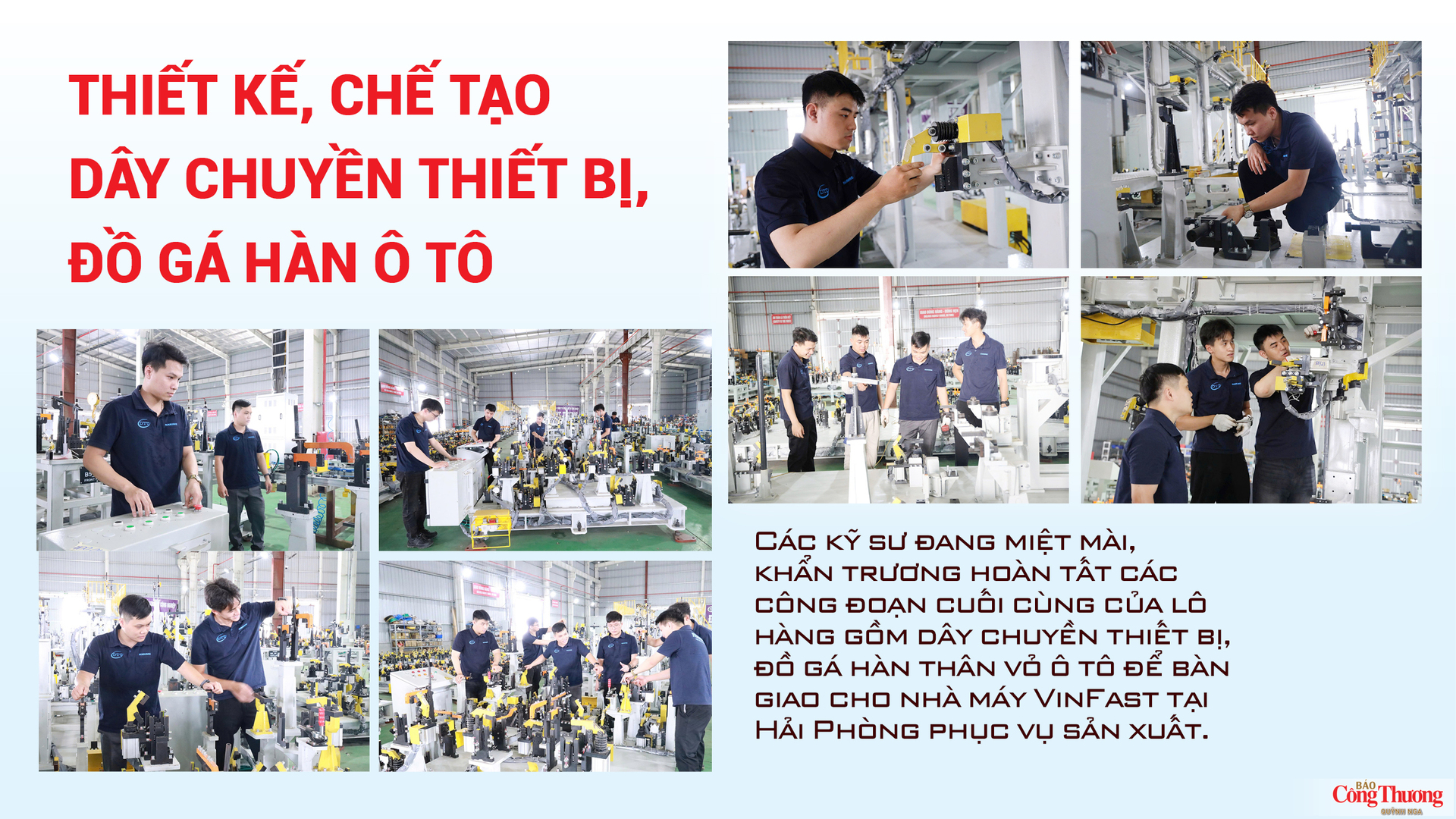
Leading us on a tour of the experimental production workshop, Mr. Hồ Viết Hoàng, the workshop manager, said that the workshop has manufactured jigs for 5 bus lines with various sizes, from 6m, 8.6m, 10m to 12m, along with many electric vehicle lines. Depending on the requirements of each order, the design, manufacturing, and completion time can last from 3-6 months. Currently, many teams at the production workshop are deployed to various locations to install equipment in Indonesia, Hải Phòng, and Hà Tĩnh.
To serve the production process of equipment, the workshop has been invested with relatively synchronous mechanical and automation equipment systems, including automation robots in production; modern CNC lathes, milling machines, cutting machines, and plate bending machines; car frame welding robots... These equipment not only help improve productivity and accuracy but also create conditions for the team of engineers and workers to continue perfecting processes and enhancing manufacturing capabilities right in Vietnam.
In an exchange with a reporter from the Industry and Trade Newspaper, Master - Senior Engineer Nguyen Van Minh, Director of the Heavy Machinery Center of the National Research Institute of Mechanical Engineering, said that since 2012, in response to the requirements of international integration and competition, the Institute has focused on investing resources to research, design, and manufacture equipment lines and welding jigs for automobiles to master technology according to the stringent standards of the automotive industry as well as the specific requirements of renowned car manufacturers such as Honda, Toyota, Hyundai, Ford.
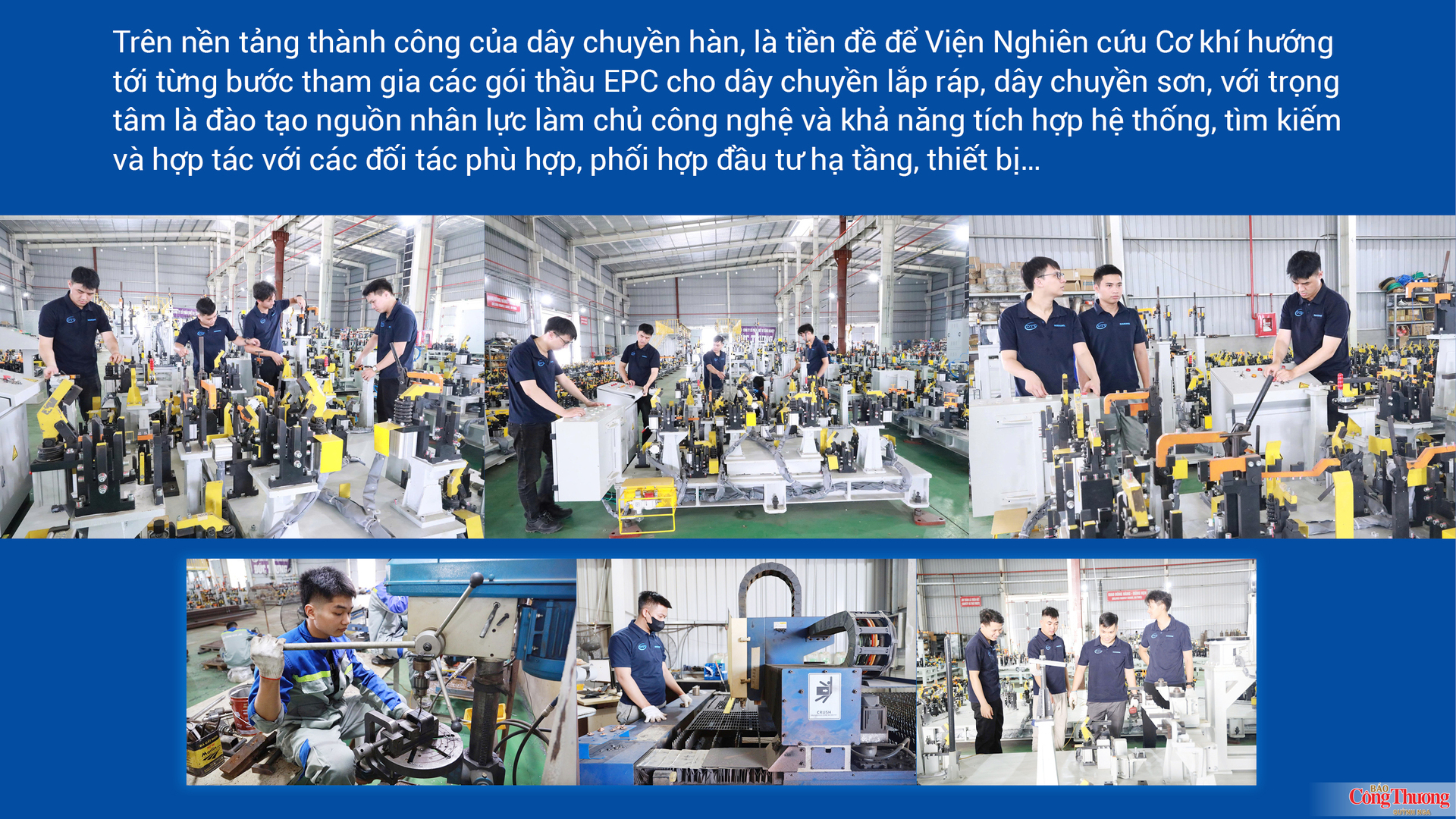
The initial team consisted of only about 12 engineers, directly trained by Japanese and Korean experts. To date, the team of engineers has grown to more than 70 people, capable of designing welding jigs that meet the stringent standards of the global automotive industry, integrating industrial robots, welding guns, control systems and automation, as well as building complete automatic body-in-white welding lines.
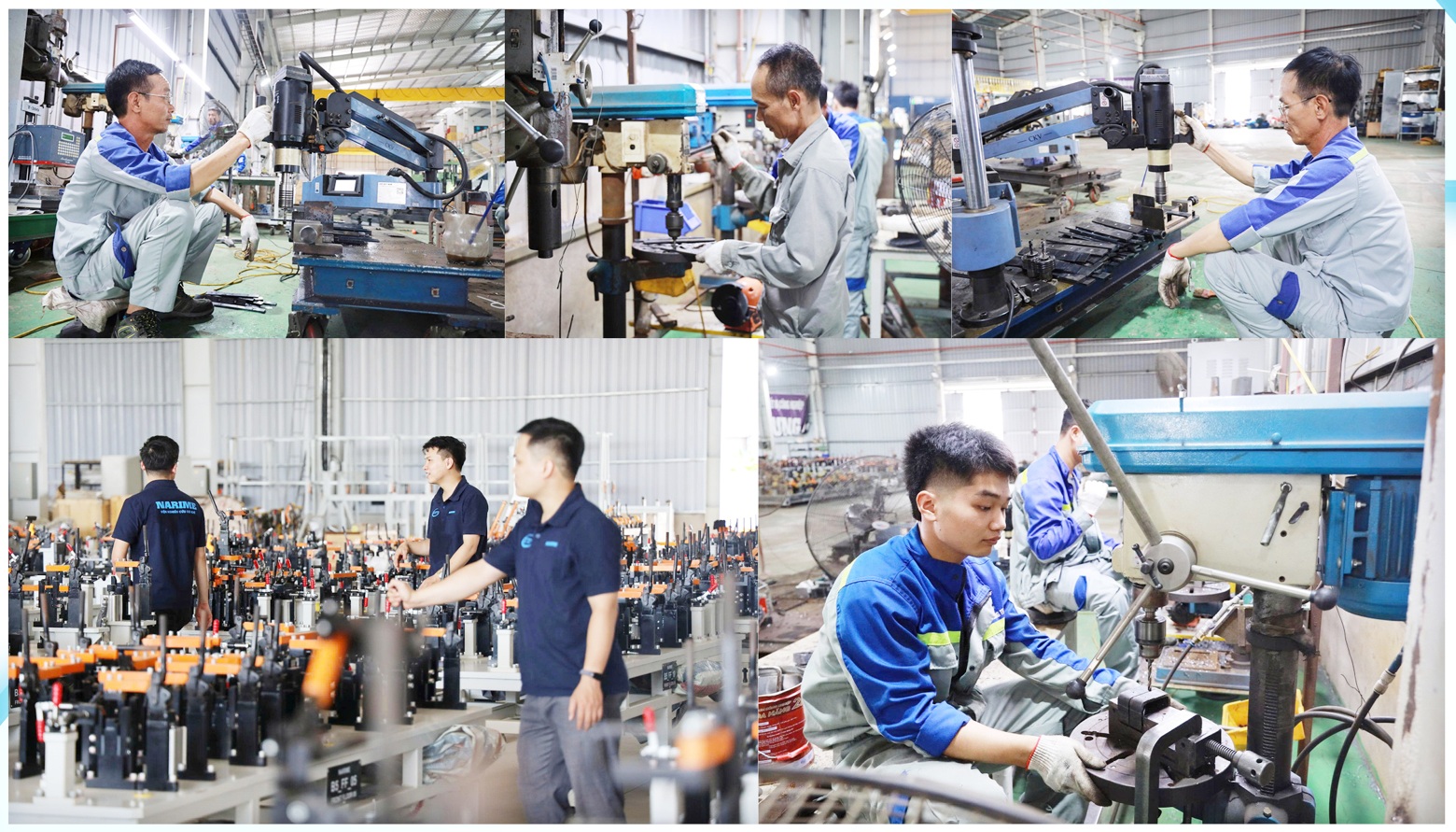
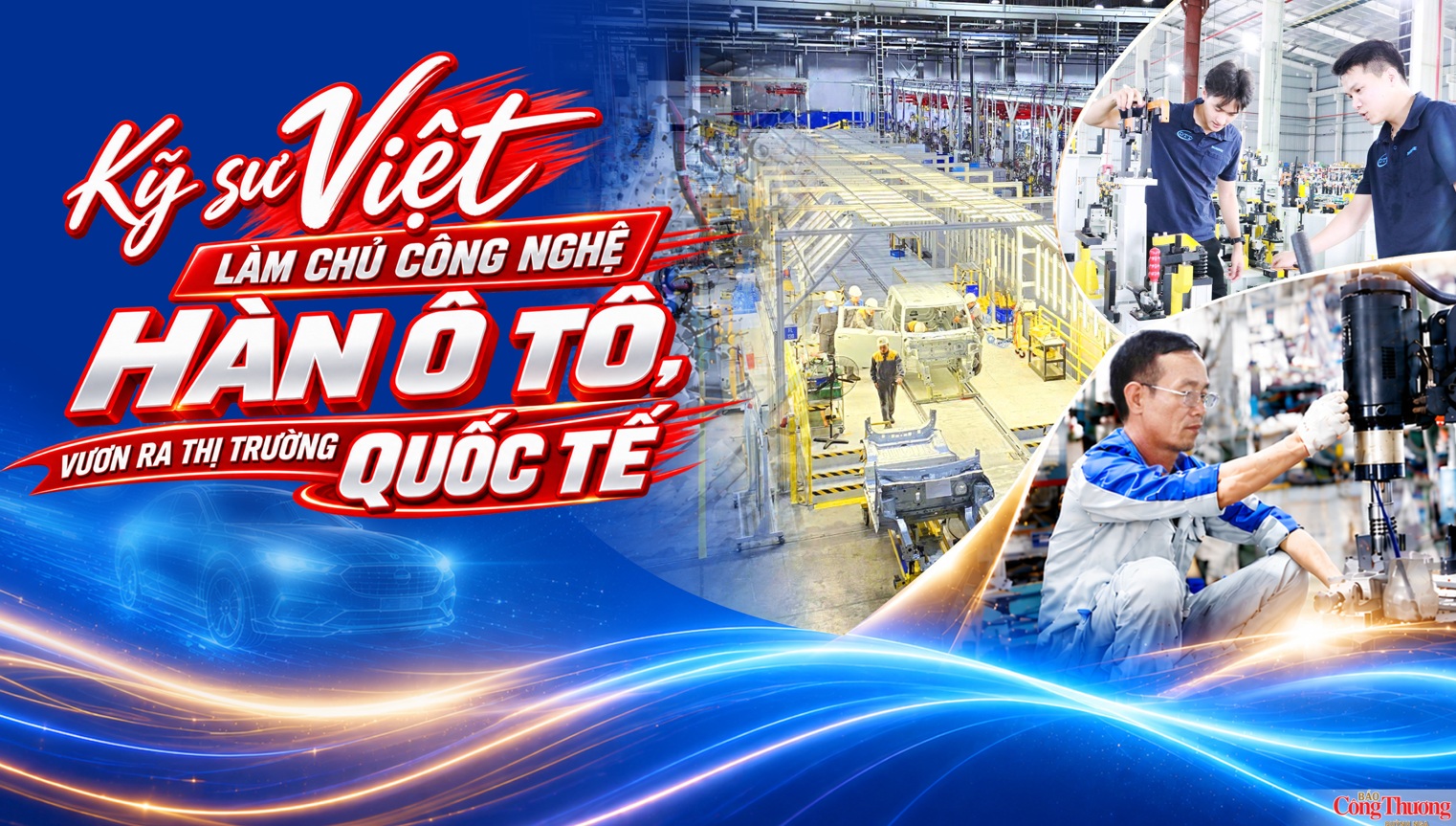
Images from the experimental production workshop, completion and application of scientific and technological research results of NARIME in the automotive field.
According to Master - Senior Engineer Nguyen Van Minh, mastering core technology lines, such as body welding lines, painting lines, and assembly lines, is an important requirement that determines the autonomy, competitiveness, and depth of localization of the industry.
From the practical implementation of large projects, it can be seen that if these technological stages are not mastered, domestic enterprises will always be passive, dependent, and bear very high investment costs. “That is why the Heavy Mechanical Engineering Center - NARIME has persistently pursued the path of mastering the design, manufacturing, and integration of automotive body welding lines, gradually taking on the role of EPC contractor for domestic and international projects” - Mr. Nguyen Van Minh emphasized.

Mr. Nguyen Van Minh recalled that the major turning point came when VinFast inaugurated its automobile manufacturing plant in Hai Phong in 2019. The Institute proactively approached and introduced its capabilities to VinFast, and quickly received its first contract in 2019 for supplying a welding jig line for 10.5m electric buses.
Building on this success, the Institute has continued to participate in many important projects, supplying equipment lines, welding jigs, and inspection jigs for VinFast's electric vehicle models such as VF e34, VF8, VF9, VF5, VF6, VF7, VF3, LIMO7; electric bus lines of 6 meters, 8.6 meters, 10.5 meters, and 12 meters; along with new projects such as Minivan and VF7.1 - work that was previously only undertaken by major foreign contractors from Thailand, Germany, etc. At the same time, the Institute has focused on supporting domestic manufacturers to develop their capabilities and gradually deepen their participation in the market for jigs, equipment, and automotive welding lines.
Sharing specifics about two typical projects, Mr. Nguyen Van Minh stated that the first project is the VF3 welding line in Ha Tinh. This is the first synchronous welding line fully executed by a Vietnamese contractor, from design, manufacturing, installation to operation. Notably, the time from contract signing to welding the first product was only 5 months - a record in schedule, clearly demonstrating the technological mastery and project implementation organization capability of the domestic engineering team.
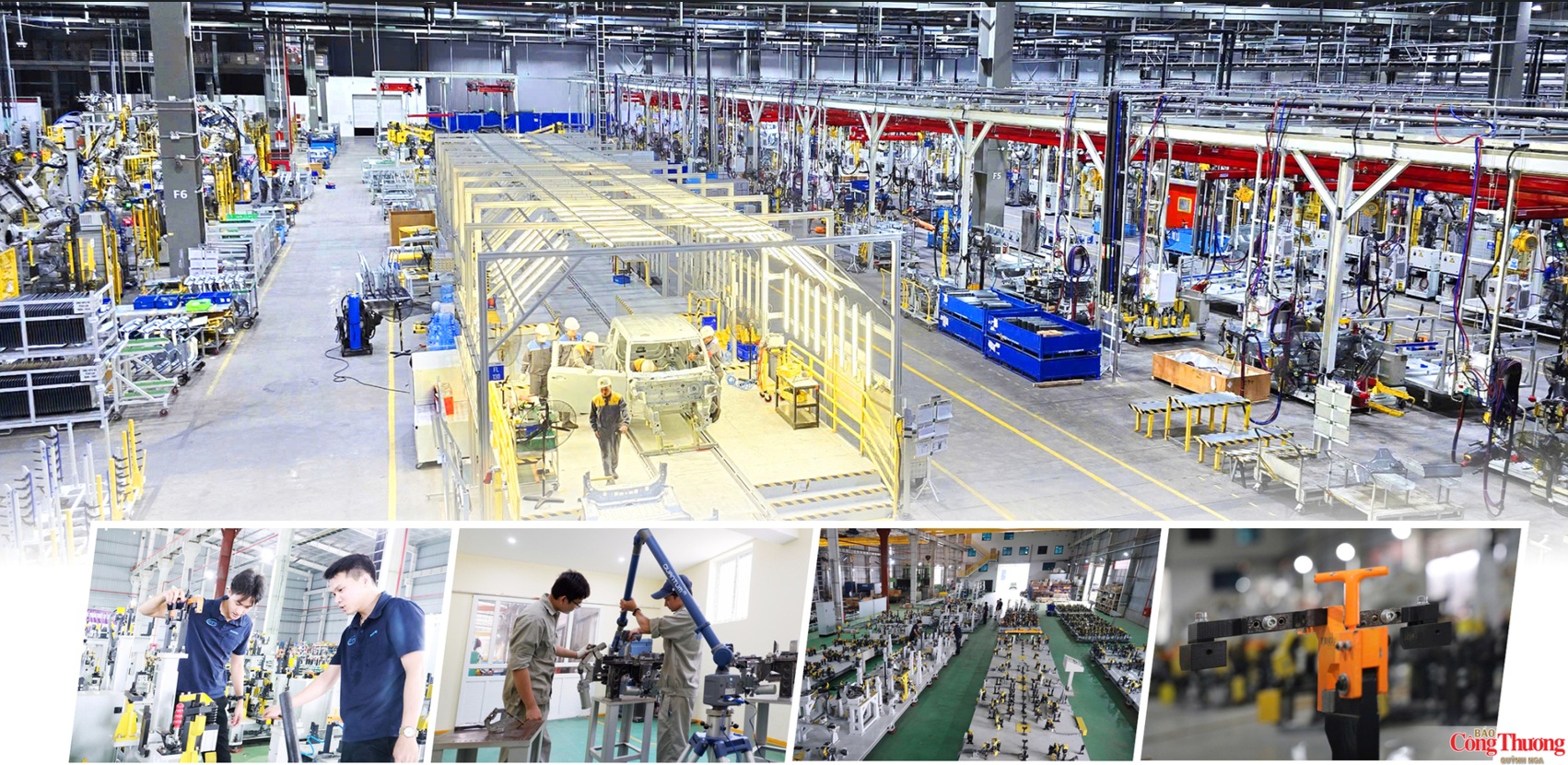
NARIME has provided equipment lines, welding jigs for many electric car models
The second project is the welding line for the LIMO7 vehicle series - a project with a very high level of automation, integrated on the basis of a line previously implemented by the foreign contractor FFT from Germany, but without full transfer of technical documentation. Under those conditions, the engineering team of the Heavy Mechanical Engineering Center proactively surveyed, researched, decoded the system, and successfully integrated the entire line, putting it into stable operation.
From the practical implementation of the above projects, the Heavy Mechanical Engineering Center has drawn some important lessons in executing EPC contracts for automotive welding lines. Accordingly, to master EPC for welding lines, it is mandatory to master jigs, welding technology, robots, and automation - fields with high technical requirements and complexity.
“In the initial stage, cooperation with experienced partners is necessary, but simultaneously, it is essential to assign capable engineers to directly participate in the project to learn, accumulate experience, and gradually master the technology” - Mr. Minh said.
Mastering the design of jigs, robots, and automation helps the Center reduce product costs, be proactive when body data changes, shorten on-site adjustment time, and ensure geometric stability in mass production. The welding stations, jigs, structures, and conveyors are designed with a modular approach, allowing easy expansion for other vehicle models, reducing changeover costs, and fitting the EPC specifics in the automotive industry.
Building on the success of the welding line as a foundation, the National Research Institute of Mechanical Engineering aims to gradually participate in EPC packages for assembly lines and painting lines, focusing on training human resources to master technology and system integration capabilities, seeking and cooperating with suitable partners, and coordinating investment in infrastructure and equipment...
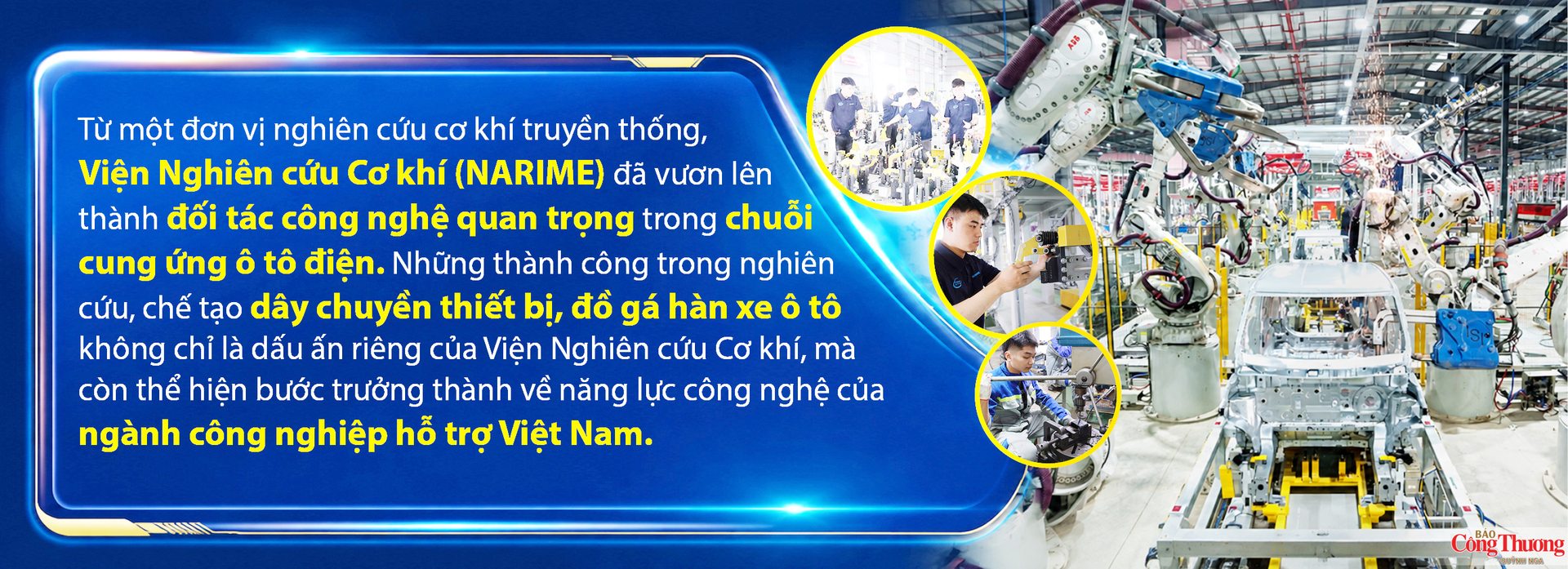
More importantly, these results demonstrate that domestic research and manufacturing units can fully assume the role of EPC general contractor for projects with high scientific and technological content, provided they are assigned the task and given appropriate conditions. This is an important basis for increasing the localization rate, reducing dependence on foreign contractors, and contributing to building a self-reliant and sustainable Vietnamese automotive industry.
Dr. Phan Dang Phong, Director of the National Research Institute of Mechanical Engineering, announced that thanks to mastering automotive technology, in the first six months of 2026, the Institute signed an export contract to Indonesia worth over 22 million USD to supply a complete equipment line for welding two passenger car models. This is not only a valuable export contract but also shows that the capability of domestic engineers and mechanical units has gradually been recognized by the international market.
From initially receiving technology training from foreign experts and participating in the first domestic projects, Vietnamese engineers now have the ability to design, manufacture, integrate, and deploy automotive welding equipment lines with high technical requirements, while gradually bringing Vietnam's high-tech mechanical products to the international market.
This achievement contributes to increasing the localization rate, reducing trade deficits, and enhancing the competitiveness of the domestic mechanical industry in projects with complex technical requirements. This is also one of the key research and technology transfer directions of the National Research Institute of Mechanical Engineering, thereby contributing to concretizing the spirit of Resolution 57-NQ/TW, making science, technology, and innovation a driving force for improving the self-reliance and competitiveness of the economy.
Source: Industry and Trade Newspaper


