

Home
News - Events News and Activities Mastering Heat Exchange Equipment: A Step Forward from Research to Import Substitution
Featured News
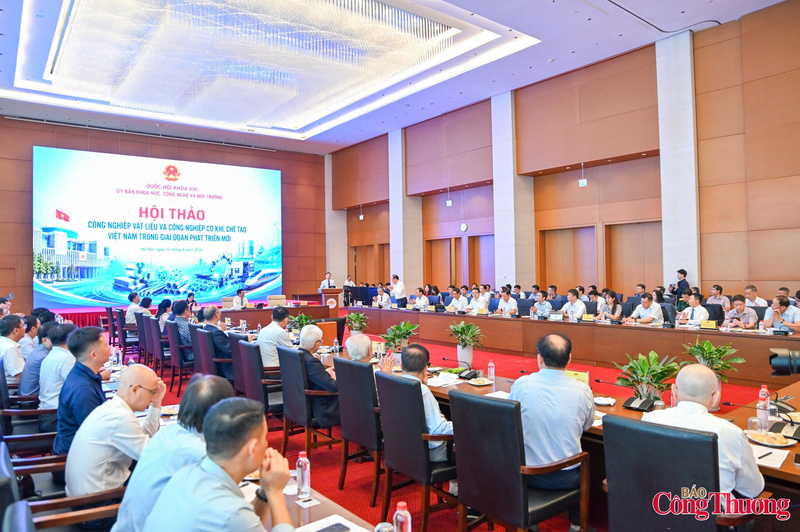


Mastering Heat Exchange Equipment: A Step Forward from Research to Import Substitution
07/5/2026
In the operation of hydropower plants, oil and air cooling heat exchangers serve as equipment that maintains the stability of the entire unit. Although not classified as main equipment, their performance directly determines the lifespan and continuous operation capability of generators, transformers, bearing systems, guide bearings, and key auxiliary assemblies. Previously, most of these devices were imported as complete sets; when replacement, repair, or spare parts procurement was needed, project owners often depended on foreign manufacturers for technical documentation, faced long delivery times, and high costs.
In recent years, the National Research Institute of Mechanical Engineering (Narime) has gradually researched, decoded, and mastered the technology of designing and manufacturing heat exchangers. Notably, Narime did not approach this by copying the physical shape of the equipment, but started from actual operational requirements at the plant: calculating heat balance, selecting materials, determining flow cross-sections, designing the tube bundle structure, developing sealing welding plans, and conducting pressure tests before putting the equipment into use.
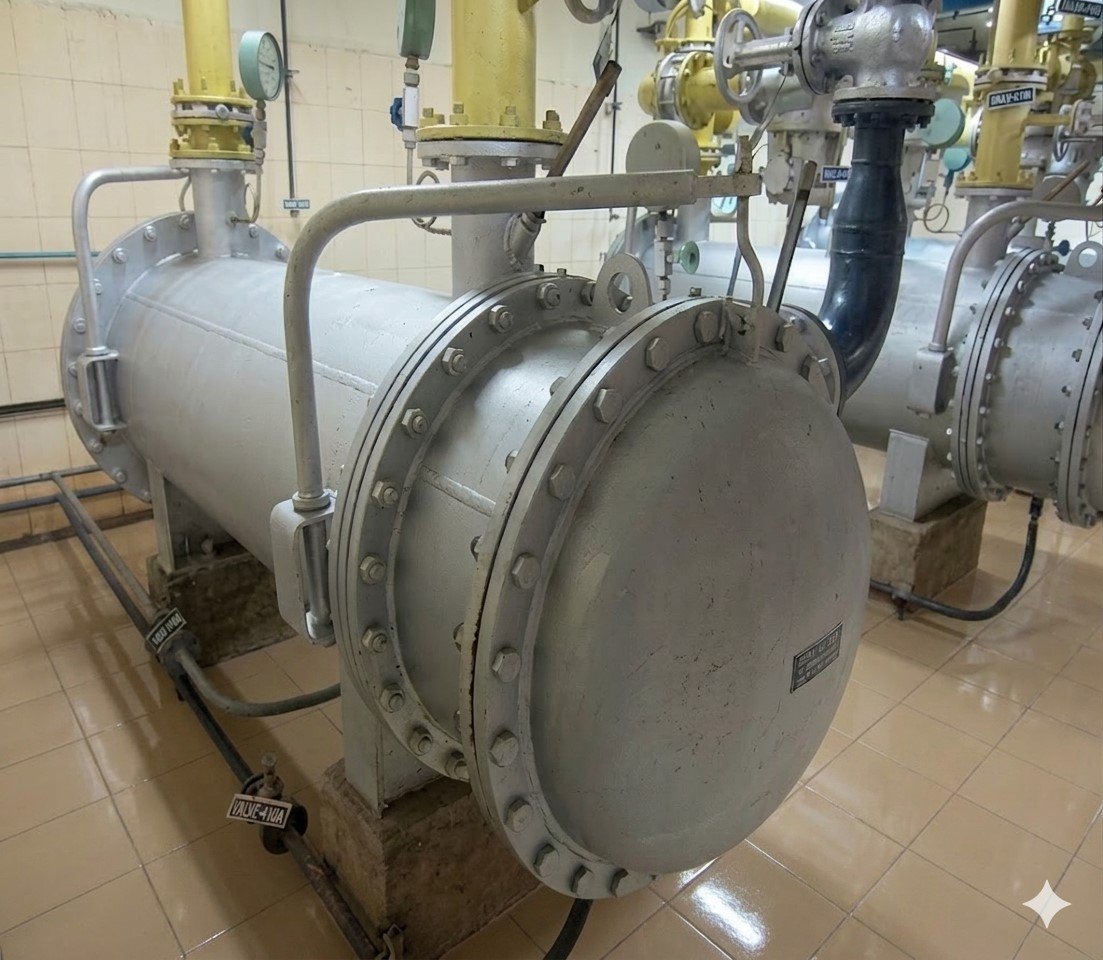
Figure 1. Transformer oil cooler manufactured and installed by Narime at YALY and Hoa Binh hydropower plants.
Technical specifications of the Transformer oil cooler:
- Heat exchange capacity: ≥ 1000 kW;
- Heat exchange surface area: ≥ 53 m²;
- Cooling water flow rate: approximately 72 m³/h;
- Cooling oil flow rate: approximately 100 m³/h;
- Oil operating temperature: 10 - 95°C;
- Cooling water temperature: 1 - 40°C;
- Operating pressure (water side): 0.03 - 0.2 MPa;
- Operating pressure (oil side): approximately 0.4 MPa.
The above technical specifications of the heat exchangers show that the products can meet technical requirements equivalent to imported equipment of the same type. To achieve this level, the design stage must concurrently control many factors: heat transfer capability, pressure loss, cleanliness of the medium, temperature fluctuations, joint tightness, and durability of the tube bundle under continuous operating conditions.
One of the products that clearly demonstrates Narime's technology mastery capability is the transformer oil cooler, which has been installed at hydropower plants such as Hoa Binh, Ialy, and many other projects. For this equipment, the requirement is not only to manufacture it to the correct size for replacement installation, but also to ensure heat exchange efficiency, tightness, pressure resistance, and stability during long-term operation.
Difficulties when first researching and mastering the technology
The biggest difficulty in the research process was not in manufacturing a single mechanical component, but in mastering the entire design problem of heat exchange equipment without having the full original design documents. The research team had to survey existing equipment, take field measurements, analyze materials, evaluate plant load regimes, and reconstruct calculation parameters so that the new equipment could be installed as a replacement while being suitable for actual operating conditions.
Furthermore, the transformer oil cooler works simultaneously with two media—oil and water—so the requirements for tightness and safety are very high. Even a small deviation in flow calculation, heat exchange area, tube structure, or weld quality could affect the cooling performance and reliability of the unit. Therefore, the design and manufacturing process must be accompanied by pressure testing, leak testing, material quality control, and strict acceptance before handover to the plant.
Decoding core technology
To manufacture this equipment, Narime conducted an in-depth research process, including: analyzing the shell-and-tube heat exchange structure; optimizing oil and water flow; mastering the manufacturing technology of heat exchange tubes and pressure-tight sealed welds; controlling thermal stress, deformation, and durability during long-term operation. The equipment also had to be suitable for operating conditions in Vietnam, where ambient temperature, cooling water quality, and plant load regimes can vary significantly by season and power system load.
Each plant has different operating conditions, so the equipment is designed on a project-specific basis, rather than mass-produced to a fixed template. This approach helps the new equipment be compatible with existing installation spaces, utilize available piping systems and connection assemblies, and minimize downtime during replacement.
To date, heat exchangers researched, designed, and manufactured by Narime have been applied at more than 29 domestic hydropower projects such as Hoa Binh, Son La, Tuyen Quang, Tri An, Thac Mo, Ban Chat, Buon Kuop... The deployment of products into operation at many plants is an important testament to the ability to transfer research results into industrial equipment with specific application sites.
Benefits for project owners and the domestic mechanical engineering industry
The successful localization of heat exchangers brings practical benefits to project owners: cost reduction of at least 30% compared to the import option; shortened repair and maintenance time; proactive supply of replacement spare parts; and reduced risk of dependence on foreign suppliers in situations requiring rapid plant response.
More importantly, this result is not limited to a specific product, but has also established the capability for calculation, design, manufacturing, testing, and integration of equipment according to the requirements of each project. This is the foundation for Narime to continue developing mechanical products with higher technical requirements in the energy and industrial sectors.
From individual equipment to system mastery capability
Starting from heat exchangers, Narime is expanding its capabilities to auxiliary equipment assemblies, replacement equipment, and synchronous systems serving energy plants. This is a direction consistent with the requirements of domestic mechanical engineering development: not just manufacturing components, but progressively mastering design, integration, and after-sales technical services.
In the context where many power plants and industrial plants are entering a phase requiring overhaul, upgrade, and equipment replacement, mastering products such as heat exchangers has very practical significance. It is a way to reduce costs, take control of repair schedules, increase the localization rate, and gradually build technology self-reliance capability for Vietnam's mechanical engineering industry.
Phan Đăng Phong, Phan Hữu Thắng- National Research Institute of Mechanical Engineering (Narime)
Source: Vietnam Mechanical Engineering Journal
Related News
- Discuss solutions to promote foundational industries in the new period
- Research results on the application of robots in a detergent powder manufacturing plant
- Specific mechanisms and policies are needed to develop mechanical engineering products with large market capacity in the period 2026-2045.
- Mastering Heat Exchange Equipment: A New Step Forward for Vietnam's Mechanical Engineering Industry


