

Home
News - Events Science & Technology News The complete equipment manufacturing industry: Sufficient capacity to serve as general contractor for large-scale projects.
Featured News

The complete equipment manufacturing industry: Sufficient capacity to serve as general contractor for large-scale projects.
In recent years, based on the planning and development strategies of industries as well as the development strategy of Vietnam's mechanical engineering sector, the research institutes under the Ministry of Industry and Trade have made in-depth investments in the fields of design and technology transfer, thereby possessing sufficient capacity to act as general contractors for a number of complete equipment lines for the country's important industries.
Milestones on Key Projects
Nearly 10 years ago, the Prime Minister issued Decision No. 1791/QĐ-TTg approving the pilot mechanism for domestic design and manufacturing of thermal power plant equipment for the period 2012-2025. Accordingly, the National Research Institute of Mechanical Engineering (Ministry of Industry and Trade) was assigned the task of presiding over and coordinating with domestic mechanical engineering enterprises to design and manufacture equipment for thermal power plants.
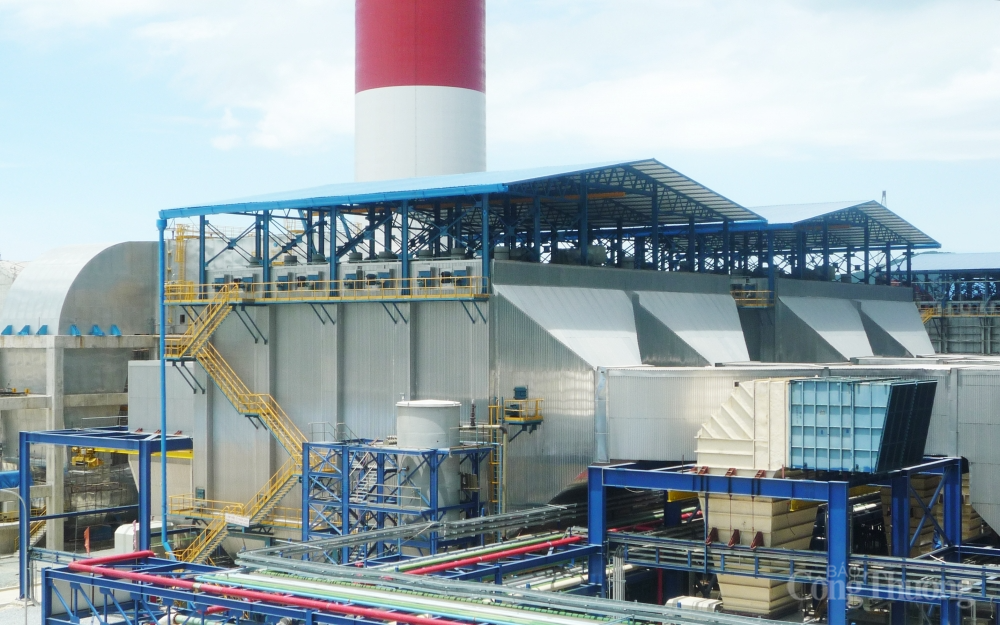
Electrostatic precipitator system at Thai Binh 1 Thermal Power Plant
Overcoming difficulties in research conditions, to date, many scientific projects have left their mark on key projects. A typical example is the state-level project 'Research, design, manufacturing, assembly, and commissioning of coal handling and transportation systems for coal-fired thermal power plants with unit capacity up to about 600 MW'.
This was the first time Vietnam successfully researched, designed, manufactured, integrated, and put into operation a coal handling and transportation system for the Song Hau 1 Thermal Power Plant with a localization rate of 50.6%, and equipment equivalent to technological equipment from G7 countries, opening a new development direction for the domestic manufacturing mechanical engineering industry.
Equally remarkable is the project 'Completion of design and manufacturing technology, trial manufacturing of electrostatic precipitators with capacity of 1,000,000 Nm3/h', which was successfully applied at Vung Ang 1 and Thai Binh 1 Thermal Power Plants with a localization rate of over 70%. Currently, the National Research Institute of Mechanical Engineering has been trusted by Doosan Group (South Korea) with a contract to supply electrostatic precipitators for Nghi Son 2 Thermal Power Plant and is expected to continue being assigned the contract for Vung Ang 2 Thermal Power Plant in 2022.
In particular, in the hydropower sector, the National Research Institute of Mechanical Engineering was assigned the task of presiding over the transfer of technology for the design and manufacture of hydraulic mechanical equipment for hydropower projects under Decision No. 797/QĐ-TTg of the Prime Minister, with the first project being A Vuong Hydropower Plant. The success of this task has brought high socio-economic benefits, contributing to the success of the sector's development.
'From the success of the first project, the Institute, together with domestic mechanical engineering units, has become self-reliant in designing and manufacturing hydraulic mechanical equipment for over 29 medium and large hydropower projects in the country, including the Son La (2400 MW) and Lai Chau (1200 MW) hydropower plants,' shared Dr. Phan Dang Phong, Director of the National Research Institute of Mechanical Engineering.
Notably, the success of the projects has created many jobs for the domestic mechanical engineering industry, with revenue from this area reaching about 8,000 billion VND, contributing to reducing product cost from 4.4 USD/kg of product to 1.5 USD/kg of product, and contributing to early power generation by 3 years for Son La Hydropower Plant and 1 year for Lai Chau Hydropower Plant, bringing high economic efficiency to the projects.
Not stopping there, in the field of mineral mining and processing, the National Research Institute of Mechanical Engineering has successfully participated as the EPCM general contractor for 02 projects, Tan Rai and Nhan Co, with a design capacity of 2 million tons of concentrate per year. Notably, this includes the design and manufacturing of 02 complete conveyor lines with a total length of 5 km each per plant.
Currently, these conveyor lines have been handed over and put into operation meeting requirements, and have been issued acceptance certificates by the Investor for use. From the success of this task, the domestic units directly involved have gained the trust of investors and continue to be assigned to other projects such as: Bao Loc Mineral Processing Plant with capacity of 200.000 tons/year, Lam Dong Processing Plant with capacity of 1.700.000 tons/year, Nhan Co Mineral Processing Plant with capacity of 1.700.000 tons/year...
In the field of construction materials production, the Institute coordinated with Vietnam Machinery Installation Corporation to carry out the large-scale science and technology project: 'Research, design, and manufacture of main equipment for synchronous production lines of rotary kiln cement with capacity of 2500 tons of clinker/day, replacing imports, implementing the localization process' with 03 topics (automatic bagging machine, large-capacity dust filter equipment, and automatic control of plant equipment lines), which was successfully applied to the Song Thao rotary kiln cement project, achieving a localization rate of about 40% of the value...
Need to Prioritize Domestic Mechanical Engineering Units
Assessing the development trend of the complete industrial equipment sector, Dr. Phan Dang Phong said that according to Decision No. 319/QĐ-TTg of the Prime Minister approving the development strategy of Vietnam's mechanical engineering industry to 2025, with a vision to 2035, the objective is to form a number of consulting and manufacturing contractor consortia capable of mastering the design and manufacturing of auxiliary equipment groups and EPC packages for industrial projects.
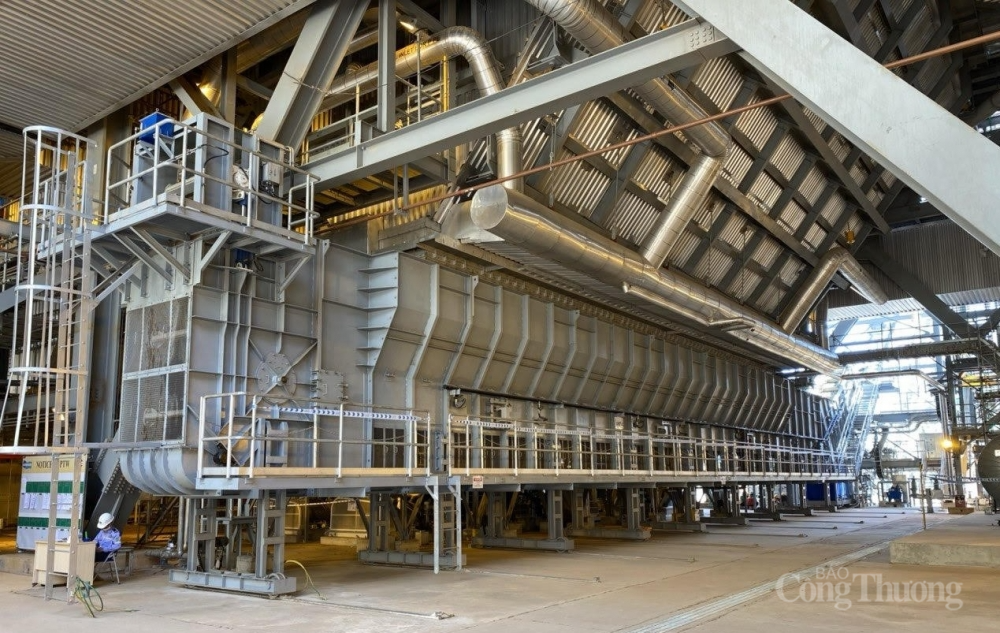 |
| Slag handling system at Nghi Son 2 Thermal Power Plant |
In reality, in the field of complete equipment lines, the market capacity is still very large. 'For example, in the field of complete thermal power plant equipment, according to the adjusted Power Master Plan VII, by 2030, the total capacity of power plants will be about 129.500 MW, of which coal-fired thermal power accounts for about 42,6%; gas thermal power (including LNG) 14,7%,' Dr. Phan Dang Phong cited.
According to data from Vietnam Electricity Group, by the end of 2020, the total installed capacity of the entire system reached 69.300 MW, of which coal-fired thermal power accounted for 41,6%, hydropower 37,7%, gas 18,8%. Thus, by 2030, for coal-fired thermal power, it will increase from 28.829 MW to 55.167 MW. If the average investment rate is 1,7 million USD/1W, then domestic coal-fired thermal power alone will invest with a total value of 45.795 million USD.
'Just considering the self-implementation of equipment under Decision No. 1791/TTg of the Prime Minister, the domestic value that can be self-realized is about 30% of the cost to be incurred, equivalent to 13.737 million USD,' Dr. Phan Dang Phong said, and also informed that for gas thermal power, it increases from 13.028 MW to 19.036 MW. Calculating the average investment rate of 1.25 million USD/1MW, domestic gas thermal power alone will invest with a total value of 7.510 million USD.
Therefore, the trend is that some large enterprises and groups will spend money to invest in owning system design technology and key equipment in order to capture and dominate the complete equipment market, thereby controlling the global supply chain including auxiliary equipment. Thus, they will reap high profits by cheaply outsourcing manufacturing from companies in the supply chain, but selling very expensively to investors due to monopoly.
'To date, most of the synchronous equipment lines for domestic industries are being supplied by foreign contractors, with the domestic value achieved not exceeding 20%,' Dr. Phan Dang Phong stated the reality.
For example, in the thermal power sector, most of the thermal power equipment lines in Vietnam today are provided by foreign contractors in the form of EPC general contracting, mostly Chinese contractors because they have low bid prices and also have the ability to arrange capital.
When Chinese companies win EPC contracts in projects, they bring into Vietnam even unskilled labor, raw materials, supplies, and equipment that Vietnam is already capable of producing to carry out the work. Thus, we invest in thermal power projects but have not created jobs for domestic enterprises and workers, but instead create jobs and revenue for the Chinese mechanical engineering industry.
The reasons why domestic contractors have not been assigned design, manufacturing, and equipment supply for industrial plant projects invested in domestically include: Because the capital mobilization for thermal power plant projects requires a large amount of capital, domestic investors often apply project arrangement in the form of ECA (Export Credit Agency).
'Thus, only foreign contractors can meet this criterion, and they will cover everything from plant design, equipment procurement, plant construction, while domestic contractors only undertake a part of the mechanical structure according to their design and instructions,' Dr. Phan Dang Phong emphasized, while also expressing that the urgent task in the coming time is for research institutes and specialized mechanical engineering units to develop research programs, invest in scientific and technological potential to research and receive technology transfer towards mastering the design and manufacturing of complete equipment lines in these fields.
Related News
- Discuss solutions to promote foundational industries in the new period
- Research results on the application of robots in a detergent powder manufacturing plant
- Specific mechanisms and policies are needed to develop mechanical engineering products with large market capacity in the period 2026-2045.
- Mastering Heat Exchange Equipment: A New Step Forward for Vietnam's Mechanical Engineering Industry


