

Home
News - Events Specific mechanisms and policies are needed to develop mechanical engineering products with large market capacity in the period 2026-2045.
Featured News
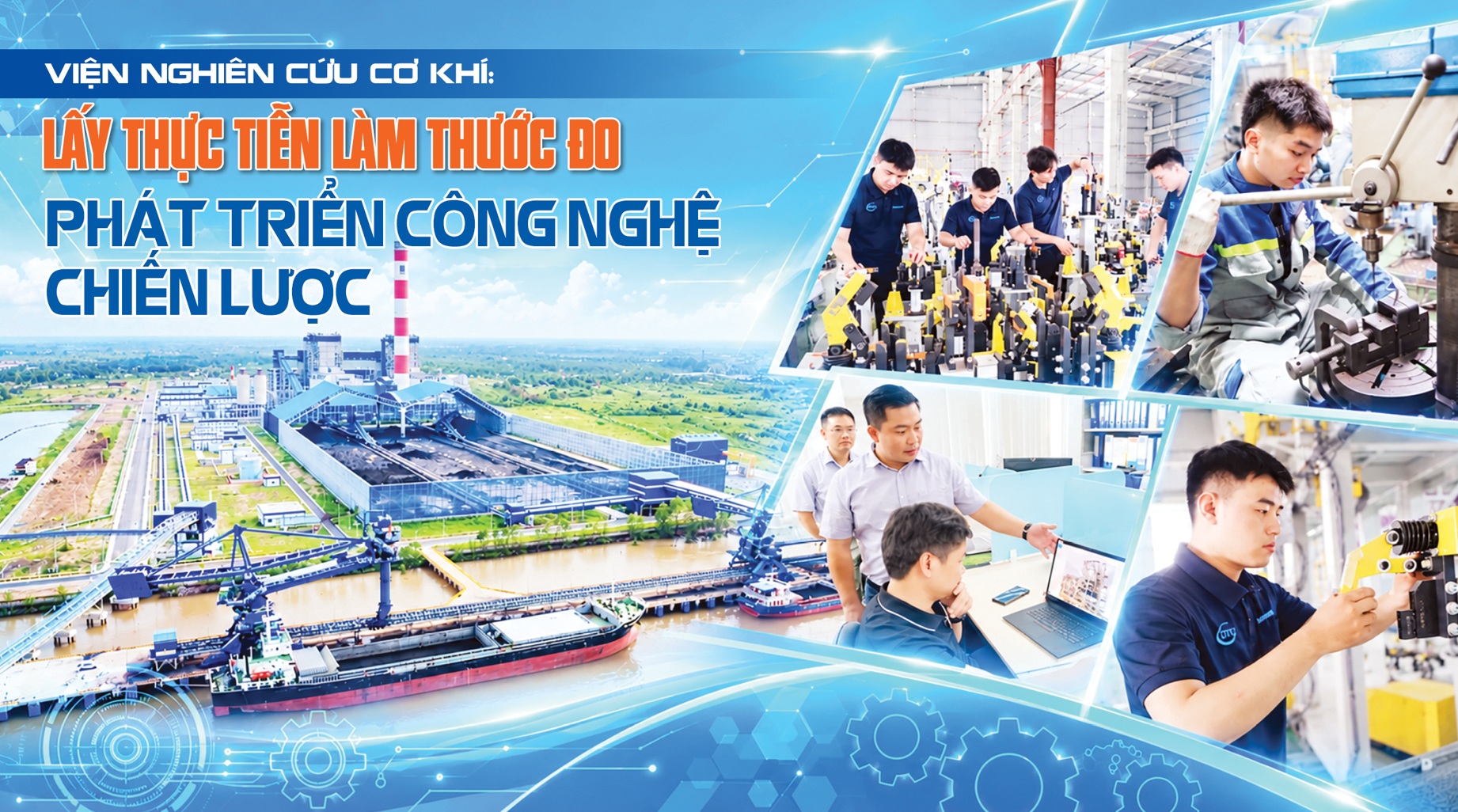




Specific mechanisms and policies are needed to develop mechanical engineering products with large market capacity in the period 2026-2045.
04/5/2026
Based on compiled data from the General Statistics Office and foreign trade data provided by the Ministry of Industry and Trade, the production scale of the entire mechanical engineering industry increased rapidly in the period 2018-2025. The total value of mechanical engineering production rose from approximately 1.626,3 trillion VND (in 2018) to approximately 3.225,5 trillion VND (in 2025), equivalent to nearly 2,0 times; the average growth rate is estimated at about 10,3%/year. Regarding foreign trade, exports of machinery, equipment, tools, and spare parts increased from 384,7 trillion VND in 2018 to 1.557,7 trillion VND in 2025; imports increased from 784,0 trillion VND to 1.610,0 trillion VND. As a result, the trade balance improved significantly, with the trade deficit decreasing from 399,3 trillion VND to about 52,3 trillion VND. These figures show that Vietnam's mechanical engineering sector has grown markedly in both production and participation in international trade. However, the development foundation is not yet truly solid, as the FDI sector still dominates heavily, accounting for about 92-93% of export value and about 75% of import value in recent years.
Regarding production organization, data from the General Statistics Office shows that the mechanical engineering industry currently has 43.601 establishments, accounting for nearly 30% of processing and manufacturing industrial enterprises. Among them, mechanical fabrication has 22.705 units, transport vehicles 1.395 units, and electrical equipment 1.946 units. The industry achieved revenue of approximately over 3,2 quadrillion VND, creating jobs for more than 1,57 million workers; of which mechanical fabrication about 0,55 million people, transport vehicles 0,29 million people, and electrical equipment 0,26 million people.
A review of the implementation of Decision No. 319/QĐ-TTg on the Vietnam Mechanical Engineering Development Strategy shows that the most prominent result is the expansion of production scale, the development of some sub-sectors, and rapid export growth. However, in-depth results remain limited. The capacity to master core technologies, the formation of strong consulting-manufacturing complexes, and the enhancement of the role of domestic enterprises in key projects have not yet achieved significant progress.
Decision No. 319/QĐ-TTg set a fairly comprehensive system of targets for the mechanical engineering industry by 2025, with a vision to 2035. The focus is on enhancing self-reliance to meet about 45% of domestic market demand by 2035; simultaneously promoting exports, with the proportion of export output reaching about 35% by 2020 and 45% by 2035. Regarding production capacity, the Strategy aims to form strong mechanical engineering corporations and consulting-manufacturing complexes capable of undertaking the role of EPC general contractor for large-scale projects in the fields of energy, industry, and infrastructure. Along with that, the development of a supporting industrial ecosystem helps domestic enterprises master technology, increase design content, and participate more deeply in the value chain.
Overall, the implementation of the targets in Decision No. 319/QĐ-TTg has only reached a fairly average level. The industry has expanded its scale and exports have increased strongly, with export value in 2025 about 4 times that of 2018. However, development across sub-sectors lacks uniformity; many high-tech fields still depend on imports, and the localization rate is low. Although there have been some leading enterprises such as THACO, VinFast and some capable units such as LILAMA, PVSHIPYARD, the capacity to master design, the role of general contractor, and the supporting industrial ecosystem have not yet met expectations. In particular, export growth still mainly relies on the FDI sector, indicating that the internal strength and position of Vietnamese mechanical engineering enterprises in the global value chain remain limited.
The reasons for not achieving the targets range from mechanisms to enterprise internal strength. One of the major barriers is that after Decision No. 319/QĐ-TTg was issued, the system of implementation mechanisms and support resources was not sufficiently synchronized or strong enough to translate strategic goals into reality. Besides, the mechanical engineering industry lacks a stable domestic market and lacks long-term orders from national projects for enterprises to accumulate experience and gradually master core technologies. The internal strength of most domestic enterprises is weak, with small scale and limited financial capacity; many enterprises, when the market is favorable, still choose imports instead of persistently investing in self-reliance. The role of leading enterprises has also not met expectations, especially in driving and supporting the system of domestic satellite enterprises.
Implementation practice shows that a correct strategy is only a necessary condition. To achieve results, there must be a specific action plan with clear responsibility, resources, and timelines for each priority area. An important lesson is to link enterprise capacity building with domestic market exploitation. National key projects should be seen as "large orders" and also as a challenging environment for domestic mechanical engineering enterprises to participate more deeply in the value chain, thereby accumulating experience, expanding scale, and moving towards mastering technology.
The mechanical engineering market capacity for the period 2026-2045 is forecast based on taking the mechanical engineering production scale of 2025 as the base year, combined with a growth scenario of about 10%/year. According to this calculation, the market size could reach about 21.699,6 trillion VND over the entire period.
In key markets, offshore wind power is estimated at about 3.165,6-4.484,6 trillion VND; gas/LNG power about 1.055,2-1.450,9 trillion VND; the three sectors of urban railways, inter-regional railways, and high-speed railways about 3.418,8-3.693,2 trillion VND; mineral mining and processing about 1.055,2-1.582,8 trillion VND; nuclear power about 2.844,8-4.267,2 trillion VND. These are sectors with large equipment value, high technical requirements, and can create a leading market for domestic mechanical engineering if Vietnamese enterprises are allowed to participate early through appropriate mechanisms.
From the above forecasts, it can be seen that the domestic market in the period 2026-2045 is large enough to create new momentum for the mechanical engineering industry, but the right focus must be chosen. Priority sectors should include railways, energy, power grids, mineral mining and processing, shipbuilding, automobiles - motorcycles, electrical equipment, agricultural machinery, synchronous equipment, and post-investment technical services. These are sectors that both have large market scale and have the ability to spread to supporting industries and form core mechanical engineering enterprises.
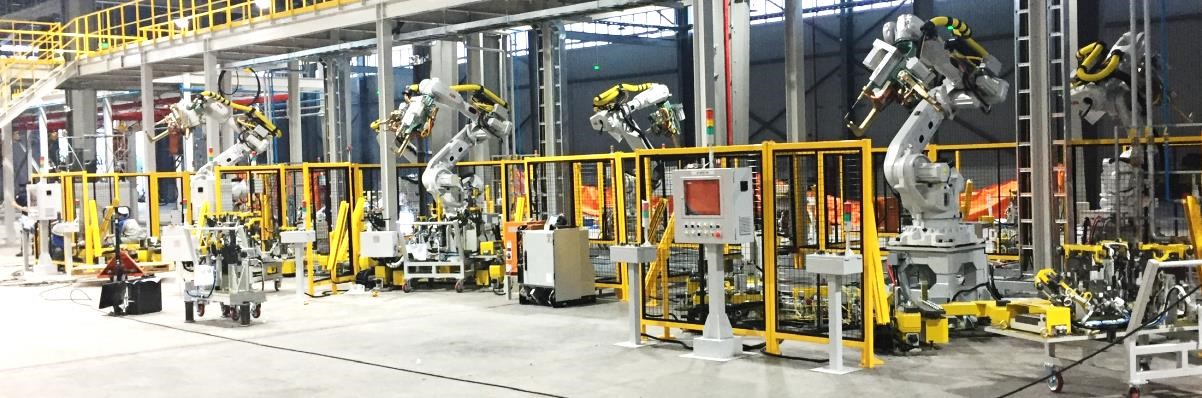 Welding station for Sub parts of the 5-seat electric car frame designed and manufactured by NARIME and supplied to the VINFAST automobile plant.
In other words, the opportunity for Vietnam's mechanical engineering lies right in the domestic market. The key issue is to turn investment demand into specific orders, specific technology transfer tasks, and specific localization requirements for Vietnamese enterprises. Without a clear implementation mechanism, most of the equipment value of large projects will still belong to foreign contractors and suppliers.
The potential from urban railways, inter-regional railways, gas power, offshore wind power, mineral mining and processing is very large, but many domestic mechanical engineering enterprises still stand outside the highest value-added stages. The biggest weakness today is the capacity for overall design and system integration for synchronous equipment lines. While foreign partners hold the core parts of the project such as technology, design, control software, and integration standards, Vietnamese enterprises mainly participate in steel structure fabrication, single-part manufacturing, or installation.
The lack of a sufficiently strong design consultancy team makes us passive in equipment procurement and specialized technical services. For example, in offshore wind power projects, domestic enterprises can participate better in items such as foundations, steel structures, and substations; but key stages such as overall design, system integration, turbines, control, and operations management still depend heavily on foreign suppliers. Without mastering integrated design, domestic enterprises only participate in low-value parts, lose initiative in component supply, and depend on external technical requirements. Without serious investment in R&D and forming technology alliances to solve the integration problem, Vietnam's mechanical engineering will find it difficult to escape the position of processing and assembly, while large orders continue to belong to multinational corporations.
Therefore, issuing specific mechanisms and policies for the mechanical engineering industry in the period 2026-2045 is an urgent requirement. The goal is to break the vicious cycle of "weak capacity due to lack of opportunity, lack of opportunity due to weak capacity", gradually helping Vietnamese enterprises escape the situation of being subcontractors on their own turf. In the spirit of Resolution No. 29-NQ/TW on accelerating industrialization and the Mechanical Engineering Development Strategy, there is a need for sufficiently strong policies to turn the country's major projects into actual orders for domestic enterprises, instead of letting most of the value fall into foreign contractors. Only when there are breakthrough mechanisms will enterprises have the motivation to invest in key stages such as design, system integration, testing, certification, and project management, thereby creating a foundation for a more self-reliant mechanical engineering industry.
The mechanisms and policies to create breakthroughs in the coming period should focus on sectors with large market capacity, high spillover effects, and the ability to move Vietnamese enterprises into design, system integration, project management, and equipment manufacturing stages. Support must be conditional, time-bound, with quantifiable criteria linked to output results. It should not be spread across the entire industry, but should concentrate on key mechanical products, core enterprises, priority projects, and high value-added stages. In the immediate term, the following specific tasks need to be addressed:
Developing key mechanical products linked to the market and increasing the localization rate of equipment: This content needs to be implemented through key programs associated with national investment projects, using the domestic market as a substantive foundation to gradually master design, system integration, project management, general contracting, equipment manufacturing, and developing supporting industries. The programs should focus on sectors with large market capacity, high spillover effects, and the ability to move Vietnamese enterprises into higher value-added stages of the industrial value chain.
Enhancing capacity in design, research, technology transfer, and technology mastery: It is necessary to gradually move Vietnamese mechanical engineering enterprises from primarily subcontracting and piece-part manufacturing to mastering engineering design, overall design, system integration, project management, and general contracting in priority sectors such as railways, offshore wind power, gas power, mineral mining and processing, and shipbuilding. By 2035, establish at least 01 national railway testing center for simulation, testing, and independent certification. In the period 2026-2035, prioritize selecting at least 01 national-level science and technology program for each important product group such as railway equipment, offshore wind power, mineral mining and processing, and shipbuilding; simultaneously, by 2030, in each priority product group, establish at least 01 research, design, and testing program at national or ministerial level, linked to core enterprises and specific output products.
Developing core mechanical engineering enterprises and enhancing production capacity: It is necessary to select enterprises with strong scale, management, and financial capacity to lead the supply chain and master source technologies. The proposed roadmap is to support 7-10 enterprises in key sectors such as railways, energy, mining, shipbuilding, robotics - automation by 2030; by 2035, establish 7-10 core enterprises, including 3-5 units capable of acting as general contractor or large system integrator; by 2045, achieve 15-20 core enterprises, of which 5-7 enterprises reach regional level. These units must meet criteria for R&D, engineering capacity, and commitment to develop a domestic supplier network. In each 5-year cycle, enterprises are assigned specific targets for the number of product groups with design mastery, value-added ratio, and technical service revenue; if commitments are not met after 3 years of evaluation, they are removed from the priority list.
Developing human resources for the mechanical engineering industry: Before 2030, complete the review and adjustment of undergraduate and postgraduate training programs according to the actual needs of key mechanical engineering enterprises; establish at least 20 training programs directly linked to real projects. The Ministry of Education and Training will take the lead, coordinating with the Ministry of Industry and Trade, training institutions, and enterprises to implement training programs for skilled technical workers and smart production personnel. The target is to train about 20.000-25.000 engineers and specialists and 150.000-200.000 skilled technical workers by 2035; continue expanding the scale by 2045 to meet the requirements of key programs.
The mechanical engineering industry plays a foundational role in industrialization, modernization, and enhancing the self-reliance of the economy. The level of development of the industry determines the capacity to supply machinery, equipment, technology lines, and technical services to manufacturing sectors; and directly affects the ability to implement major projects in energy, transport, mining, national defense, and technical infrastructure. The period 2026-2045 opens up a very large market for Vietnam's mechanical engineering, especially in the fields of energy, railways, transport, mining, processing and manufacturing industry, shipbuilding, agriculture, and logistics. This is an important opportunity to enhance the capacity of domestic mechanical engineering enterprises. However, opportunities will only translate into substantive results if there is a correct strategy, sufficiently strong mechanisms, and effective implementation. Therefore, issuing specific mechanisms and policies to develop sectors with large market capacity for the mechanical engineering industry in the period 2026-2045 is necessary, aiming to orient the industry towards modernization, enhance design, manufacturing, system integration capacity, master technology, and increase the proportion of value performed by Vietnamese enterprises.
Dr. Phan Dang Phong, Director of the National Research Institute of Mechanical Engineering (NARIME).
Source: Vietnam Mechanical Engineering Magazine
Related News
- Discuss solutions to promote foundational industries in the new period
- Research results on the application of robots in a detergent powder manufacturing plant
- Mastering Heat Exchange Equipment: A New Step Forward for Vietnam's Mechanical Engineering Industry
- Resolution 57-NQ/TW creates a strong impetus for science and technology in the Industry and Trade sector.


