

Home
News - Events Training activities Doctoral dissertation information of PhD candidate Ngô Trọng Bính (revised version after the Institute-level thesis evaluation council)
Featured News

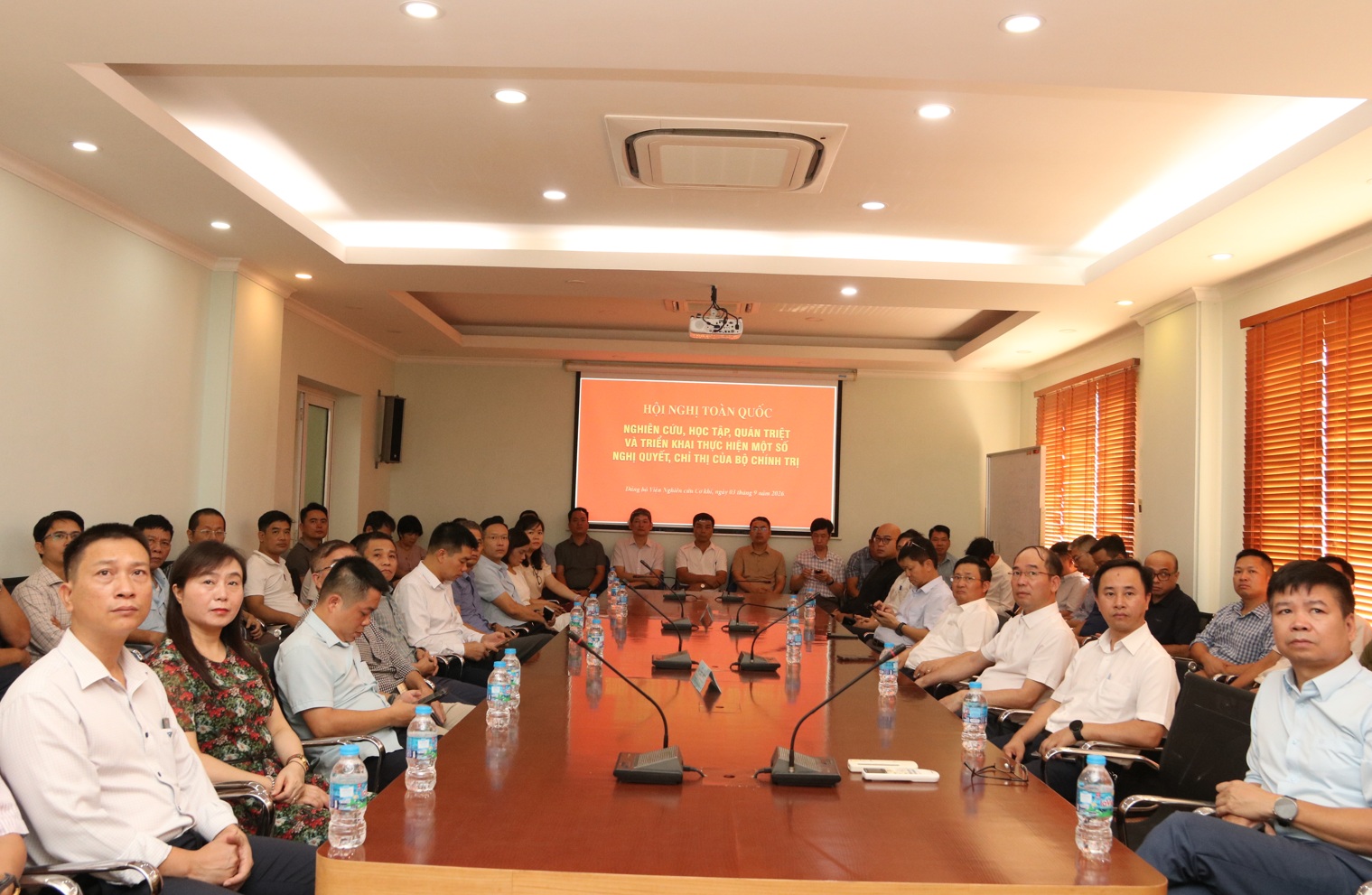


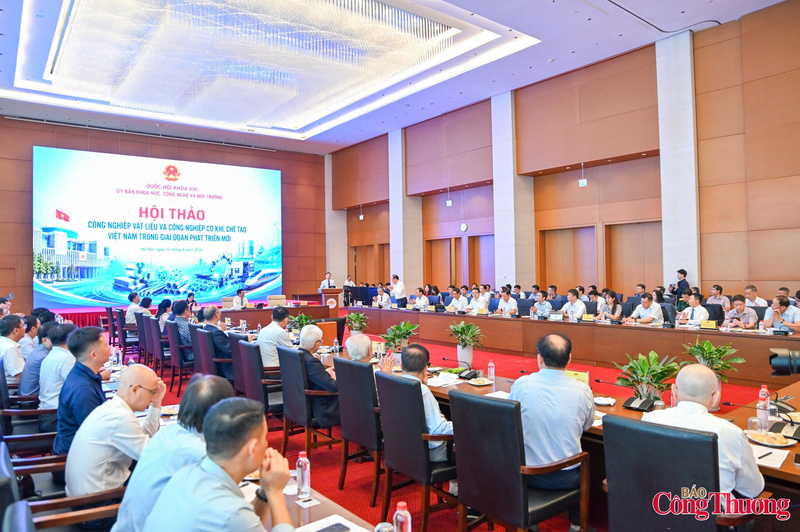


Doctoral dissertation information of PhD candidate Ngô Trọng Bính (revised version after the Institute-level thesis evaluation council)
Information on the doctoral thesis of researcher Ngo Trong Binh (revised version after the Institute-level Thesis Evaluation Council):
Full name of researcher: Ngo Trong Binh
Collective of scientific supervisors: Assoc. Prof. Dr. Hoang Tung and Assoc. Prof. Dr. Vu Huy Lan
Field: Mechanical Engineering - Code: 9520103
Training institution: National Research Institute of Mechanical Engineering - Ministry of Industry and Trade
Thesis title: "Research on the MAG welding process for narrow gap butt joints"
Summary of new conclusions of the thesis
- This is an applied experimental research work on narrow gap butt welding technology (NG-MAG welding) for thick CT.38 carbon steel, with the following new contributions:
+ Proposing an experimental research methodology for the NG-MAG welding process of thick CT.38 steel, suitable for practical conditions when using the MAG D500 welding power source of the National Research Institute of Mechanical Engineering and the domestically available LINCOLN FLEXTEC® 500x welding equipment. The N27 experimental design method is employed, with the survey domain of 3 independent factors defining the welding regime: welding current (Ih, A), welding speed (vh, m/h), and bevel angle (a, degrees). The quality of the welded joint is evaluated through a set of criteria including: mechanical-physical properties (microhardness, tensile strength) and metallographic characteristics (macrostructure, microstructure in characteristic structural subzones);
+ By applying mathematical statistical data processing methods according to the full factorial orthogonal experimental design of 3 levels and 3 factors (N27) using the least squares method, a numerical model predicting the tensile strength (sk, MPa) of the NG-MAG welded joint has been established in the form of a second-order polynomial. Accordingly, the appropriate NG-MAG welding regime for CT.38 steel can be easily selected to achieve the required tensile strength for the welded structure. Simultaneously, 2D and 3D graphs have been provided to visually represent the influence laws of the NG-MAG welding regime on sk within the selected survey domain of the three parameters Ih, vh, and a.
- The research results of the thesis can be applied in production practice and serve as reference material for training endogenous Science and Technology (S&T) human resources.
Detailed information of the thesis can be found at here
Related News
- Discuss solutions to promote foundational industries in the new period
- Research results on the application of robots in a detergent powder manufacturing plant
- Specific mechanisms and policies are needed to develop mechanical engineering products with large market capacity in the period 2026-2045.
- Mastering Heat Exchange Equipment: A New Step Forward for Vietnam's Mechanical Engineering Industry


