

Home
News - Events Science & Technology News National Research Institute of Mechanical Engineering: Effectiveness from Scientific Research Projects
Featured News

National Research Institute of Mechanical Engineering: Effectiveness from Scientific Research Projects
16/05/2022
In recent years, numerous scientific and technological research projects led by the National Research Institute of Mechanical Engineering - Ministry of Industry and Trade have been successfully applied.
A reporter from the Industry and Trade Newspaper had an exchange with Dr. Phan Đăng Phong - Director of the National Research Institute of Mechanical Engineering (NARIME) - Ministry of Industry and Trade on this matter.
Could you please share some results of the Institute's scientific research, technology transfer, and pilot production activities in recent years?
In recent years, adhering to the motto of linking scientific research tasks with the country's socio-economic development programs, the National Research Institute of Mechanical Engineering (NARIME) has made positive contributions to the process of innovation and improvement of technical and technological standards in the industrial sector. Many research projects have been effectively applied to production and business activities at enterprises, especially corporations and general companies, contributing to enhancing production capacity, quality, and competitiveness of businesses, as well as creating a foundation for the lead organization to continue developing scientific and technological research resources.
|
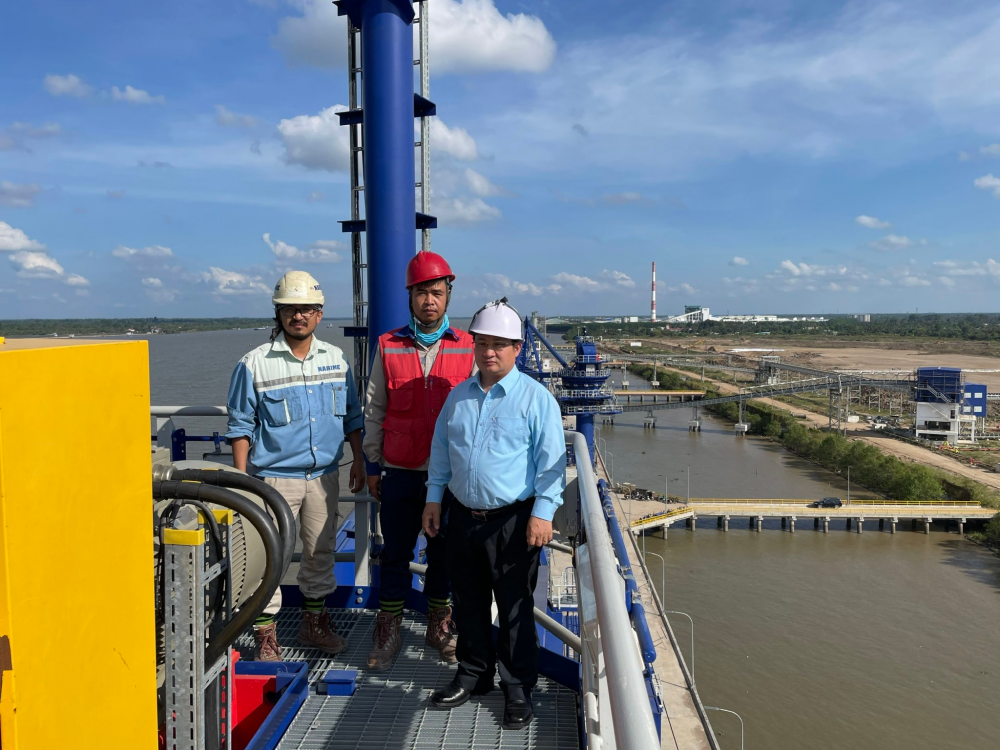
Dr. Phan Đăng Phong (far right) at the trial run program of the coal supply system for the Song Hau 1 Thermal Power Plant Project |
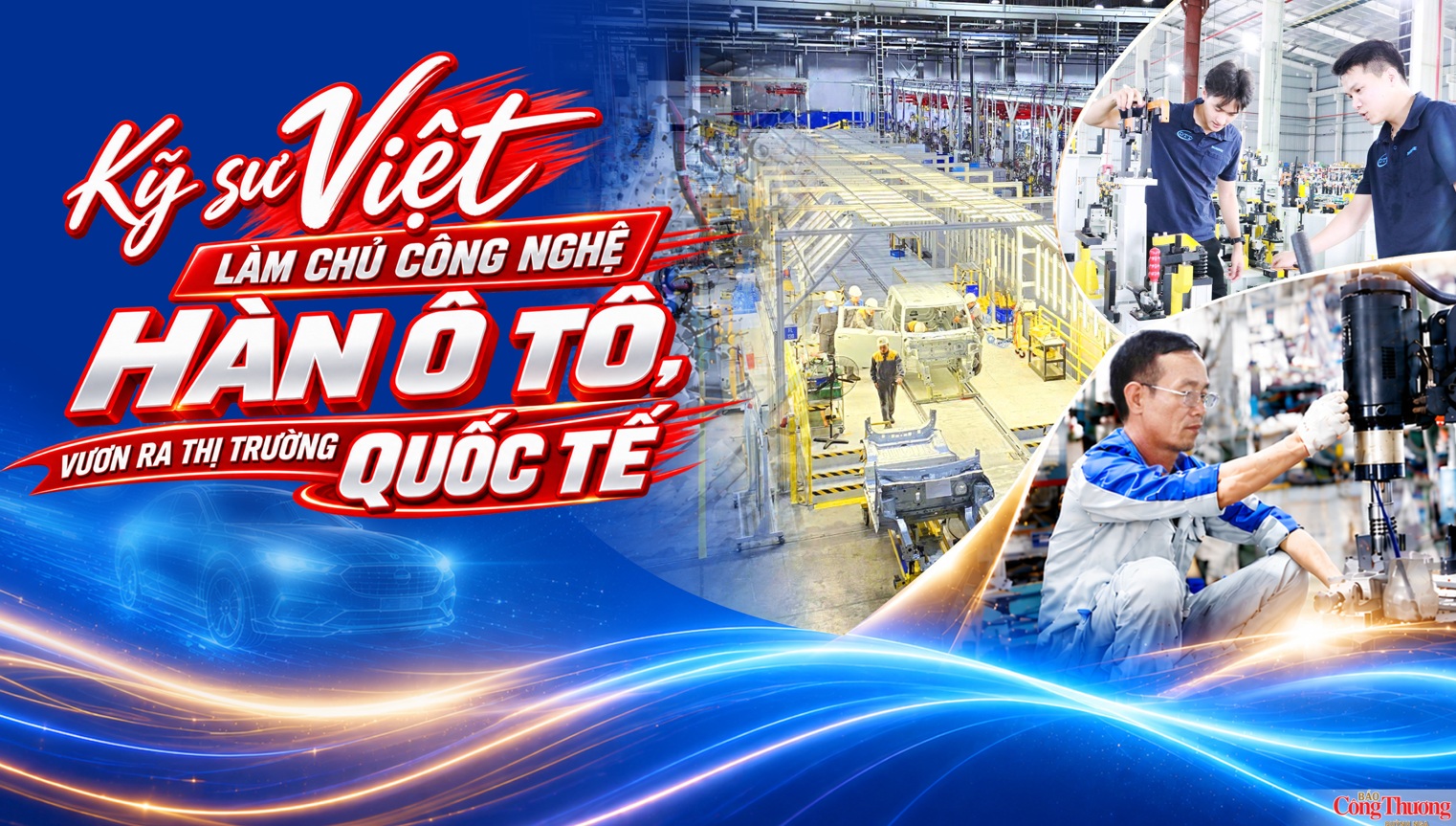
Typically, in the field of automation serving the 4.0 Industrial Revolution, NARIME has focused on researching and mastering the technology of smart production lines at automobile, motorcycle, and chemical manufacturing plants. Recently, with the successful research and mastery of technology for several major projects such as: automated, flexible production lines at LIX - a member company of the Chemical Group, automated motorcycle wheel assembly production lines for Vietnam Automobile and Motorcycle Parts Manufacturing Company, robotic welding jig and assembly lines for passenger cars - SUVs, and welding jig and body assembly lines for electric BUSes for Vinfast. Through this, the Institute has gradually asserted itself in the field of smart manufacturing, contributing to reducing product costs, bringing high economic efficiency to investors, proactively changing production technology when required, and creating stable employment for the Institute worth approximately 200 billion VND/year in this field alone.
In the thermal power sector, alongside the success of state-level science and technology tasks such as researching, designing, manufacturing, and putting into operation auxiliary equipment systems for coal-fired power plants with a unit capacity of about 600MW, the Institute has created several traditional products such as coal supply systems, ash and slag discharge systems, and electrostatic precipitator systems, bringing significant socio-economic benefits. This has created more jobs for domestic mechanical engineering enterprises, reduced product costs by at least 10% compared to similar imported equipment, and reduced the trade deficit by over 100 million USD for a 1,200MW coal-fired thermal power plant.
|
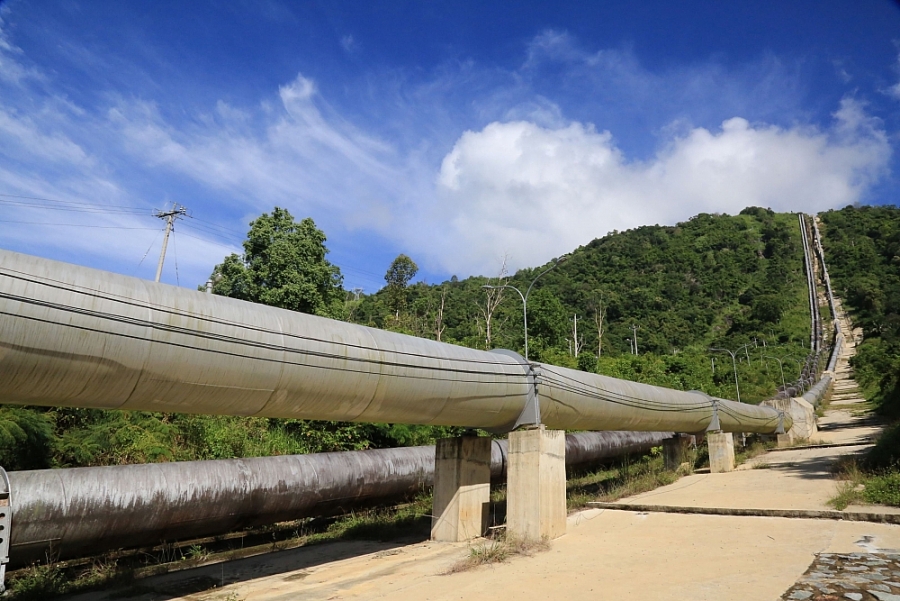
High-pressure pipelines (890m) at the Da Nhim Hydropower Plant expansion, executed for the first time in Vietnam by NARIME |
In the field of mineral extraction and processing, the Institute has successfully participated as the EPCM general contractor for two projects, Tan Rai and Nhan Co, with a design capacity of 2 million tons of refined ore per year. Notably, the Institute designed and manufactured synchronously two conveyor lines with a total length of 5km each for each plant. Currently, these conveyor lines have been handed over and put into operation, meeting requirements, and have been granted acceptance certificates by the investor for use. From this success, domestic units directly involved in the task have gained the trust of the investor and have been entrusted with other projects such as: Bao Loc Ore Processing Plant with a capacity of 200,000 tons/year, Lam Dong Processing Plant with a capacity of 1,700,000 tons/year, Nhan Co Ore Processing Plant with a capacity of 1,700,000 tons/year...
In the field of new energy and high technology, the Institute succeeded in the turnkey execution of the floating pontoon and mooring system for the Da Mi solar power project with a total capacity of 47.5MW, which started commercial power generation on June 1, 2019. The Institute is currently developing and deploying high-tech products following the 4.0 technology direction, focusing on fully automated smart production lines and warehouses, consistent with the general development orientation of various industrial sectors...
In your opinion, what are the challenges for the Vietnamese mechanical equipment market today?
Regarding the mechanical equipment market in the coming years, according to the development plans for the electricity, oil and gas, mineral extraction and processing, paper, construction materials production, new energy and renewable energy industries, the market capacity for mechanical engineering development remains very large, especially for complete equipment lines for domestic industries.
However, at the present time, most complete equipment lines for industries are dependent on foreign contractors for technology. This leads to a very low domestic proportion, not exceeding 20%, mainly concentrated in simple products that do not generate high added value.
To overcome this limitation, we need to build development strategies for ministries and sectors within the overall national socio-economic development strategy. The strategies of the institutes in the coming years need to be built on this basis, with a focus on building sufficiently strong research and development institutes with source technologies corresponding to each industrial sector and capable of fulfilling the country's major socio-economic development strategy to 2030, with a vision to 2045.
Could you share the directions the Institute will take in the coming time?
The overall objective of the Institute's Development Strategy to 2030, with a vision to 2045, is to be the leading independent consultancy unit in Vietnam, with prestige in the international market, and sufficient capacity to prepare investment projects, technical designs, and detailed designs for specialized industrial projects within the Institute's strengths, such as mechanical manufacturing and assembly lines, thermal power, renewable energy, mineral processing, chemicals, environmental treatment, and smart production lines. The Institute has sufficient capacity to act as the EPC, EPCM, or turnkey general contractor for whole equipment packages of domestic industrial projects within its strengths.
Along with continuing to invest in facilities, financial resources, and human resources with sufficient capacity to act as EPC, EPCM, or turnkey general contractors..., the Institute will continue to make focused and targeted investments in S&T projects and tasks that directly create products for industries. At the same time, it will continue to propose to the Ministry of Industry and Trade mechanisms, policies, and solutions to develop the mechanical engineering sector, focusing on mechanisms and policies for purchasing and receiving the transfer of source technologies for complete equipment lines in the fields of thermal power, hydropower, mineral extraction and processing, new and renewable energy, chemicals, and agricultural machinery equipment. Thereby, contributing to increasing the domestic production rate, reducing the trade deficit, lowering product costs, and creating more jobs for the domestic mechanical engineering industry.
Thank you very much!
Source: Industry and Trade Newspaper
Related News
- Discuss solutions to promote foundational industries in the new period
- Research results on the application of robots in a detergent powder manufacturing plant
- Specific mechanisms and policies are needed to develop mechanical engineering products with large market capacity in the period 2026-2045.
- Mastering Heat Exchange Equipment: A New Step Forward for Vietnam's Mechanical Engineering Industry


