

Home
News - Events National Research Institute of Mechanical Engineering: Gradually Realizing the Goal of Restructuring and Enhancing Capacity
Featured News

National Research Institute of Mechanical Engineering: Gradually Realizing the Goal of Restructuring and Enhancing Capacity
With the desire to enhance the capacity and effectiveness of S&T research, the National Research Institute of Mechanical Engineering has accelerated its restructuring process and initially achieved positive results.
Focusing research priorities on 6 programs
The 13th National Party Congress approved the 10-year Socio-Economic Development Strategy for 2021-2030, which sets the task of "Strongly renovating the mechanism of research activities, science and technology management, and innovation, creating favorable conditions for research and transfer in line with market mechanisms, enhancing the autonomy of public science and technology research units. Paying due attention to investment in basic scientific research; focusing on research and application of core technologies and digital technologies. Restructuring, improving the capacity and effectiveness of research institutions...".
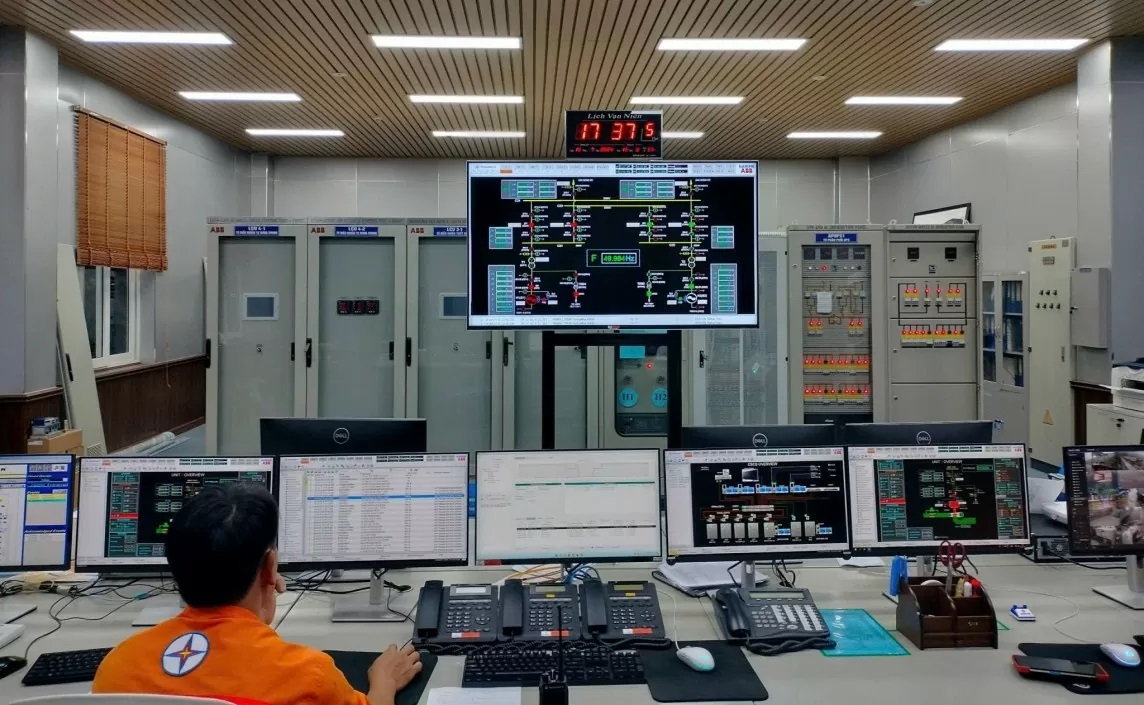
Major repair project of the Central Control System of Dong Nai 3 Hydropower Plant executed by the National Research Institute of Mechanical Engineering. Photo: QN
Along with the whole country, the Industry and Trade sector is accelerating its industry restructuring with the orientation of making science, technology, and innovation one of the breakthrough solutions. The Strategy for Science, Technology, and Innovation Development of the Industry and Trade sector until 2030 has identified: Research institutes under the Ministry must become core factors in the network of science and technology organizations of the Industry and Trade sector; their research capacity must be enhanced, making them strong research entities operating under a mechanism of autonomy and self-responsibility...
Sharing with a reporter from the Industry and Trade Newspaper - Dr. Phan Dang Phong, Director of the National Research Institute of Mechanical Engineering (Ministry of Industry and Trade) - stated that to build the National Research Institute of Mechanical Engineering to meet the above requirements, in recent times, the Institute has accelerated the restructuring task with the goal of improving operational efficiency and competitiveness.
The Institute's orientation towards 2030, with a vision to 2045, is to become a leading independent consultancy unit in Vietnam, with prestige in the international market, capable of preparing investment projects, technical design, and construction drawing design for specialized industrial projects within the Institute's strengths, such as: Mechanical manufacturing and assembly lines, thermal power, renewable energy, mineral processing, chemicals, environmental treatment, industrial automation systems, and smart warehouses. At the same time, it must be capable of acting as the EPC, EPCM, or turnkey general contractor for complete equipment packages of domestic industrial projects within the Institute's strengths.
Accordingly, the Institute focuses on several research and development programs for complete equipment as follows: First, the research and development program for complete equipment in the thermal power field. This program mainly focuses on building mechanisms, policies, and solutions to master the technology of gas thermal power plant equipment and the program for upgrading and renovating old thermal power plants to suit new environmental conditions.
Second, the research and development program for complete equipment in the field of building materials production, focusing on building mechanisms, policies, and solutions to master the technology of equipment for cement plants, waste heat power plants in cement plants, and cement silo equipment.
Third, the research and development program for complete equipment in the field of new and renewable energy, focusing on building mechanisms, policies, and solutions to master the technology of coal-fired and gas thermal power plant equipment and the program for upgrading and renovating old thermal power plants to suit new environmental conditions.
Fourth, the research and development program for complete equipment in the field of bauxite mining and processing, mainly focusing on building mechanisms, policies, and solutions to master the technology of mineral mining and processing plant equipment.
Fifth, the research and development program for complete equipment in the field of agriculture and post-harvest agricultural product processing.
Sixth, the research and development program for complete equipment in the field of waste treatment, power generation from waste and biomass, industrial robots, robot applications, and 4.0 technology lines and products.
Initial successes
Dr. Phan Dang Phong said that in the first program, the Institute is currently building policy mechanisms to increase the domestic localization rate for equipment of gas power plants invested in the country. It is expected to be submitted to the Ministry of Industry and Trade for consideration and approval in 2025.
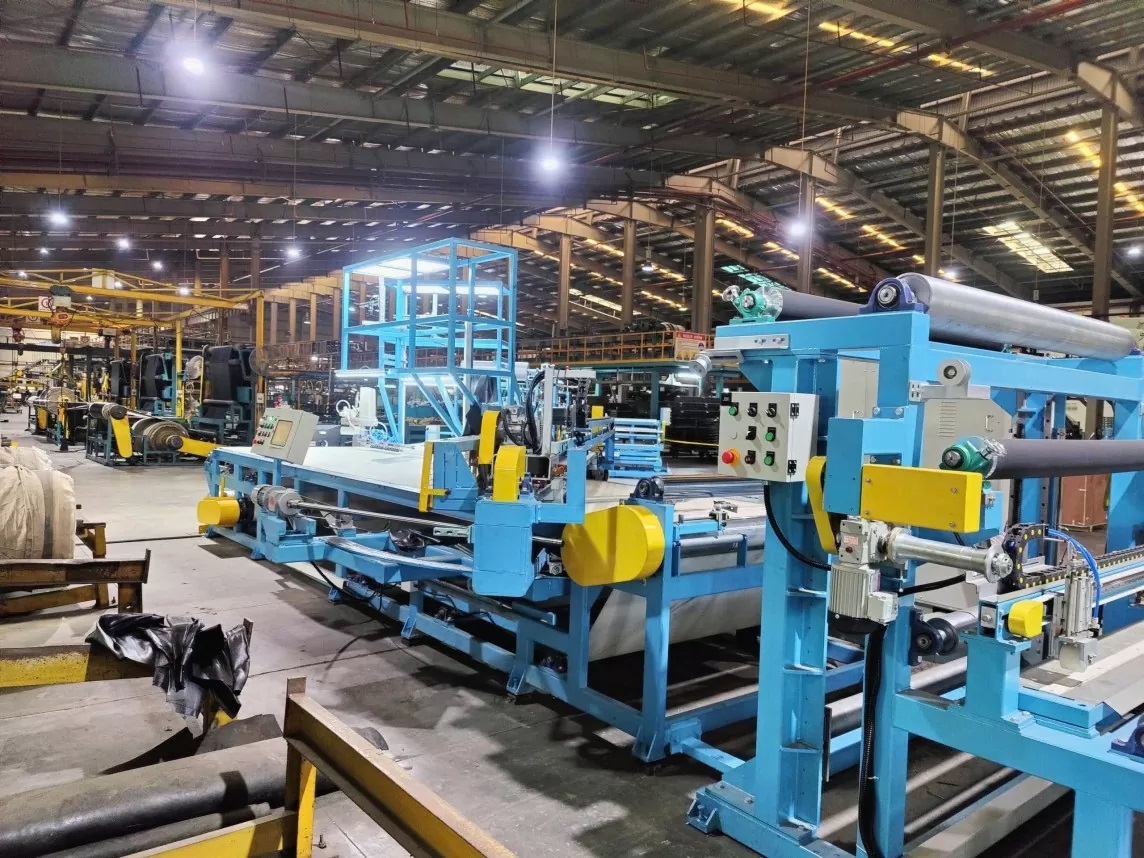
Automatic rubber cutting and pasting line at Da Nang Rubber Company designed and manufactured by the National Research Institute of Mechanical Engineering (Photo: QN)
In addition, the Institute is also investing resources and actively seeking foreign partners for cooperation to participate in part in the design and supply of gas thermal power plant equipment in the coming time, focusing on several projects invested in Vietnam such as: Quang Trach 2 Thermal Power Plant, O Mon 3.
Besides, the Institute is cooperating with the Japanese partner JFE to participate in the design, manufacturing, and provision of technical services for several biomass power projects in Yen Bai and Tuyen Quang. These projects are expected to start implementation in 2025.
For the second program, the Institute has coordinated with foreign companies to implement several waste heat power generation projects at domestic cement plants including: Hoang Mai, Hoang Thach, Bim Son, Nghi Son. Participating in mastering the design and manufacturing technology of these projects will significantly contribute to increasing the localization rate for similar projects in the future, creating jobs and proactiveness in maintenance and repair work, and generating new work areas for a part of the Institute's staff for at least the next 10 years.
The Institute's engineers are actively coordinating with investors in domestic cement projects to master the repair, replacement, and upgrade of equipment and equipment lines for the cement industry, work that was previously the exclusive domain of foreign contractors.
With the third program, the Institute has achieved initial success in manufacturing floating pontoon and anchoring systems for solar power projects such as the Da Mi Solar Power Plant project with a capacity of 47.5MW..., opening prospects for developing equipment products serving the renewable energy sector under the Vietnamese brand. In the coming time, when new projects are approved according to the plan, the Institute will continue to seek partners to implement this work to perfect the technology.
Along with that, the Institute is focusing human resources on researching offshore wind power projects, especially technologies related to floating pontoon and anchoring systems, and manufacturing technology for large components in harsh environments to meet market demand.
For the fourth program, over the past two years, the Institute has implemented a series of new projects according to the sector's development plan, such as: Basic design of the mine-beneficiation part of the Dakchung bauxite-alumina industrial complex project with a capacity of 1 million tons of alumina/year; preparing an investment opportunity study report for the Hoa Phat Bauxite-Alumina Complex project with a designed capacity of 2,000,000 tons of alumina/year and 1,000,000 tons of aluminum/year at the Bac Gia Nghia and Gia Nghia mines, Dak Nong province; preparing an investment opportunity study report for the An Vien B.P Bauxite-Alumina Complex project with a designed capacity of 2,000,000 tons of alumina/year in Binh Phuoc...
Notably, in the sixth program, the Institute has implemented research and development of high-tech products following the 4.0 technology direction, focusing on automatic production lines and smart warehouses suitable for the development orientation of the digital economy.
For example, the Institute has successfully designed, manufactured, and put into operation an automatic product sorting system at a logistics enterprise. This automatic product sorting system can operate continuously over an 8-hour work shift per day, recording a productivity of approximately 7,500 products/hour (equivalent to about 60,000 products/day). In reality, at the time of trial run and official operation, it was not yet the peak season. According to calculations, if operating at maximum productivity, the system can handle up to 70,000 products/day...
Source: Industry and Trade Newspaper
Related News
- Discuss solutions to promote foundational industries in the new period
- Research results on the application of robots in a detergent powder manufacturing plant
- Specific mechanisms and policies are needed to develop mechanical engineering products with large market capacity in the period 2026-2045.
- Mastering Heat Exchange Equipment: A New Step Forward for Vietnam's Mechanical Engineering Industry


