

Home
News - Events News and Activities Vietnam masters the auxiliary equipment system of coal-fired thermal power plants.
Featured News

Vietnam masters the auxiliary equipment system of coal-fired thermal power plants.
29/12/2022
For the first time, leveraging domestic scientific and technological capabilities, a synchronous equipment line for a 600 MW coal-fired thermal power plant has been researched and manufactured in Vietnam.
Product quality equivalent to G7 countries
The Ministry of Industry and Trade has just accepted the State-level science and technology project "Research, design, manufacture, and commissioning of several auxiliary equipment systems for coal-fired thermal power plants with unit capacity up to approximately 600MW," led by the National Research Institute of Mechanical Engineering.
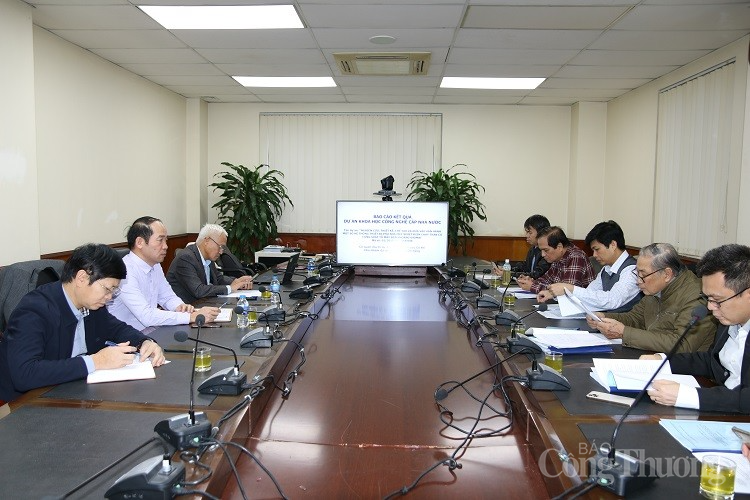
The Ministry of Industry and Trade accepts the project "Research, design, manufacture, and commissioning of several auxiliary equipment systems for coal-fired thermal power plants with unit capacity up to approximately 600MW"
The project aims to master the design, manufacture, installation, and operation of several auxiliary equipment systems for coal-fired thermal power plants with unit capacity up to approximately 600 MW, in line with the objectives set forth in the Prime Minister's Decision No. 1791/QĐ-TTg; to design, manufacture, and commission several auxiliary equipment systems for coal-fired thermal power plants with unit capacity up to approximately 600 MW.
The research subjects include: BOP systems: coal handling system (CHS); flue gas desulfurization system (FGD); ash and slag handling system (AHS); auxiliary fuel oil supply system; flue gas exhaust system; water treatment and wastewater treatment systems; cooling water system; hydrogen cooling system for generator units; distribution substation up to 500kV and secondary systems; fire protection and firefighting system.
Technical design of thermal power plants according to Decision No. 1791/QĐ-TTg; solutions, regulations, management procedures, and organization for implementing thermal power plant projects under the 1791/QĐ-TTg mechanism.
Dr. Nguyễn Chỉ Sáng, project director, stated that this is a large-scale science and technology project being researched and implemented for the first time in Vietnam in the field of thermal power. The research subjects are not only individual equipment but also synchronous equipment systems, which contain many complex issues regarding equipment manufacturing technology that require in-depth study of their nature to identify essential problems to be solved.
The research topics focus on major, critical equipment systems that have a significant impact on the overall equipment manufacturing of thermal power plants. "To date, the project has fully completed the quantity, quality, and types of products ordered by the Ministry of Science and Technology and the Ministry of Industry and Trade," Dr. Nguyễn Chỉ Sáng emphasized.
Specifically, the design, manufacture, installation, and commissioning of 6 BOP systems have been completed, including: coal handling system; ash and slag handling system; flue gas exhaust system; cooling water system; distribution substation up to 500kV and secondary systems; fire protection and firefighting system, meeting the requirements set by the projects.
"The quality of the science and technology products is equivalent to technology from G7 countries and has been applied with high economic efficiency in domestic thermal power projects such as Sông Hậu 1, Thái Bình 1, and Nghi Sơn 2," Dr. Nguyễn Chỉ Sáng affirmed.
Large, long-term economic benefits
According to Dr. Nguyễn Chỉ Sáng, after the project, the investment cost for BOP items (as specified in Decision 1791) of a 600 MW coal-fired thermal power plant is expected to decrease by 10% to 20%, contributing to an increase in industrial production value in GDP due to the higher localization rate of synchronous equipment lines for thermal power plants.
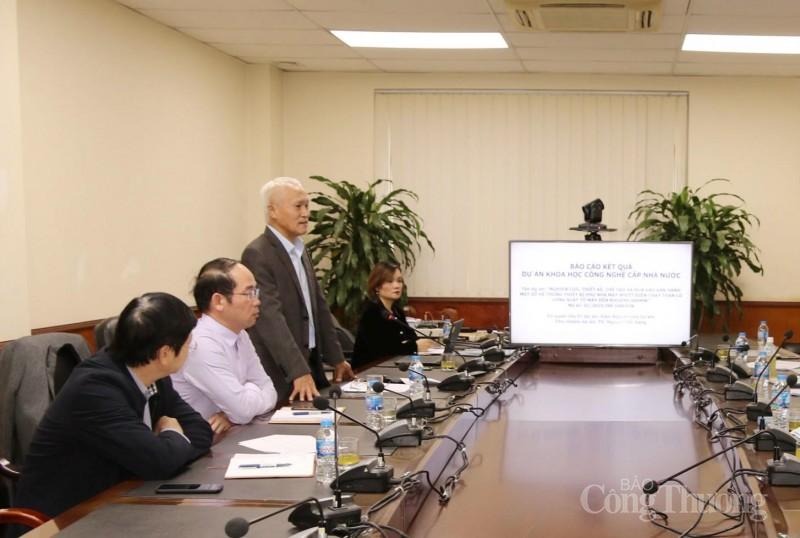
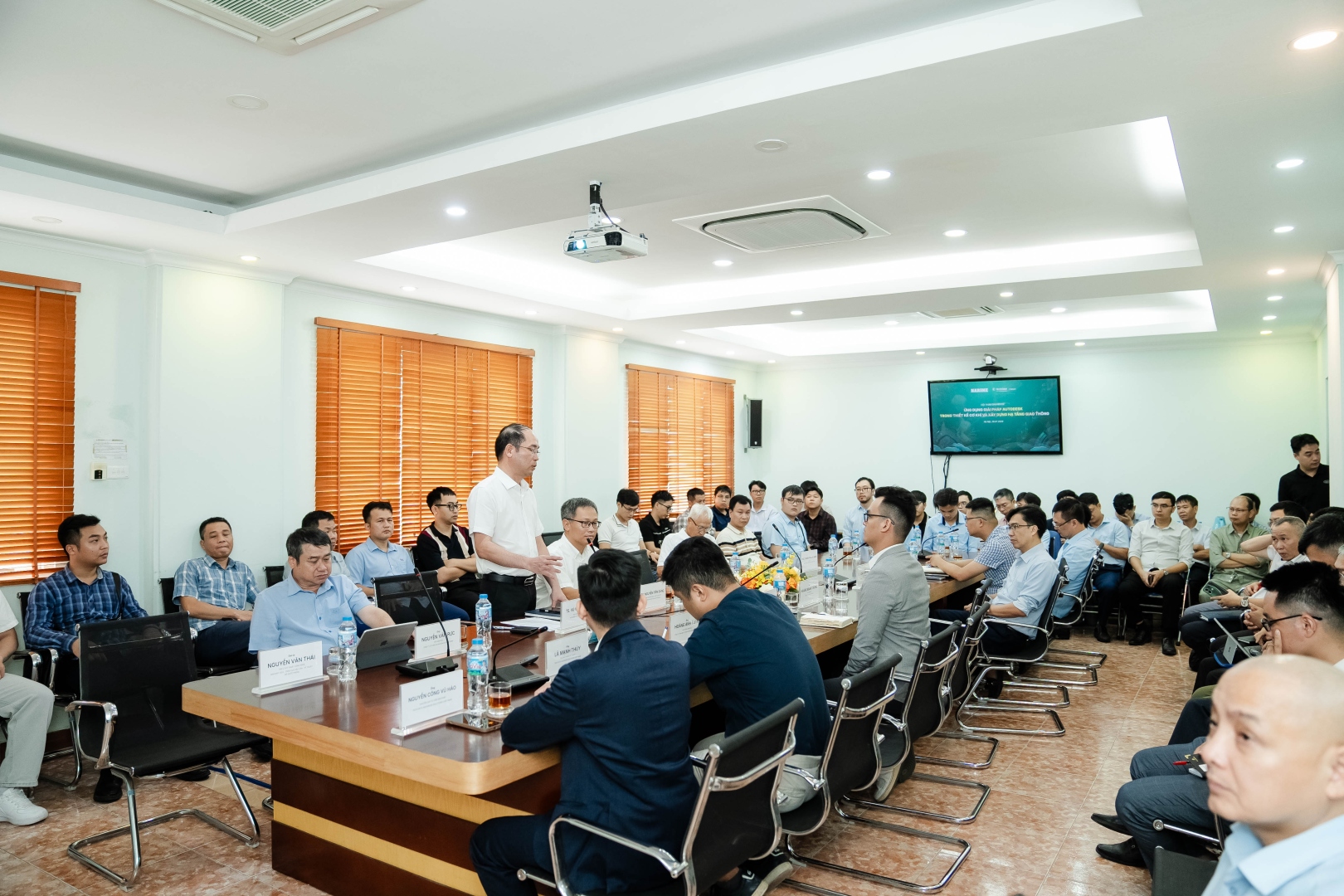
Dr. Nguyễn Chỉ Sáng, project director, speaking at the project acceptance meeting
Specifically, approximately 65% of costs for hiring foreign experts in project management, design consultancy, and other technical services can be reduced. The overall localization rate of the synchronous equipment line will gradually increase with investment projects for synchronous equipment lines of coal-fired thermal power plants, reaching 70-80% in volume and 40-50% in value.
Consequently, this enhances national self-reliance in manufacturing synchronous equipment for thermal power plants in particular and in the mechanical engineering industry in general, reducing the current heavy dependence on foreign countries.
From the success of this science and technology project, especially the successful mastery of technology for the 6 systems, domestic mechanical engineering enterprises have gradually improved the quality of their human resources, making them capable of undertaking similar complex projects.
A typical example is that, thanks to self-reliance in design and manufacturing technology for equipment systems, domestic mechanical enterprises have participated in international bidding and won contracts for large projects tendered by foreign contractors (competing with contractors from China, Taiwan, India), such as: the coal handling system for the Quảng Trạch 1 project, the ash and slag handling system and electrostatic precipitator system for the Nghi Sơn 2 and Vũng Áng 2 projects.
The project's success also serves as a basis for application in other coal-fired thermal power projects, gas-fired thermal power plants, and industrial projects in other fields.
The research team recommends that competent authorities facilitate the expansion of the project's research results to domestic thermal power, waste-to-energy, wind power, and gas power plants. At the same time, it is necessary to establish preferential mechanisms with a limited duration for projects using successfully researched S&T products to encourage investors to adopt the research outcomes.
Source: Industry and Trade Newspaper
Related News
- Discuss solutions to promote foundational industries in the new period
- Research results on the application of robots in a detergent powder manufacturing plant
- Specific mechanisms and policies are needed to develop mechanical engineering products with large market capacity in the period 2026-2045.
- Mastering Heat Exchange Equipment: A New Step Forward for Vietnam's Mechanical Engineering Industry


